Goat Breeds in Pakistan: Beetal, Kamori, Teddy and 6 More Types
A practical guide to Pakistani goat breeds like Beetal, Kamori, Teddy and Nachi: where each is raised, what it suits, and how to feed, house and protect a herd.
By Pets Bazar Editorial Team, Editors · Published · Updated · 12 min read
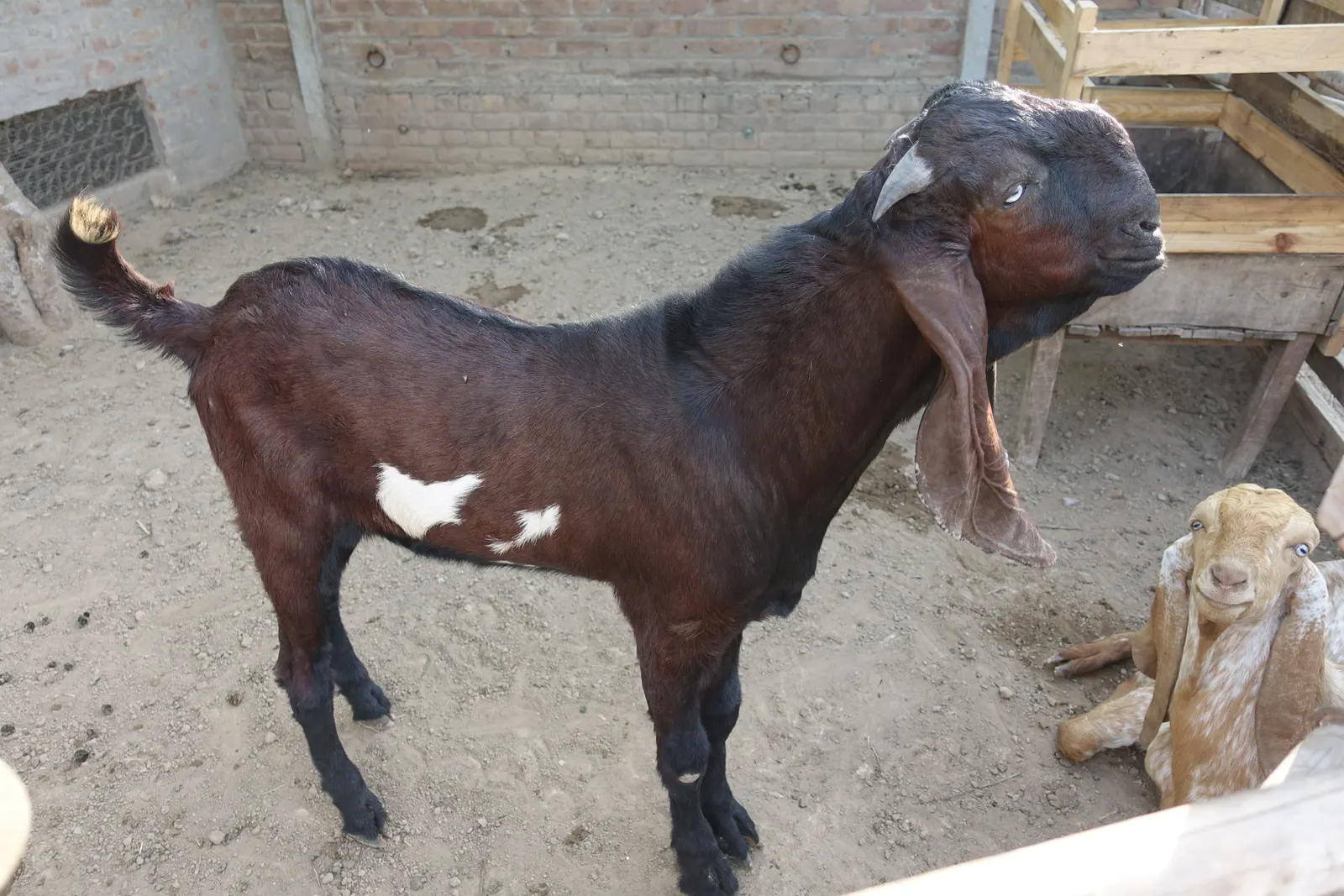
The main goat breeds of Pakistan covered here are Beetal, Kamori, Teddy, Barbari, Nachi, Dera Din Panah, Pateri, Damani and Khurasani. Nachi, Barbari and Teddy are raised mainly for meat, Damani for milk, and Beetal, Kamori, Pateri and Dera Din Panah for both, while Teddy and Barbari, both small breeds, suit small farms and stall feeding.
Goats are the quiet backbone of rural Pakistan. For many families a goat is a savings account on four legs: it gives milk and meat, it can be sold when school fees or a wedding come due, and demand peaks every year before Eid-ul-Adha. Pakistan has about 80 million goats by government estimates, mostly in small flocks on smallholder farms.
A goat that suits your climate, feed and buyers will grow well and stay healthy. One that does not will cost you money every month. This guide covers the main goat breeds in Pakistan, where each is raised, what it is good for, and how a beginner can run a small goat farm responsibly.
The main goat breeds of Pakistan
Researchers have recorded around 25 to 36 local goat breeds in Pakistan, depending on how names and local strains are counted. Home areas overlap, and many animals at the mandi are crosses, so treat the regions below as where a breed is most common, not as strict borders.
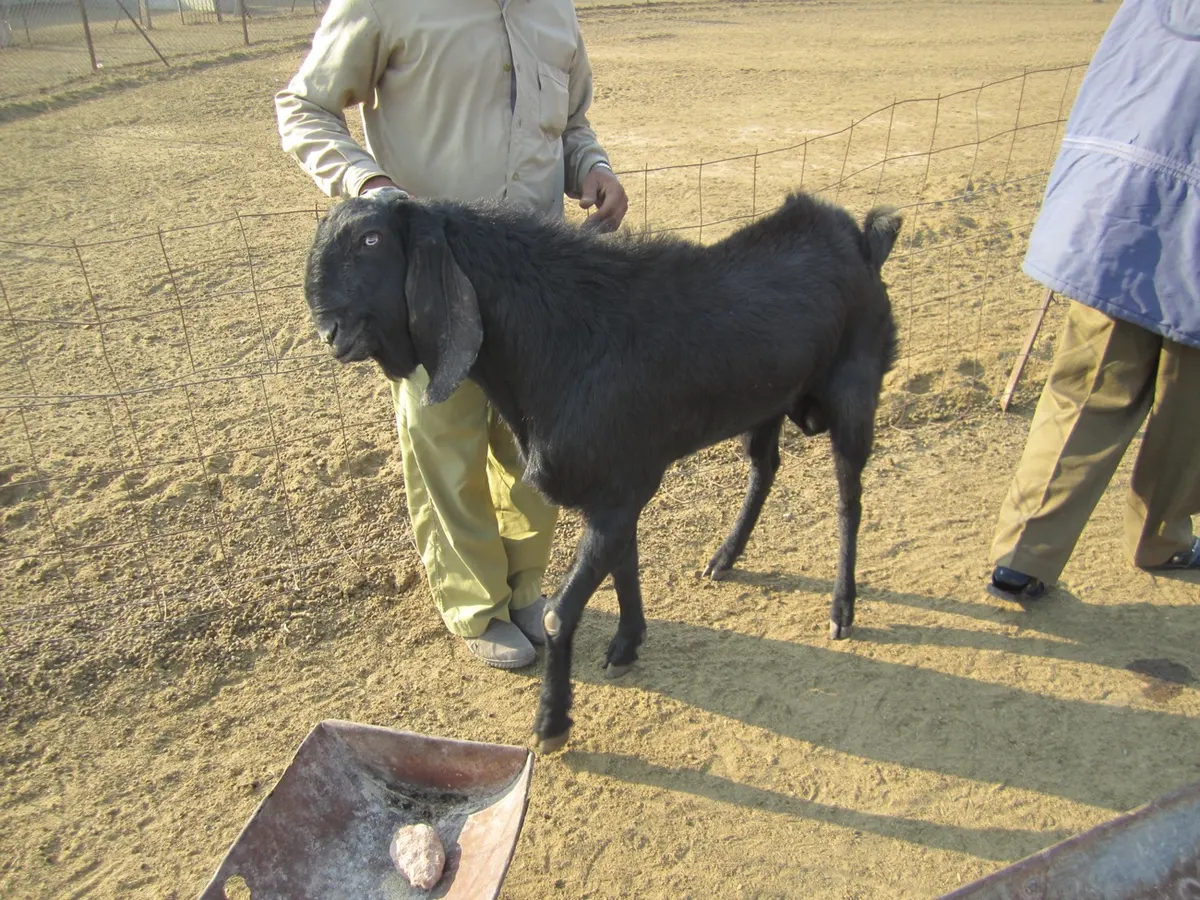
Beetal. The best-known breed of Punjab, raised across central and northern districts such as Faisalabad, Jhang, Lahore, Okara and Gujranwala. India also registers Beetal as a breed of its Punjab. Beetal goats are tall and long-legged, with long, flat, drooping ears and a curved Roman nose. They are dual purpose: good milkers and a favourite sacrifice animal at Eid. Well-known strains include the large, spotted Makhi Cheeni. Do not pay for a "pure" or "show" Beetal on looks alone.
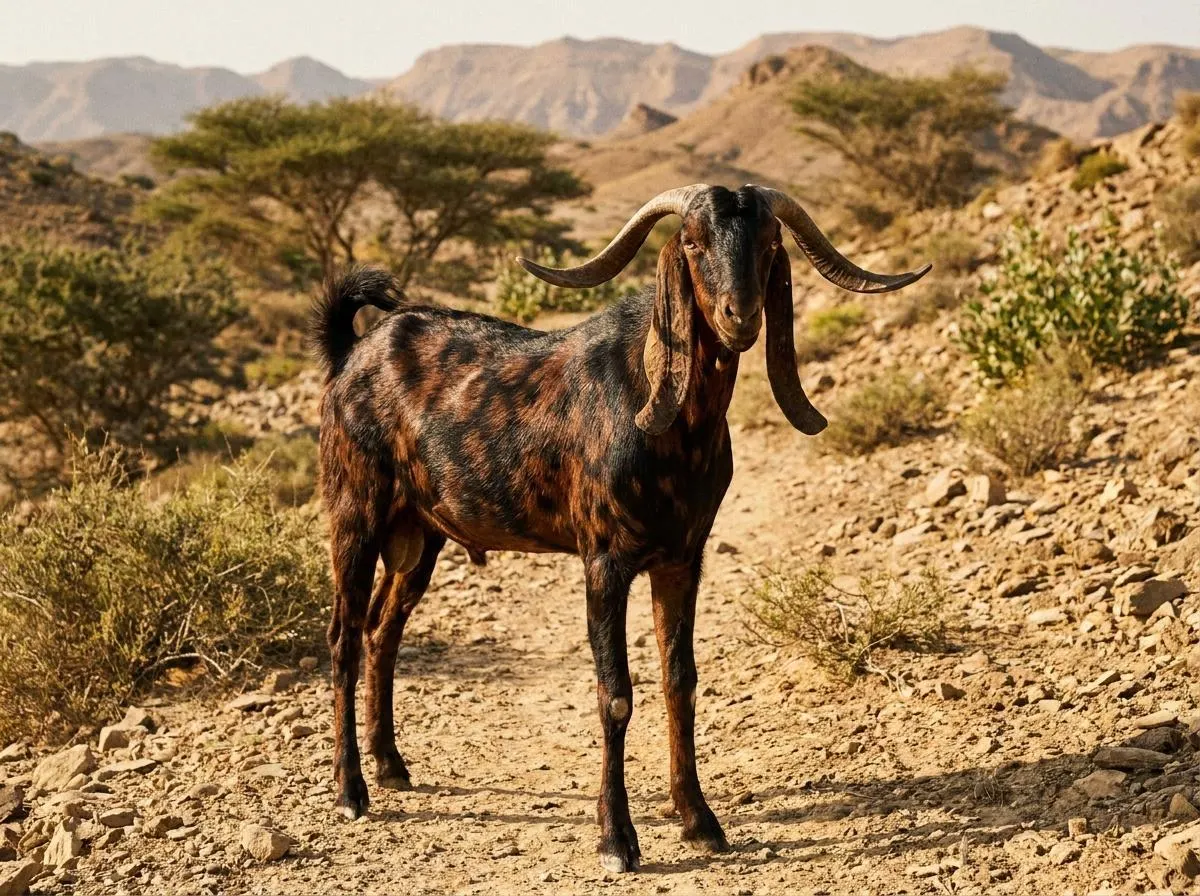
Kamori. The signature breed of Sindh, mainly from Dadu, Larkana and Nawabshah (Shaheed Benazirabad). Kamori goats are large, with a long neck, very long drooping ears, and a dark brown or reddish coat covered in small coffee-coloured patches. They are kept for milk and are also prized for Eid. Ask the seller about the parents, because spotted crosses are often sold as Kamori.
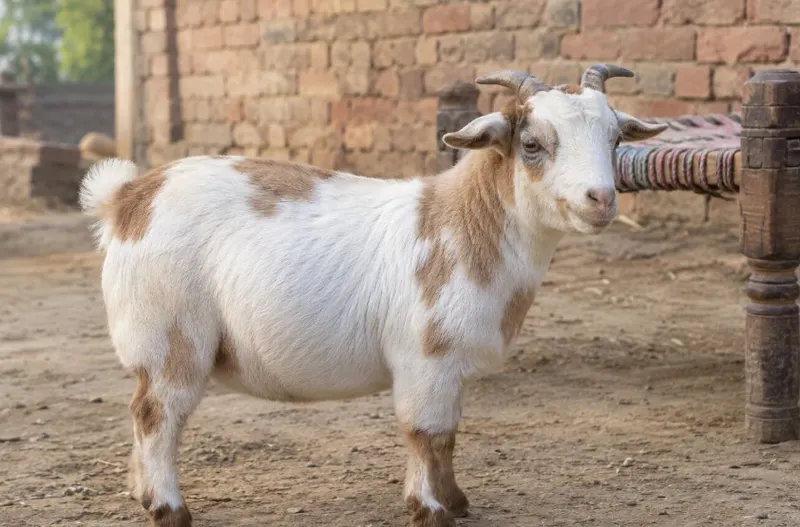
Teddy. Pakistan's most numerous breed and one of its smallest, found mainly in Punjab districts such as Sargodha, Mianwali, Gujrat and Jhelum. Teddy goats are compact and short-legged, often white, brown, black or mixed, with small ears. Their strengths are hardiness and fertility: twins are common. They suit beginners, small plots and stall feeding. Check that a Teddy is small because of its breed, not because it is underfed.
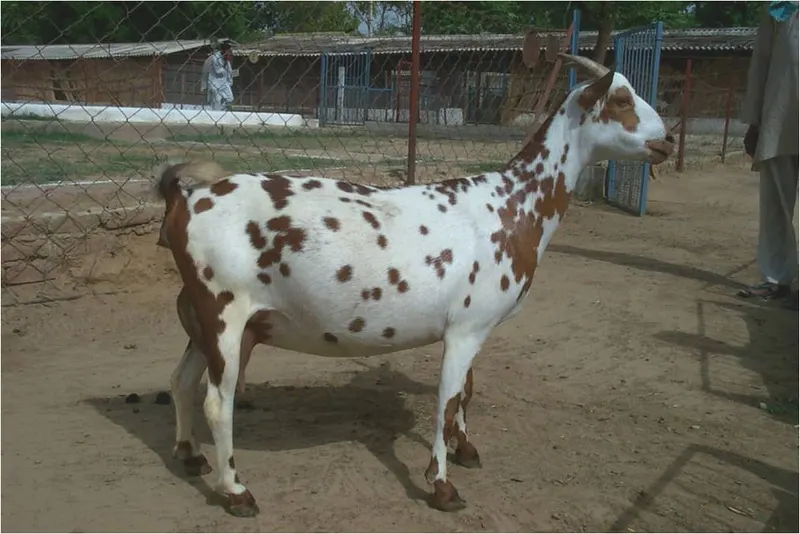
Barbari. A small breed with short, upright ears and a white or cream coat with brown spots. In Pakistan it is found in parts of Punjab, including Gujrat, Jhelum and Sargodha, and in Sindh. India registers it as a breed of Uttar Pradesh and Rajasthan. It matures early and often has twins or triplets, which makes it popular for meat on small farms.
Nachi. A medium-sized goat from southern Punjab, around Multan, Jhang, Muzaffargarh and Bahawalpur. It is black or brown with short, rough hair and small twisted horns. Its name comes from its high-stepping, "dancing" walk. Nachi goats are raised mainly for meat and do well in hot, dry conditions.
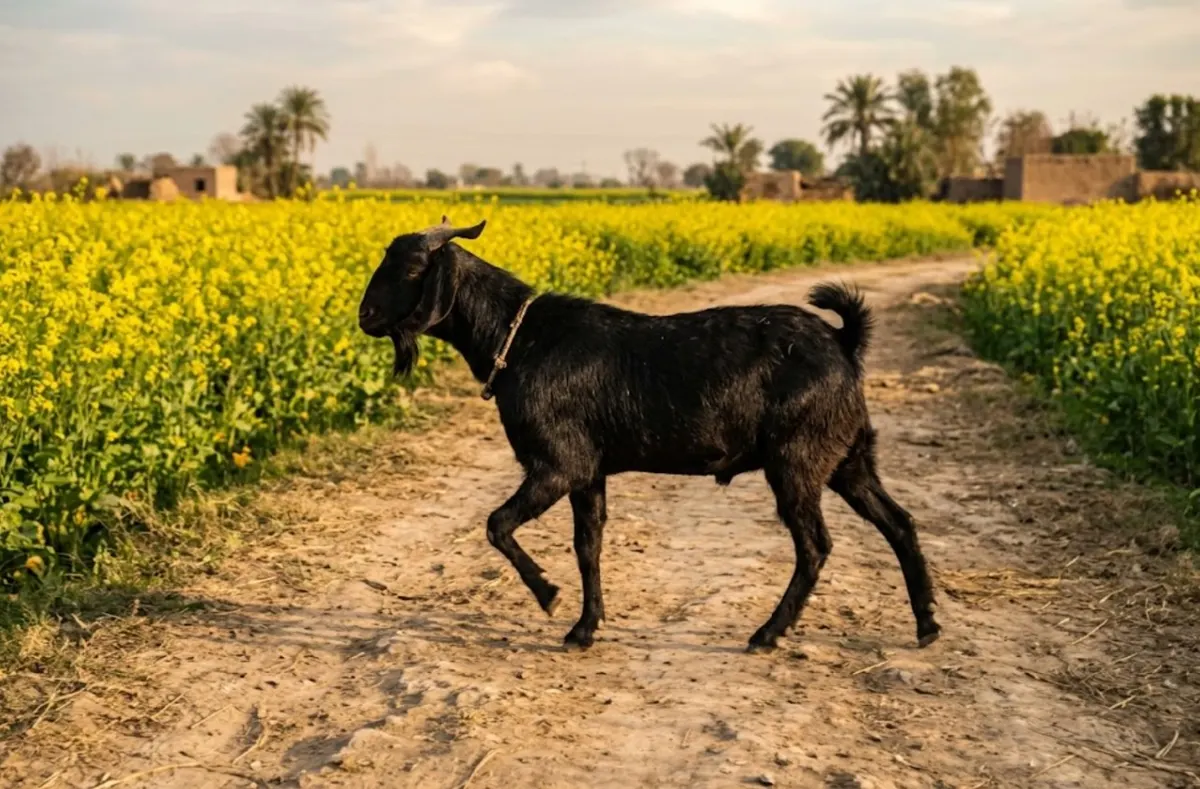
Dera Din Panah (DDP). Named after a town in Muzaffargarh district, and also found around Multan. DDP goats are large and usually solid black, with long hair, long twisted ears and spiral horns. They are milked and also sold for meat. Genuine DDP goats are now hard to find.
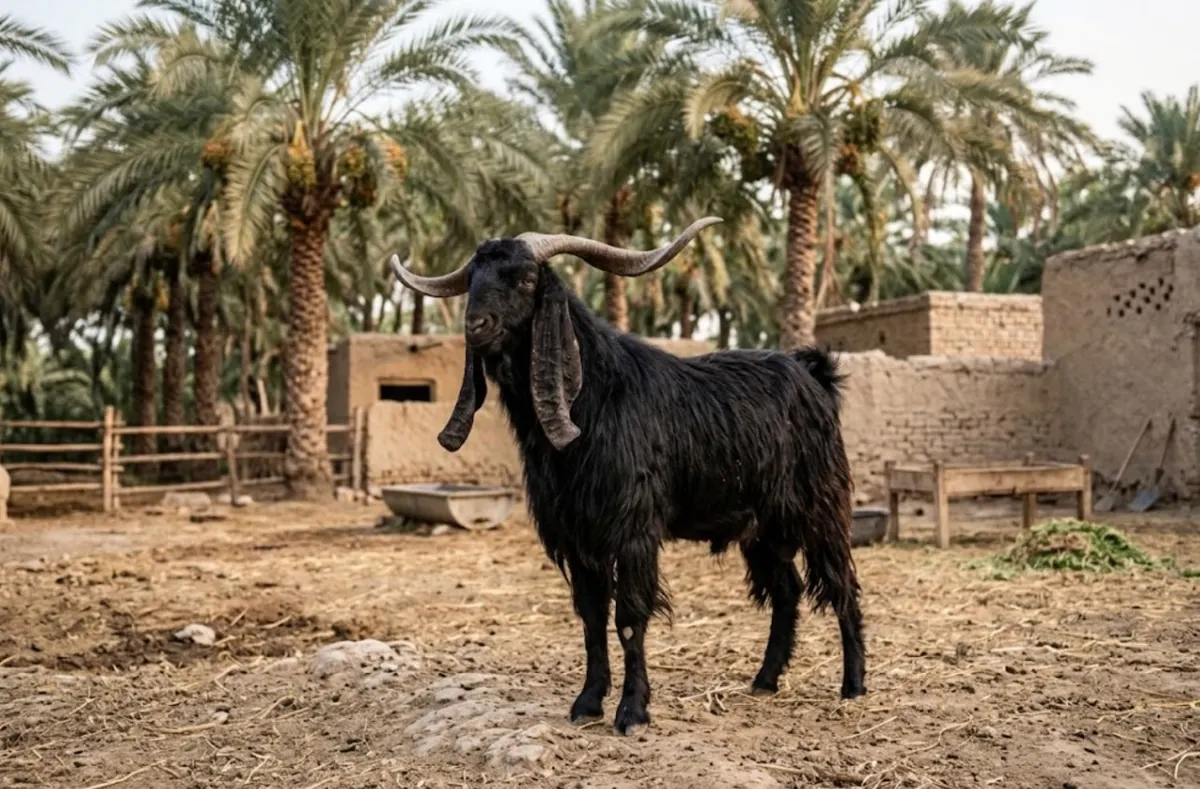
Pateri. A Sindh breed found around Shaheed Benazirabad, Matiari, Hyderabad, Mirpurkhas and Sanghar. Most Pateri goats are white with dark brown patches on the head, neck and legs, with drooping ears and upward spiral horns. They are kept for both milk and meat.
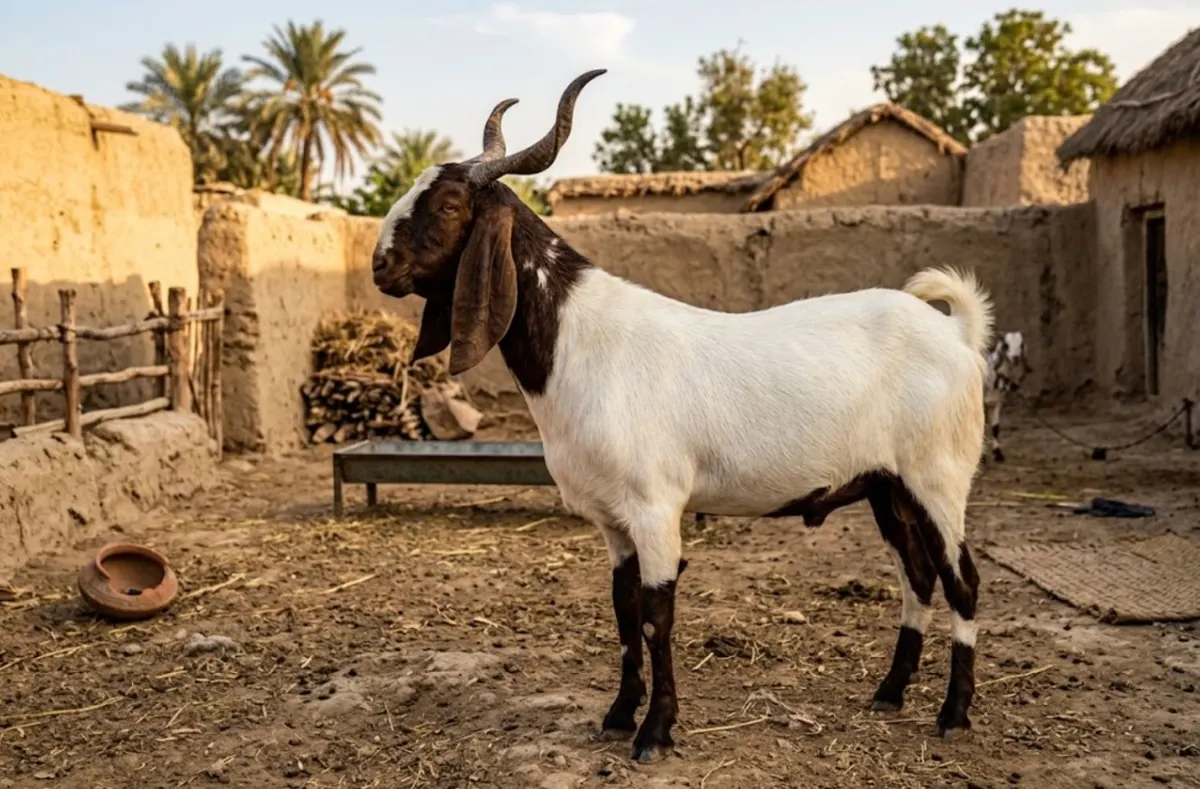
Tapri. A Sindh goat of the Hyderabad, Thar and lower Sindh area, with black and white strains also recognised locally. It is medium-sized and kept for milk and meat. Published descriptions are limited, so judge each animal on its own health and record.
Damani. A medium-sized goat from Dera Ismail Khan and Bannu in Khyber Pakhtunkhwa, usually black with tan on the head and legs and a long hair coat. It is known locally as a useful milker and copes well with the hot, dry south of the province.
Khurasani. A large, long-haired goat of the western border areas. Older sources place it in Balochistan, and others in the Peshawar, Kohat and Bannu belt. Coats vary from black to grey and mixed. It is raised for meat and its coarse hair is used for rope and rugs.
Sindh Desi and other local goats. Many Sindh goats are simply called desi. Researchers also record Bugi Toori, Jattan and Lohri in Sindh, and Kaghani and Gaddi in the northern hills. These hardy local goats are often the best choice where feed is scarce.
A note on Kajli: it is mainly known as a Pakistani sheep breed from the Sargodha and Khushab area. A few goat breed lists use the same name, so ask what a seller means before you buy.
Exotic breeds and crossbreeding
Breeds such as Saanen (a Swiss dairy goat) and Boer (a South African meat goat) are imported or used for crossbreeding in Pakistan. Crosses can grow faster or give more milk, but they usually need better feed, more shade and closer health care than local goats. For a beginner, a well-chosen local breed is usually the safer start.
Pakistani goat breeds compared
| Breed | Main region | Primary purpose | Distinguishing feature | Suitable farming system |
|---|---|---|---|---|
| Beetal | Central and north Punjab | Milk and meat, Eid market | Tall, long drooping ears, Roman nose | Stall-fed or semi-intensive |
| Kamori | Upper Sindh | Milk and meat, Eid market | Brown coat with small dark patches, very long ears | Stall-fed or semi-intensive |
| Teddy | North and west Punjab | Meat, small-scale milk | Small, compact, often twins | Small farms, stall feeding |
| Barbari | Punjab and Sindh | Meat | Small, upright ears, spotted coat | Small farms, stall feeding |
| Nachi | South Punjab | Meat | Black or brown, high-stepping walk | Grazing, semi-intensive |
| Dera Din Panah | Muzaffargarh, Multan | Milk and meat | Black, long hair, twisted ears | Semi-intensive |
| Pateri | Central and lower Sindh | Milk and meat | White body, brown head and neck | Semi-intensive |
| Damani | Dera Ismail Khan, Bannu | Milk | Black with tan head and legs | Grazing, semi-intensive |
| Khurasani | Western border areas | Meat and hair | Large, long coarse hair | Grazing, hill and range |
No single breed is best for every farmer. The right one depends on your climate, the feed you can grow or buy, what local buyers ask for, your budget, and whether you want milk, meat, breeding stock or a mix.
How to start goat farming in Pakistan
Decide your goal. Milk, meat, breeding stock or mixed farming each need different animals and feeding. For a larger dairy animal, see our guide to buffalo breeds in Pakistan.
Buy from people you can find again. A known breeder, a neighbour with a good record, or a seller who lets you visit the herd is safer than a stranger at a crowded mandi.
Check every animal before you pay.
Start small. A few does and access to a good buck is enough to learn feeding, kidding and disease prevention. Grow only when that works.
Budget for everything. Plan for the animals, feed for the whole year, housing, vaccines and vet visits, labour, and an emergency reserve. Feed is usually the largest ongoing cost.
Understand the market. Demand and prices rise before Eid-ul-Adha and fall after it. Buying just before Eid for a quick resale is risky. We do not quote prices here. Check current goat ads on Pets Bazar to see what sellers near you are asking.
Feeding and nutrition
Goats are browsers. They do best on a mix of grazing, tree leaves and fodder.
- Green fodder and grazing: berseem and lucerne in winter, maize, sorghum and mott grass in summer, plus leaves of ber, kikar, shisham and other local trees.
- Dry fodder: wheat straw, hay and crop residues fill the gaps, but they are low in protein on their own.
- Concentrate: a grain and oilseed cake mix helps pregnant and milking does, fast-growing kids and working bucks. Most adult goats on good fodder need little.
- Water: clean, fresh water at all times. Milking does and goats in summer heat drink a lot.
- Minerals and salt: a mineral mixture or lick prevents many deficiency problems.
Change feed slowly over a week or more. A sudden switch to a lot of grain or lush green fodder can cause bloat, acidosis or enterotoxemia, which can kill quickly. Quantities depend on body weight, age, stage of production and feed quality, so ask your local livestock officer or vet to help set a ration for your herd.
Housing and daily management
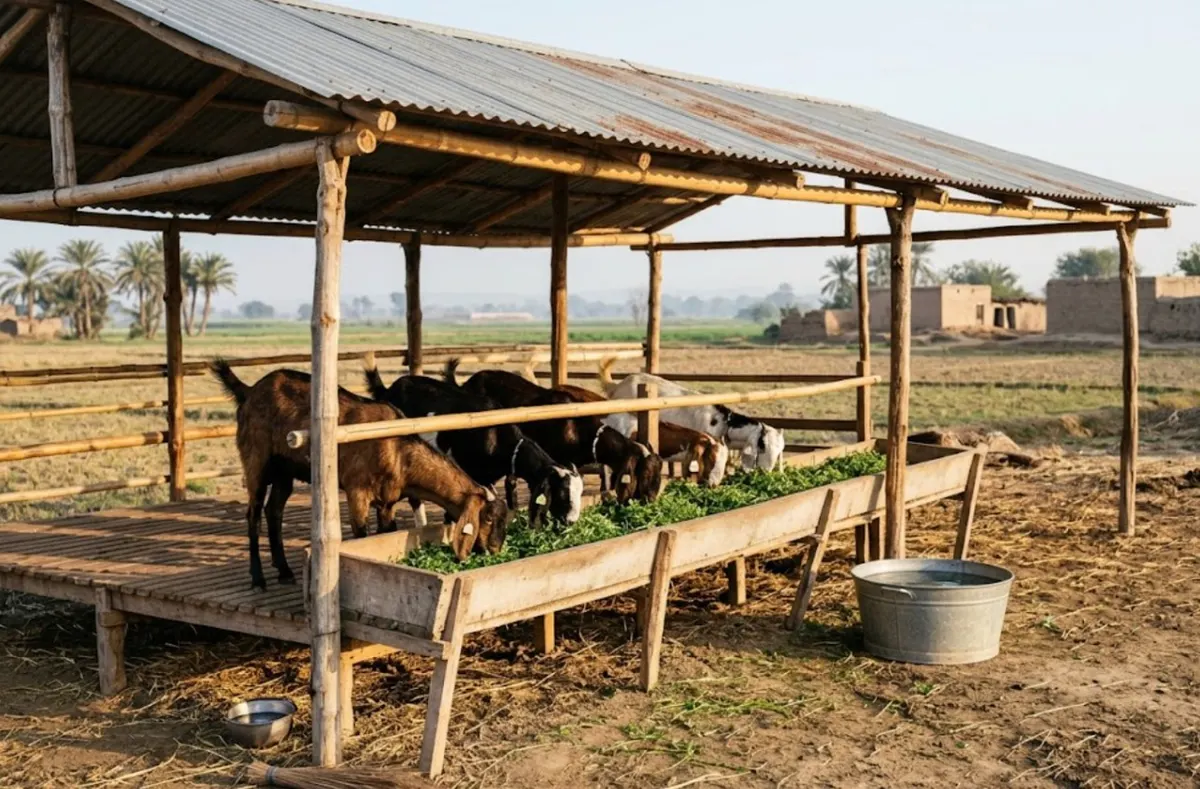
A good goat shed in Pakistan keeps animals dry, shaded and well ventilated.
- Protect against rain, heat, cold and wind, but keep air moving. Damp, stale air leads to pneumonia.
- Keep floors dry with good drainage and clean bedding.
- Separate sick goats, does near kidding, young kids and bucks where you can.
- Use strong fencing and close the shed at night against dogs and other predators.
- Clean feeders and water troughs every day.
- Give shade outside and do not overcrowd.
- Watch every goat daily: appetite, behaviour, droppings and walk.
Breeding, pregnancy and kid care
Breed only healthy, well-grown animals. Does bred too young or too thin often have weak kids, so let a doe reach good size and condition first, as your vet advises. Rotate bucks to avoid breeding close relatives.
In late pregnancy, give a doe extra good feed and a clean, quiet place to kid, and call a vet if a birth stalls.
After birth, make sure each kid drinks colostrum, the first milk, as soon as possible, ideally within the first hour. It carries the antibodies a kid needs. Dip the navel in a disinfectant your vet recommends, keep kids warm and dry, and check that they suckle often. Introduce fodder gradually so kids eat well before weaning.
Common goat diseases and prevention
Prevention is cheaper than treatment. Symptoms often overlap, so always have a vet confirm what is wrong.
- PPR (peste des petits ruminants): a fast-spreading viral disease. Signs include high fever, eye and nose discharge, mouth sores, diarrhoea and breathing trouble. Vaccination and quarantine are the main defences.
- Enterotoxemia: linked to sudden feed changes or too much grain. Goats may die suddenly. Vaccination and slow feed changes help.
- Goat pox: fever and raised skin lumps, especially on less hairy parts. Isolate sick animals and ask your vet about vaccination in your area.
- Contagious caprine pleuropneumonia (CCPP): coughing, fast breathing and fever, worst in crowded or damp sheds.
- Foot problems: limping and swelling between the toes, usually from wet floors and overgrown hooves. Keep floors dry and trim hooves.
- Internal and external parasites: weight loss, pale gums, a rough coat, diarrhoea, ticks and lice. Deworm on vet advice, ideally after a dung test, and keep housing clean.
- Digestive problems: bloat, acidosis and mineral deficiencies, mostly prevented by steady feeding and minerals.
Work out a vaccination plan with a local vet or the provincial livestock department, which runs campaigns for diseases such as PPR. The right timing depends on your region, the animals' ages, their past vaccinations and local disease risk. Keep new goats apart for two to three weeks, isolate any sick animal straight away, and find a vet clinic near you before you need one.
Common mistakes beginners make
- Buying animals only for how they look.
- Trusting breed claims without seeing the parents or a health record.
- Feeding too much costly concentrate and too little good fodder.
- Letting water run short, especially in summer.
- Skipping vaccination and deworming.
- Keeping goats in damp, dark or crowded sheds.
- Mixing new goats into the herd without quarantine.
- Expecting quick or guaranteed profits, especially from Eid trading.
Conclusion
Successful goat farming in Pakistan comes down to a few basics: choose a breed that suits your area and goal, feed steadily with clean water always available, keep housing dry and airy, prevent disease with a vet's help, and understand your local market before you grow. Talk to your local livestock officer or vet, start with a small, well-planned herd, and build from there.
When you are ready to buy, browse goats for sale on Pets Bazar, and read our guide to buying an animal safely in Pakistan before you pay. Breeding Beetal or Kamori goats? Post a free ad on Pets Bazar and buyers can chat with you directly.
References
- Khan, M.S., Khan, M.A. and Mahmood, S. (2008). Genetic resources and diversity in Pakistani goats. International Journal of Agriculture and Biology 10(2): 227 to 231.
- Abdullah, S.S. and others (2024). A quick look at goat production and husbandry practices in Pakistan. Chilean Journal of Agricultural and Animal Sciences 40(2): 418 to 432.
- Mari, N.N. and others (2022). Phenotypic characterization of indigenous Pateri goat in various regions of Sindh. Journal of Animal and Plant Sciences 32(2): 353 to 361.
- Ijaz, A. and others (2024). Evaluation of Sindh goat breeds performances. Journal of Animal and Plant Sciences 34(1): 253 to 259.
- Kumar, C. and others (2018). Population structure, genetic diversity and selection signatures within seven indigenous Pakistani goat populations. Animal Genetics 49(6): 592 to 604.
- Nazeer, M. and Shah, S.H. (2018). Morphological characterization of indigenous goat breeds of Khyber Pakhtunkhwa. Sarhad Journal of Agriculture 34(2): 258 to 267.
- Oklahoma State University, Breeds of Livestock: Damani, Dera Din Panah, Nachi and Barbari.
- ICAR National Bureau of Animal Genetic Resources, India: Registered goat breeds.
Frequently asked questions
Which goat breed is best for farming in Pakistan?
There is no single best breed. Beetal suits Punjab farmers who want size, milk and a good Eid market. Teddy suits small farms because it is small, hardy and often has twins. In Sindh, Kamori and Pateri are popular. Choose the breed that already does well in your area, because it is used to the climate and local buyers know it.
Which Pakistani goat breeds are good for meat?
Beetal, Kamori, Dera Din Panah and Nachi are commonly raised for meat and for the Eid-ul-Adha market, and Teddy and Barbari are raised for meat on smaller farms. Meat growth depends as much on feeding and health as on breed.
Which goat breeds are kept for milk in Pakistan?
Beetal and Kamori are the best-known milk breeds, and Dera Din Panah, Damani and Pateri are also milked. Most Pakistani goats are dual purpose, so milk yield varies a lot from one animal and one farm to another.
How many goats should a beginner start with?
Start with a small herd you can feed and watch every day, often a few does and access to one good buck. Grow the herd only after you have handled a full season of feeding, kidding and disease prevention.
What do goats eat in Pakistan?
Mostly grazing and browse, green fodder such as berseem, lucerne, maize and sorghum, tree leaves like ber, kikar and shisham, and dry fodder such as wheat straw. Concentrate is added for pregnant and milking does, growing kids and breeding bucks. Clean water must be available at all times.
How can I tell if a goat is healthy before buying?
A healthy goat is alert, eats readily, walks without limping, and has bright eyes, a clean nose, a smooth coat and firm droppings. Check the teeth for age, the udder of a doe for lumps or hardness, and ask about vaccination and deworming.
How can I reduce disease in my goat herd?
Keep new goats apart for a few weeks, vaccinate on a schedule set with your local vet, deworm on vet advice, keep the shed dry and airy, give clean water, and separate any sick animal at once.
Is goat farming profitable in Pakistan?
It can be, but profit is never guaranteed. It depends on feed costs, animal health, losses, market access and timing, especially around Eid. Start small, keep records of every cost, and learn your local market before you expand.