German Shepherd: History, Coats, Body and What to Check Before Buying
Where the German Shepherd comes from, how it has changed, long coat versus stock coat, how to read its body, and what to check before you buy.
By Pets Bazar Editorial Team, Editors · Published · 9 min read
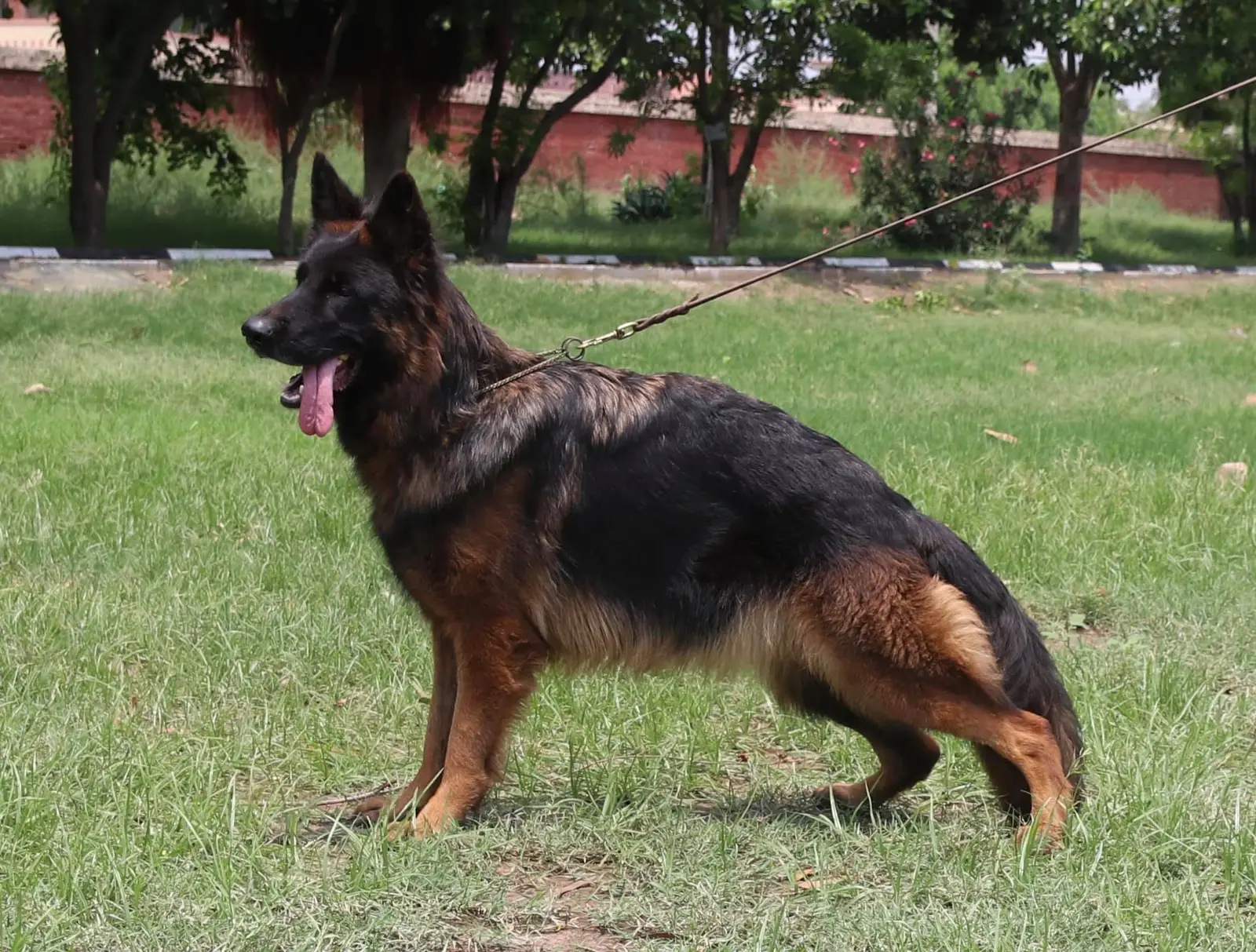
The German Shepherd is one of the easiest dogs to recognise. It has upright ears, a long body and a dark saddle on its back. It was bred to work, and its shape comes from that work.
Where the breed came from
In the 1800s, shepherds in Germany kept their flocks with local sheepdogs. Every region had its own kind. A former cavalry officer named Max von Stephanitz wanted one proper breed made from the best of them.
In April 1899, at a dog show in Karlsruhe, he and Artur Meyer started a club for the breed. It is called the Verein für Deutsche Schäferhunde, or SV. Stephanitz became its first president. The histories say he bought a dog called Hektor Linksrhein at that show and renamed him Horand von Grafrath. Horand became dog number one in the SV studbook, listed as SZ 1.
Stephanitz knew that machines were coming to Germany and that farms would need fewer sheepdogs. So he pushed the breed towards the police and the army.
How the breed changed
The two world wars made the German Shepherd famous. In the First World War, armies on both sides used dogs to carry messages, guard posts and look for wounded soldiers. The German Shepherd was one of the breeds used most. After the war, people in Britain did not want a German name, so they called the breed the Alsatian. The old name came back there only many years later. In the Second World War the United States Army trained thousands of dogs, and by the end of 1944 the German Shepherd was its favourite. Police and army units still use the breed today.
Over the last century the breed also split into two types. Some dogs are bred for the show ring and some for work. A 2020 study in the journal Scientific Reports looked at this. It found that the back of the breed has slowly changed from fairly straight to curved and sloping. The writers of the study think this follows fashion, not what the dog needs for work or health.
The breed standards still ask for a straight, firm back. They also say that hind legs bent too far make a dog less steady and make it tire sooner.
People still argue about this. In the same study, dogs with a more sloping back carried more weight on their front legs and moved their back legs less evenly. None of them was lame, and nobody has shown a link to joint disease. In 2016 the Kennel Club's own health officials spoke out against a very sloping-backed German Shepherd that had won its breed at Crufts. If you are buying, just watch the dog stand and walk. Its back should stay level, and its hocks should not wobble.
The German Shepherd in Pakistan
Here the breed guards homes, lives with families and works with the police. In 2023 the Sindh police said its canine unit had bought German Shepherds, Rottweilers and Belgian Shepherds. The officer called them Alsatians, the old British name that many people in Pakistan still use.
The German Shepherd has a thick double coat, and our summers are hot. Give the dog shade and fresh water, and exercise it only in the cooler hours.
In adverts you will see words like "double coat", "long coat", "stock coat" and "pedigree". Ask the seller what each one means for this dog, and which kennel club gave the papers.
Long coat and stock coat
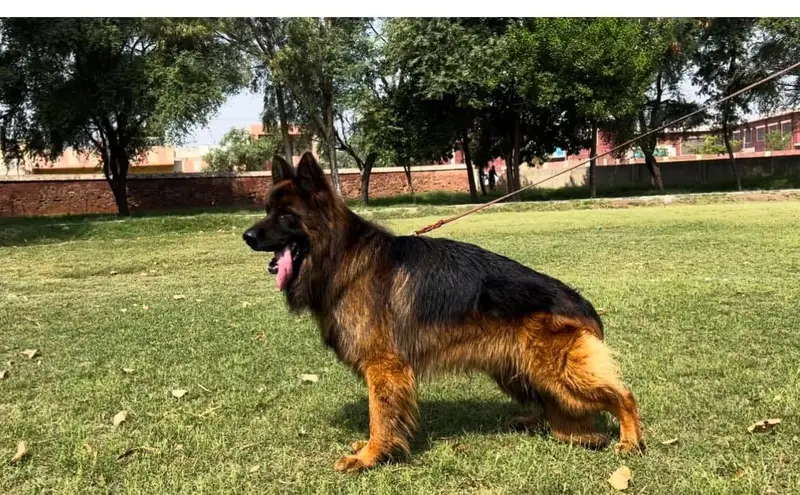
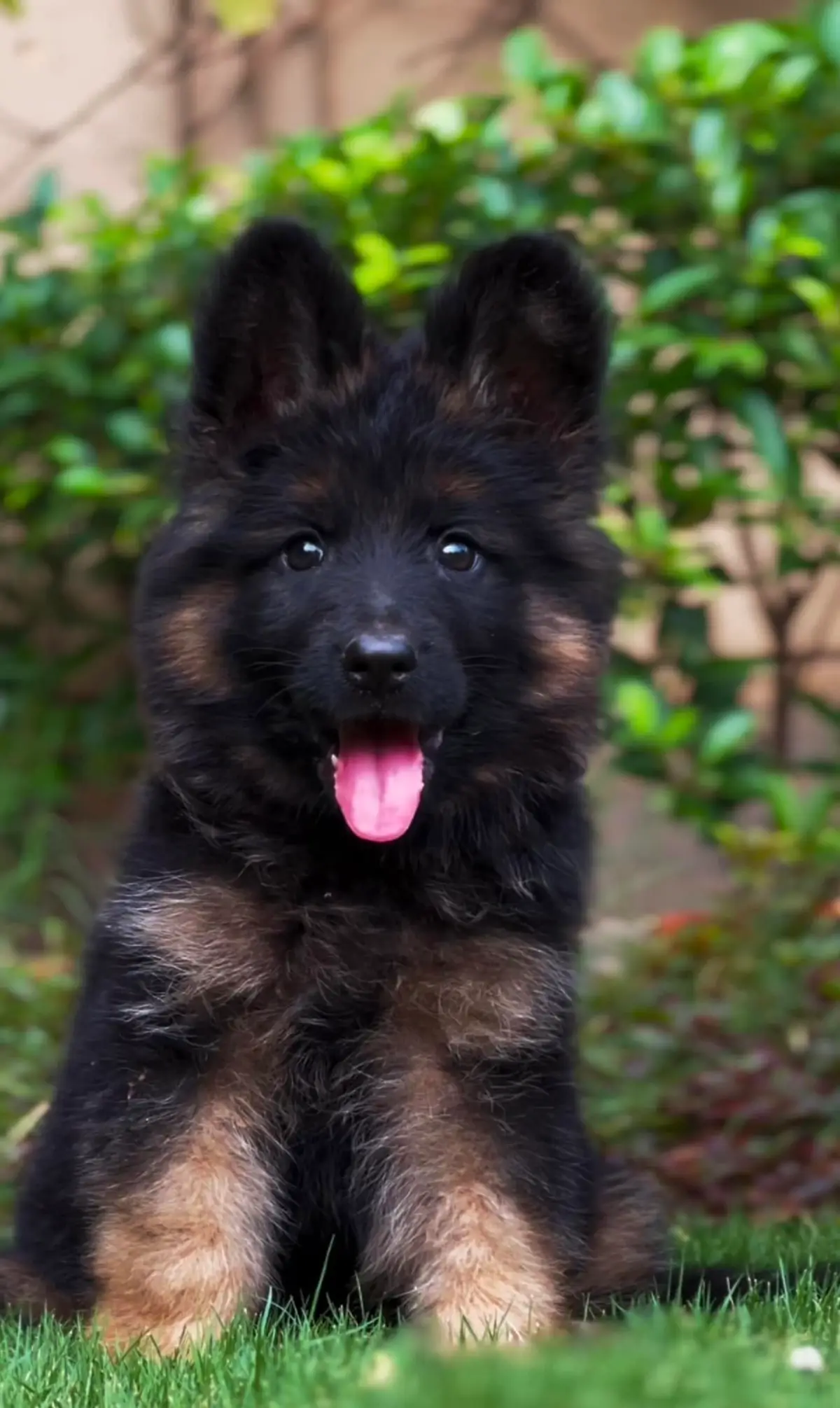
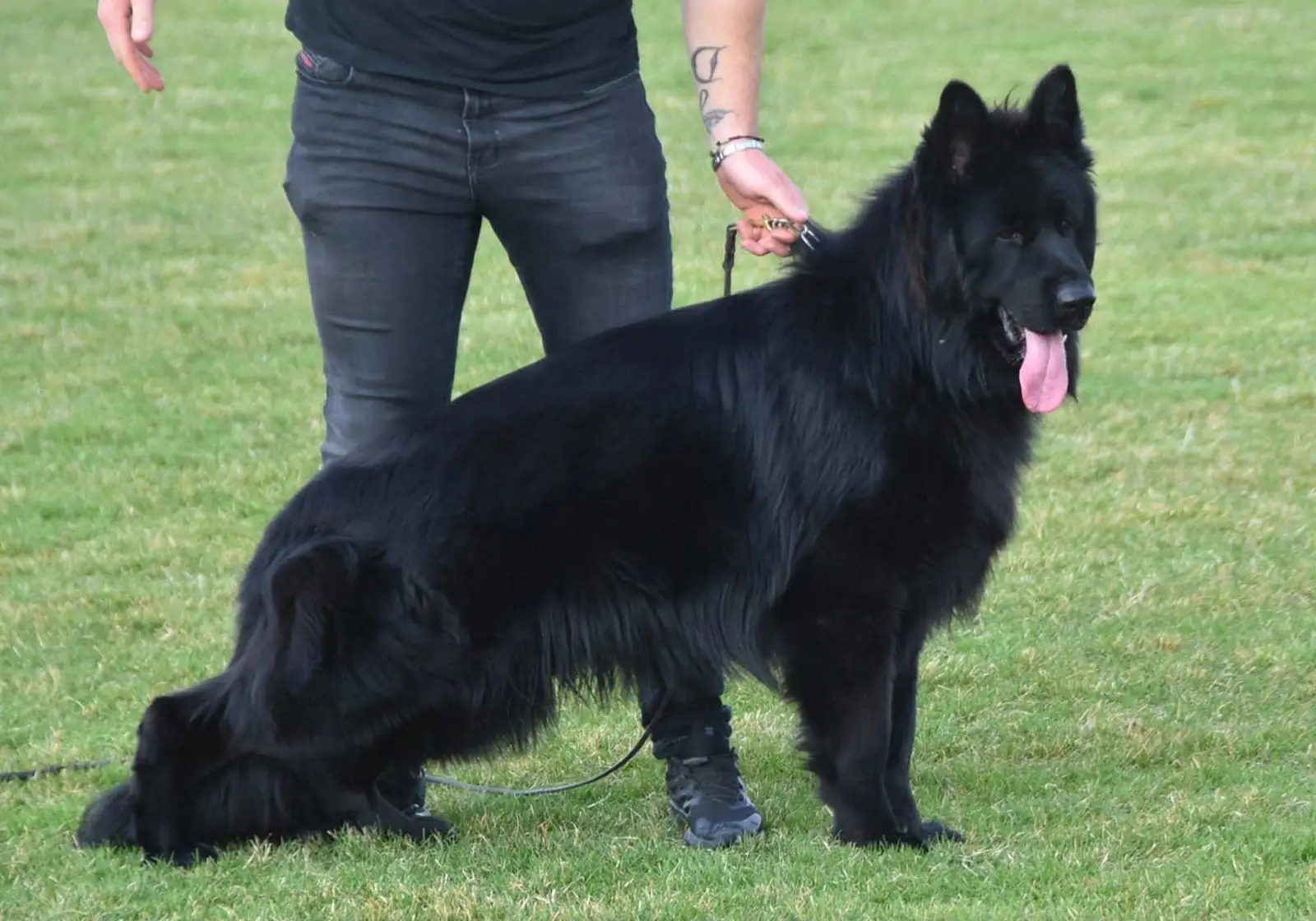
Most German Shepherds have a stock coat. The outer hair is thick and rough and lies close to the body, over a soft undercoat. A long coat is longer and softer and does not lie flat. It gives the dog tufts on the ears, a mane on the neck, feathering on the legs and a bushy tail.
The long coat is passed on by a recessive gene called FGF5. A puppy grows a long coat only if it gets a copy of the gene from each parent. So two normal-coated parents can have a long-coated puppy, if both carry the gene. Two long-coated parents will only have long-coated puppies.

Clubs have not always agreed about the long coat. The FCI standard from 2010 accepts it, as long as the dog has an undercoat. The Kennel Club in Britain added the long coat to its standard in 2015. Before that, it counted as a fault. The American Kennel Club still lists a soft, too-long coat as a fault. Whatever the clubs say, a long-coated German Shepherd is still a German Shepherd.

Both coats shed, and the undercoat comes out in clumps when the dog moults. The long coat tangles more, behind the ears, on the thighs and on the tail. Brush it often, and even more while the dog is shedding. Give the dog shade and fresh water all day, and ask your vet how to look after the coat in hot weather.
The body, part by part
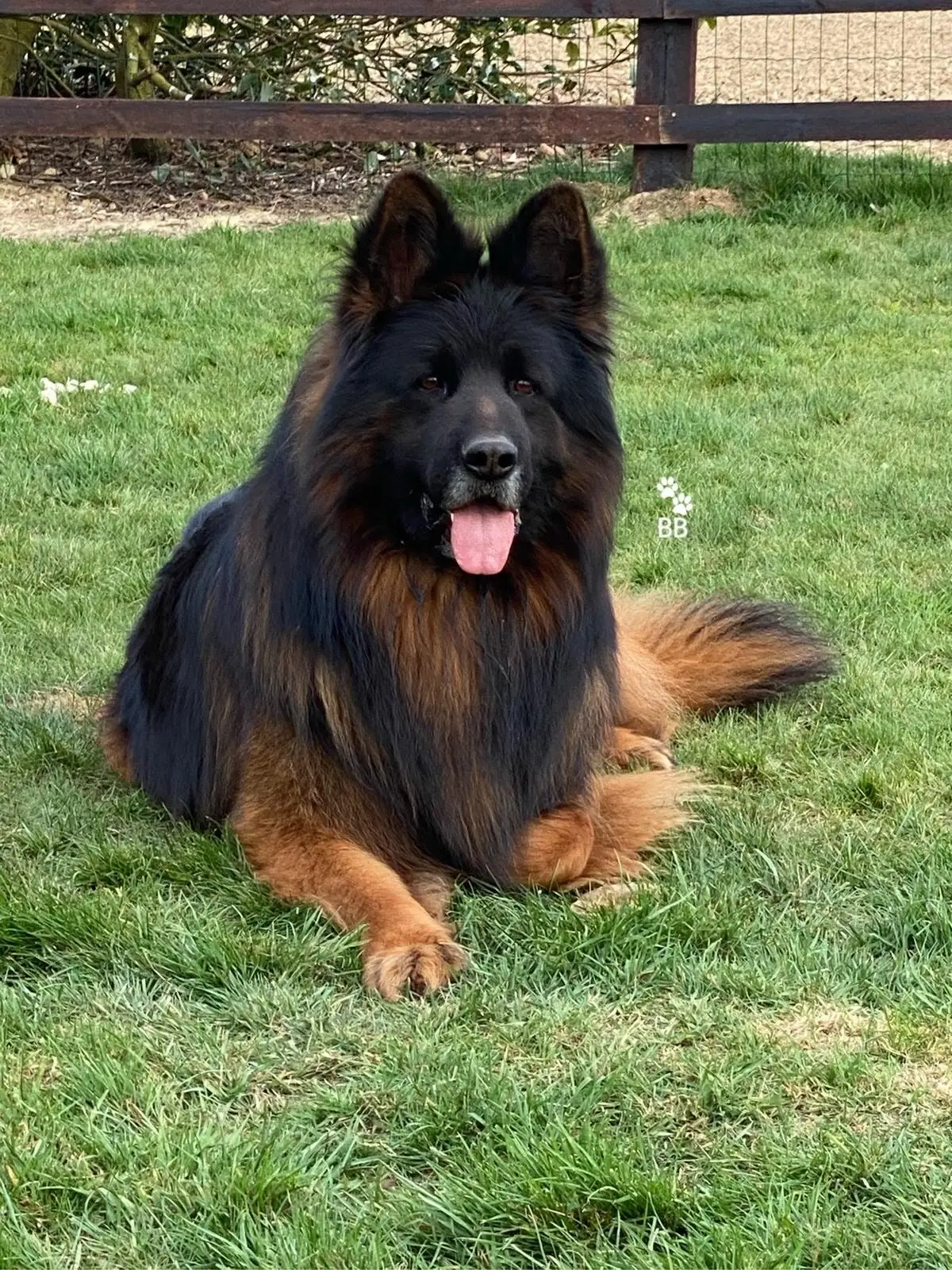
The standard describes a medium-sized dog that is a little longer than it is tall. Males stand 60 to 65 cm at the shoulder and weigh 30 to 40 kg. Females stand 55 to 60 cm and weigh 22 to 32 kg. The photo below has numbers on it. The list after the photo uses the same numbers.
Parts of the German Shepherd

- 1Head
- 2Ears
- 3Neck
- 4Withers
- 5Back (topline)
- 6Croup
- 7Tail
- 8Chest
- 9Forelegs
- 10Hindquarters and hocks
- 1. Head. Shaped like a wedge, and in proportion with the body. The nose is black. The teeth meet like scissors.
- 2. Ears. Medium size, pointed, held upright and facing forward. In an adult, ears that droop or are tipped over are faults. A young puppy's ears may not stand yet.
- 3. Neck. Strong and muscular, with no loose skin under the throat.
- 4. Withers. The top of the shoulders. Height is measured here.
- 5. Back (topline). Straight, firm and well muscled. There is no dip and no hump between the withers and the croup.
- 6. Croup. The rump. It is long and slopes only a little, and it flows into the tail.
- 7. Tail. Long enough to reach at least the hock. It hangs in a gentle curve and lifts when the dog is excited or moving, but never above the line of the back.
- 8. Chest. Moderately broad and deep. The ribs are neither flat nor barrel-shaped.
- 9. Forelegs. Straight from every side, and parallel when seen from the front. The elbows do not turn in or out.
- 10. Hindquarters and hocks. Strong, well-muscled thighs. The hocks are firm, and the bone below them stands upright. Hind legs bent too far make the dog less steady.

The German Shepherd is a trotter. The standard describes a long, flat stride that covers a lot of ground, while the back stays firm and level. So do not only look at the dog standing. Watch it move. A dog can look great in a show pose and still move badly.

Colours and markings
The standard allows black with reddish-brown, brown, yellow or light-grey markings. That is the familiar black and tan, and the richer red and black. Solid black is allowed too, and so is grey with darker shading, which breeders call sable. A mostly black dog with tan only on the legs and face is called a bicolour. Whatever the colour of the coat, the nose must be black.

White is not allowed. The FCI standard lists white hair as a disqualifying fault, and the American Kennel Club disqualifies white dogs from the show ring. The FCI treats white shepherd dogs as a separate breed, the White Swiss Shepherd Dog. The American Kennel Club also calls blue and liver serious faults. So when an advert says a colour is "rare", it may just be a sales word.

Health checks before you buy
Hip and elbow dysplasia are the best-known problems of the breed. The joint forms badly and wears out early. Vets screen for it with X-rays. The SV requires X-rays before breeding and does not allow dogs with medium or severe dysplasia to be bred. A 2020 Kennel Club study found that hip and elbow results in screened breeds, the German Shepherd among them, have got better over time. Ask to see the parents' X-ray certificates. Do not accept just "they are clear".
Degenerative myelopathy is a disease of the spinal cord that slowly gets worse. It usually shows in older dogs. First the back legs get weak and wobbly. A DNA test for a change in the SOD1 gene sorts dogs into clear, carrier and at risk. An at-risk dog will not always fall ill, but a breeder who tests can avoid breeding at-risk puppies.
Bloat is a sudden emergency. The stomach fills with gas and can twist. Vets call it GDV. Large dogs with deep chests get it most, and veterinary schools list the German Shepherd as a higher-risk breed. Watch for trying to vomit with nothing coming up, a swollen and painful belly, drooling, restlessness and weakness. Go to a vet at once. Two or more small meals a day, and rest after eating, are the usual advice.
The puppy should also come with a vaccination record signed by a vet.
Finding one on Pets Bazar
Prices depend a lot on age, pedigree, training and coat. A trained adult, or a puppy from screened parents, costs much more than a dog with no papers. Where the site has enough listings, the price band below shows what sellers are asking now.
Meet the dog before you pay anything, and see the parents if you can. Watch the dog stand and walk. Ask for the health papers above. Never send an advance payment for a puppy you have not seen. Our guide to buying a pet safely in Pakistan covers payments.
Browse all German Shepherds for sale on Pets Bazar, or find a vet clinic near you for a health check after you buy.