The Desi Horse of Pakistan: History, Marwari and Daily Care
What a desi horse is, where it came from, how it compares with the Marwari and the horses of Indian Punjab, and how to look after one.
By Pets Bazar Editorial Team, Editors · Published · Updated · 10 min read
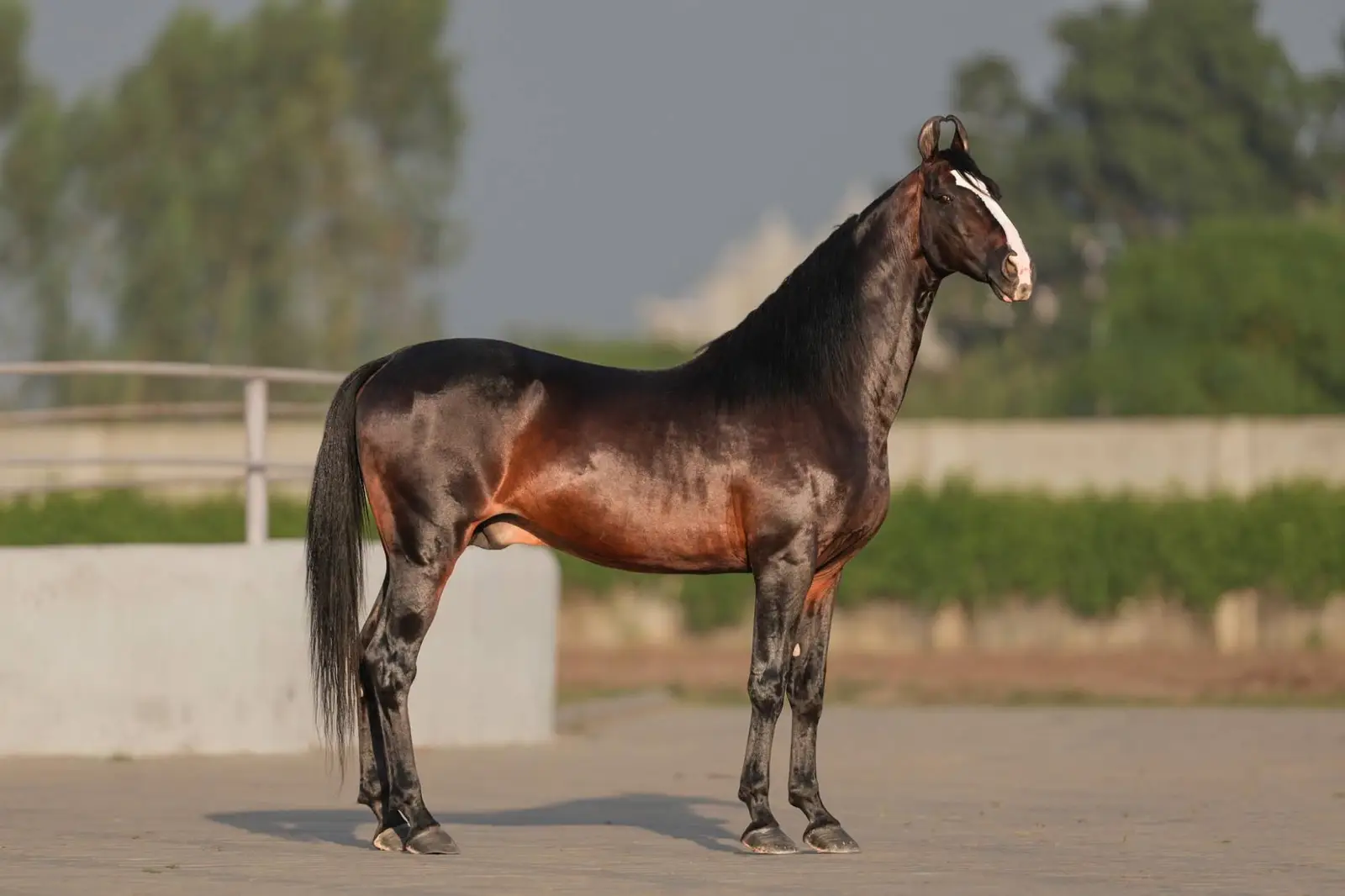
Ask ten horse owners in Punjab what a desi horse is, and you may hear ten answers. The word just means local. In the horse trade it means a horse bred in Pakistan from local stock, not an imported breed like the Arabian or the Thoroughbred.
What "desi" means
"Desi" is not a registered breed. It has no stud book and no breed standard. It means a locally bred horse, usually of mixed and partly unknown ancestry. How it looks depends on where it was bred.
A few local types do have names. The Balochi horse of Balochistan has ear tips that turn inward, like the Kathiawari horse of Gujarat. It is fairly small, about 14 hands (around 142 cm) on average, and it has been used for riding, light work and pulling tangas. The Hirzai is a rarer horse from the same province, usually grey. It is said to come from crossing Balochi horses with Arabs. Pakistan reported both to the Food and Agriculture Organization (FAO), which listed the Hirzai as endangered in 2007.
In Punjab and Sindh, most horses sold as desi are village-bred. For over a hundred years, local mares have been bred to Arab, Thoroughbred and other stallions, through army and government schemes and through the owners' own choice. Two desi horses from neighbouring districts can differ in height, build and temperament. So judge the horse you are looking at, not the label.

A short history
Horses have lived in the Indus region for a very long time. Breed histories say Turkoman-type horses came with the Mughals in the 1500s, and that Arab and Central Asian horses mixed with local stock in the centuries after.
Under British rule, the army needed remounts (replacement horses for the cavalry) and mules. When the canal colonies of western Punjab were laid out from the late 1800s, some land grants came with a condition to breed horses. In the Jhelum colony, for example, grantees had to keep mares and breed from them for the army. The Mona depot near Mandi Bahauddin was set up in 1902. The Pakistan Army still runs it, and it breeds Arabian horses and mules. With all this crossing, it is no surprise that Arab and Thoroughbred blood runs through many Punjabi village horses.
Tent pegging came from the same cavalry tradition. The rider gallops at a small wooden peg and tries to lift it off the ground with a lance or sword. Nobody agrees where it began. The international horse sport federation (FEI) traces it to cavalry in the Indian subcontinent in the Middle Ages, and it became an FEI discipline in 2004. In Pakistan it is called neza bazi. People play it in Punjab, Khyber Pakhtunkhwa and parts of Sindh and Balochistan, and it is often called the most popular horse sport in rural Punjab.
Horses also pulled tangas and carts, carried loads to market and took families to weddings. Tractors and motorbikes have taken over much of that work, but not all of it.
The Marwari of Rajasthan
The Marwari comes from Rajasthan in north-west India, and takes its name from the Marwar region around Jodhpur. It is a Rajasthani breed, not a Punjabi one, and it is not native to Pakistan. The Rathore rulers of Marwar bred it for centuries and rode it as a cavalry horse.
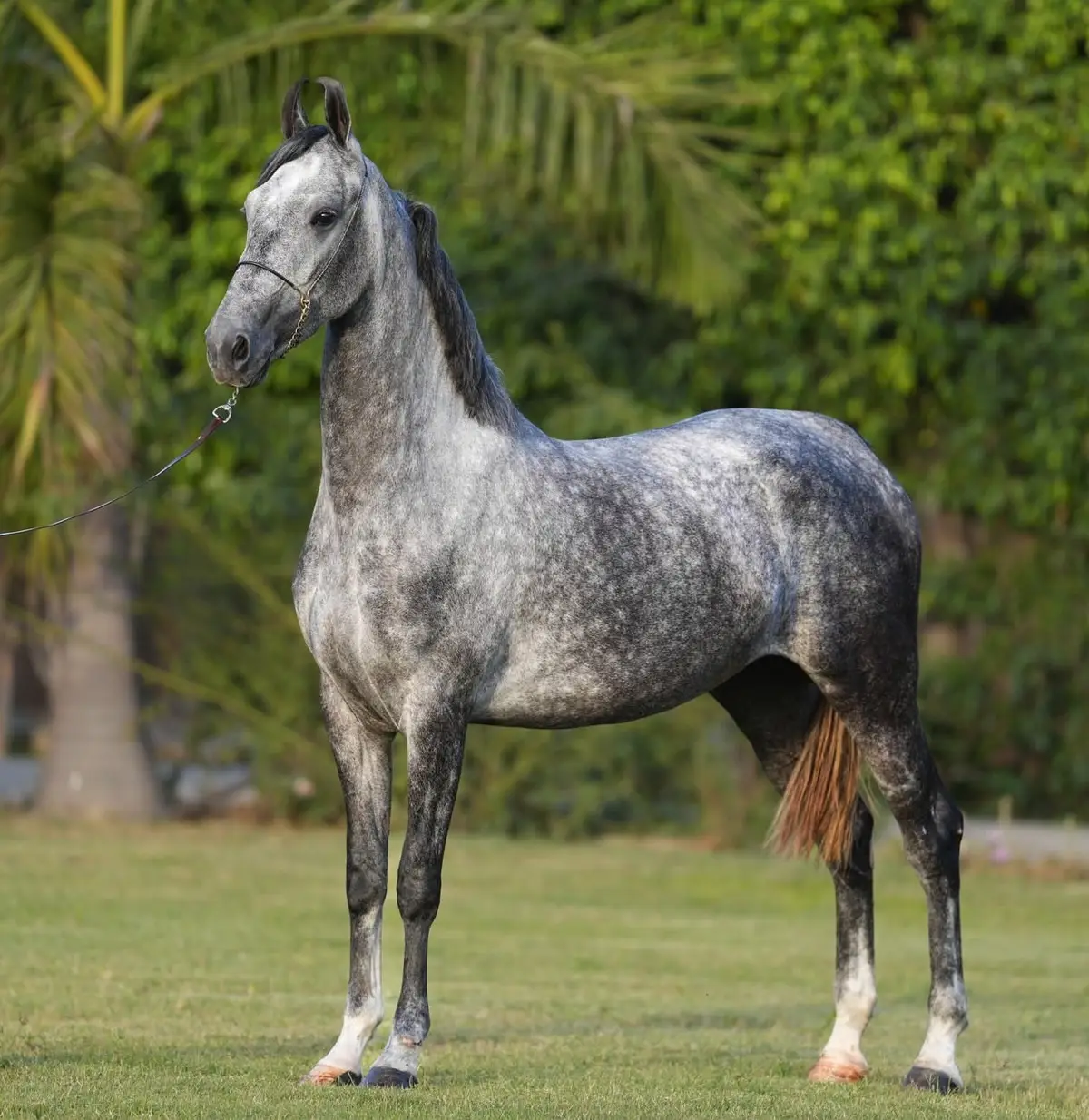
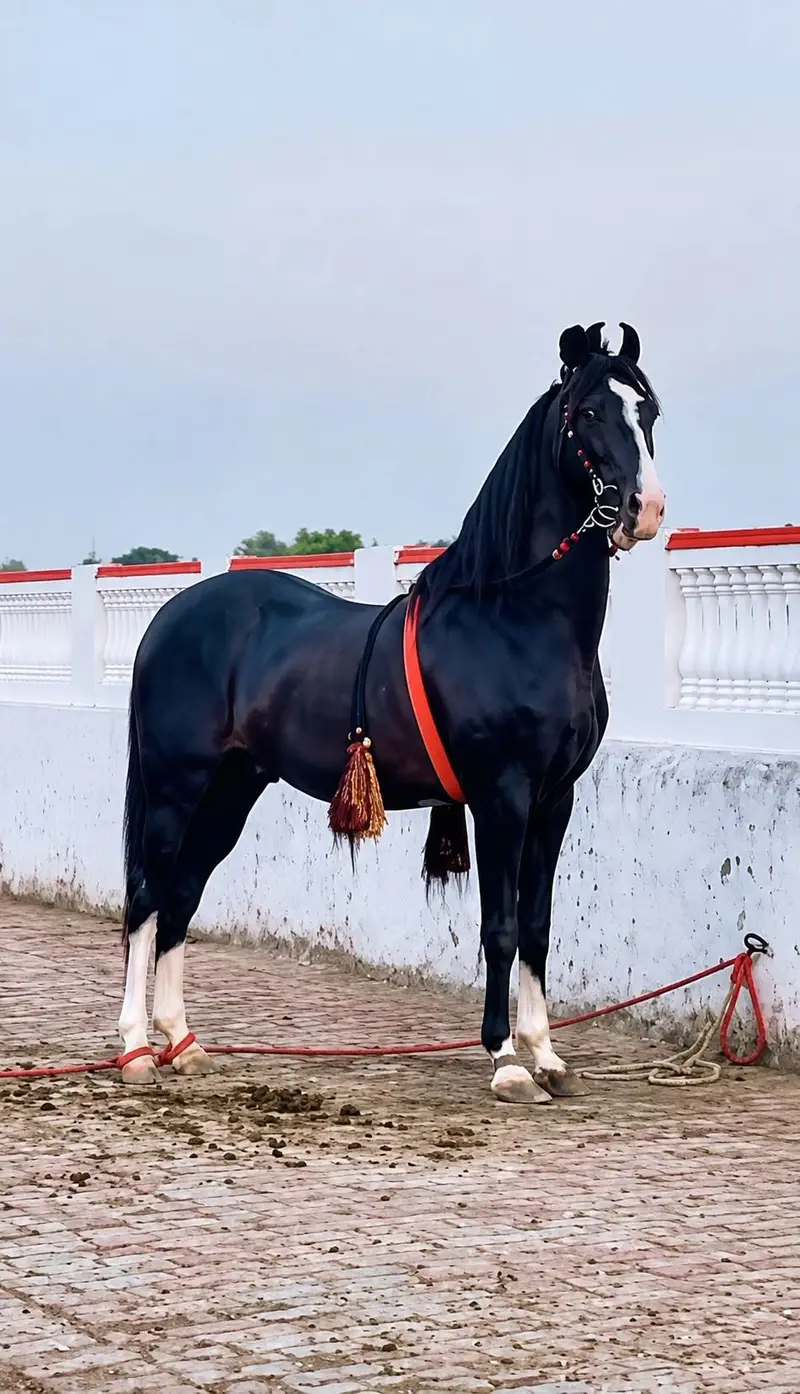
Its best-known feature is the ears. The tips curve inward and can touch, or almost touch, above the poll. The horse can also turn its ears in a wide arc. The Kathiawari of Gujarat has the same ears, and so does Pakistan's Balochi horse. So curved ears alone do not prove that a horse is a Marwari.

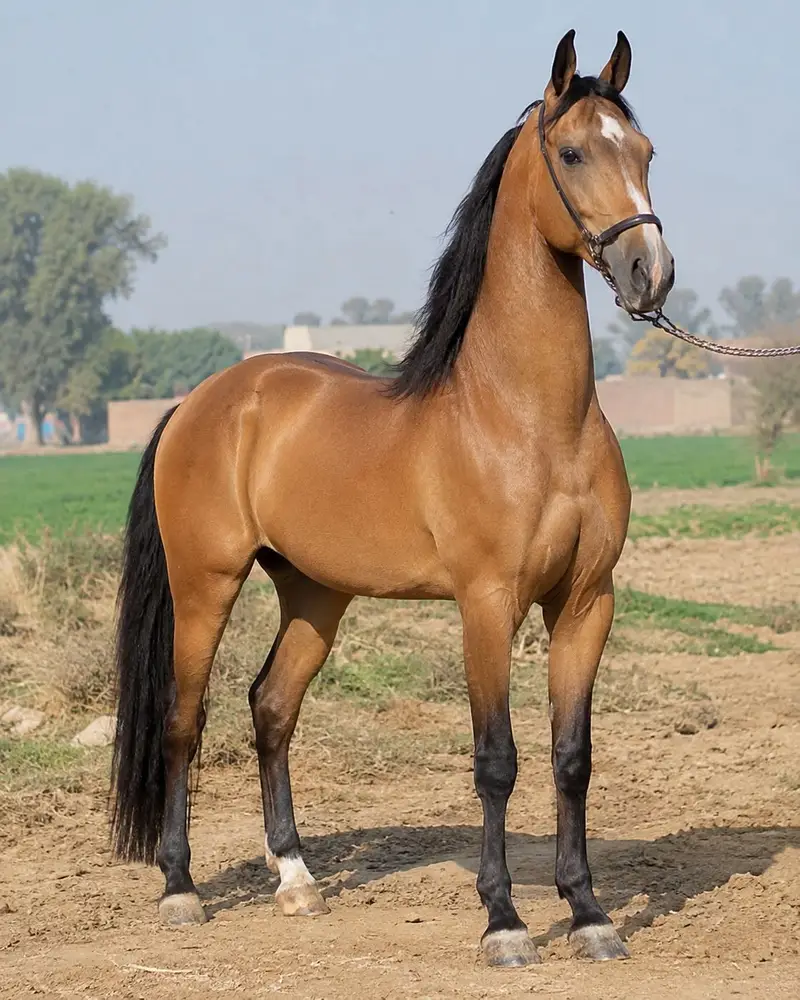
Stallions average about 150 cm and mares about 140 cm. The neck is arched and carried high, the withers stand out, the chest is deep and the legs are slender. The coat can be any colour. Bay is common. Grey horses are seen as lucky, and they are usually the most valued. The breed is described as hardy and easy to keep. Many Marwaris have a natural ambling gait called revaal. They are often described as spirited and sometimes unpredictable, so they suit an experienced handler better than a first-time owner.
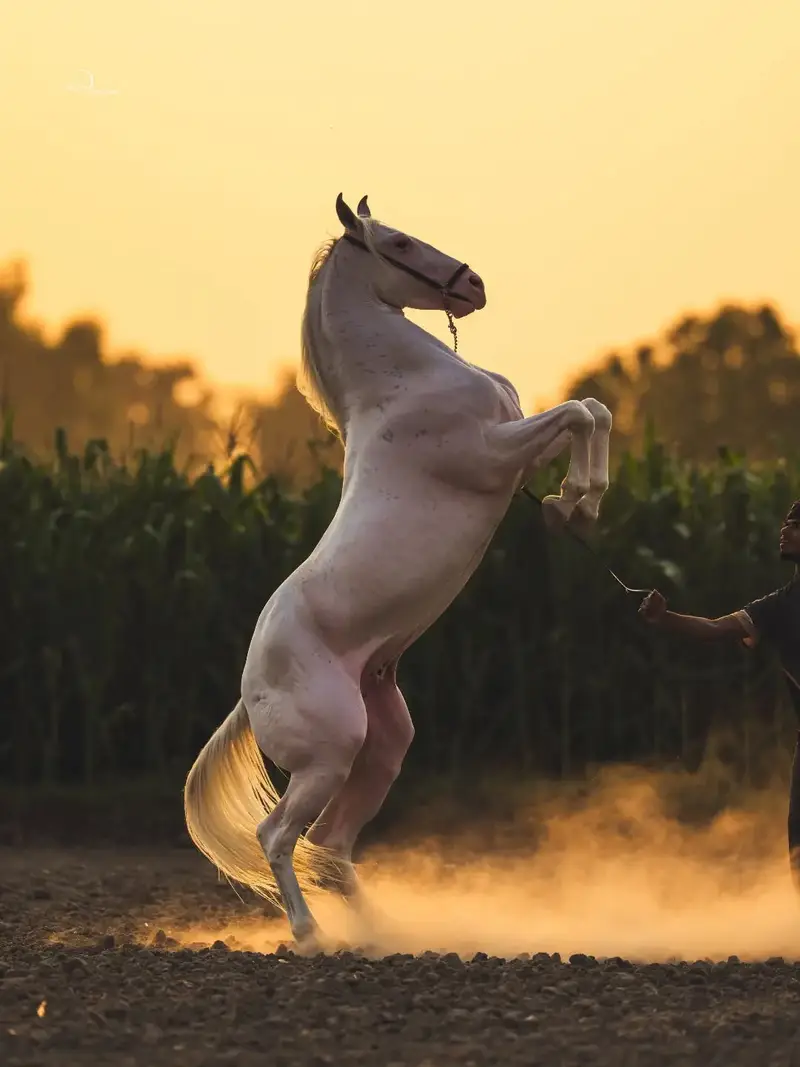
In Rajasthan the Marwari is ridden, shown and used at ceremonies and weddings. Horses trained to prance and "dance" at ceremonies are still in demand in rural India.
India banned the export of its native horse breeds in 1952. Since 2008 it has given licences mostly for temporary exports, such as for exhibitions. So a horse advertised in Pakistan as a Marwari is most likely bred here from Marwari-type stock, and its pedigree usually cannot be checked against the Indian breed register. Ask each seller what they know about the horse's parents.
Horses of Indian Punjab
Punjab was divided in 1947, and its horse culture was divided with it. On the Indian side, horses are bought and sold at fairs, such as the horse market at Sri Muktsar Sahib during the Maghi Mela every January, and they are shown at livestock fairs across the state. Reports from these fairs name the Marwari and the Nukra among the prized horses. A rural sports festival at Kila Raipur near Ludhiana, held since the 1930s, has included horse races and trick riding.
"Nukra" means a pale coat, cream or nearly white, which is prized in Marwari-type horses. Nukra horses have won top prizes at Punjab livestock fairs. Authorities in Indian Punjab have sometimes closed horse markets because of glanders, a serious bacterial disease. It can infect people, and it cannot be treated in horses. When horses travel between markets, disease travels with them.
Before 1947 the horses of both Punjabs came from one pool. Today the breeders on each side mostly work apart. Marwari-type horses are prominent at Indian Punjab fairs. In Pakistani Punjab, decades of Arab and Thoroughbred crossing have left a bigger mark on village horses. Horses with curved ears are bred and admired on both sides of the border.
Compared side by side
These are general tendencies, not rules. Horses vary, and a well-handled horse of any type can be a better buy than a badly handled one with a famous name.
- Size. Desi horses vary a lot; the Balochi type averages about 142 cm. Marwari stallions average about 150 cm and mares about 140 cm. Indian Punjab horses vary, and many are Marwari type.
- Build. Desi: light to medium, often with Arab or Thoroughbred blood. Marwari: an arched, high neck, a deep chest and slender legs. Indian Punjab: often like the Marwari.
- Ears. Desi: varied; curved in Balochi and Marwari-type horses. Marwari: the tips curve inward and may touch. Indian Punjab: often curved.
- Temperament. Desi: mostly depends on handling. Marwari: spirited, sometimes unpredictable. Indian Punjab: depends on type and handling.
- Stamina. Desi: depends on breeding and fitness. Marwari: described as hardy and easy to keep. Indian Punjab: varies.
- Typical uses. Desi: tent pegging, farm and cart work, weddings, breeding. Marwari: riding, ceremonies, weddings, shows. Indian Punjab: fairs, shows, ceremonies, riding.

What each horse is used for
Tent pegging needs speed, a straight steady line and a horse that does not shy at the lance or the crowd. Riders look for courage and quick response more than pedigree. A local horse with the right temperament and training can do very well.
Farm and cart work needs a calm, sound horse with good feet and a strong back. Size matters less than steadiness and good hooves. Many hard-working desi horses are small.
Weddings and ceremonies need a horse with presence: an upright neck, a striking coat and calm nerves in noise and crowds. These horses often wear decorated tack. This is where Marwari-type horses with curved ears are most wanted.
Organised racing in Pakistan is mainly for Thoroughbreds. Village races and fairs are open to every kind of horse. If you want a horse for breeding, look first at soundness, temperament and feet. Looks and ear shape can come after.
Daily care
Water comes first. A horse needs clean, fresh water at all times, and it drinks much more in summer. Check the troughs a few times a day and keep them in shade.
Most of the feed should be forage: grazing, green fodder or good dry fodder, given little and often. Give grain only to horses in hard work, and raise the amount slowly. Keep salt where the horse can reach it, ideally near the water, because it helps the horse keep drinking in the heat. When you change the feed, do it over a week or two so the gut is not upset.
A farrier should see the hooves every 6 to 8 weeks, shod or not. Working horses on hard roads may need it sooner. Pick out the feet every day. Look for stones, cracks and a bad smell, which can mean thrush.
Groom the horse every day, so you spot cuts, ticks and swellings early. In the hottest months, work the horse early in the morning or in the evening, and give it shade in the middle of the day. Signs of heat stress are fast breathing, a high pulse, weakness, or a horse that does not want to move.
Vaccines, worms and the vet
Ask a local vet to set up a vaccination plan. Every horse should have the tetanus vaccine, because tetanus gets in through wounds and is often fatal. The equine influenza vaccine is advised for horses that go to fairs, shows or races, or live with horses that do. Your vet may add others, depending on the disease risk in your area.
Vets no longer advise worming every horse on a fixed calendar. Instead, they count worm eggs in the dung to see which horses shed the most, and treat those more often. This slows the spread of worms that no longer respond to the dewormer. Get the teeth checked at least once a year. Sharp edges make chewing painful and can cause weight loss and colic.
Colic means pain in the belly, and every owner should know the signs: pawing, looking round at the flank, lying down and getting up again and again, rolling, sweating while resting, and not eating or passing dung. A lame horse nods its head at the trot, takes a shorter stride, or has a hot foot with a strong pulse.
Buying a desi horse on Pets Bazar
Horse prices depend a lot on age, training and bloodline. A proven tent-pegging horse or a striking show horse usually sells for much more than an untrained youngster. Where the site has enough listings, the price band below shows what sellers are asking now.
See the horse in person before you pay anything. Watch it walk and trot on hard, level ground. Look at all four feet. Ask about vaccinations and worming. If you can, have a vet examine the horse before you buy. Our guide to buying a pet safely in Pakistan covers payments.

Browse all desi horses for sale on Pets Bazar, or find a vet clinic near you for a pre-purchase check.