Lovebird Male or Female: How to Tell the Difference
Most love birds look the same as male and female. Which clues help, which are myths, how a DNA test works and what to ask a seller before buying a pair.
By Pets Bazar Editorial Team, Editors · Published · 4 min read
Can you tell a male lovebird from a female? In the species most people keep, not by looking. Peach-faced, Fischer's and masked cocks and hens wear the same colours. Behaviour gives hints, an egg proves a hen, and a DNA test from a few feathers is the only sure answer.
For the species and colour names used here, see our guide to love birds in Pakistan and their colour mutations.
Can you tell a male lovebird from a female by looking
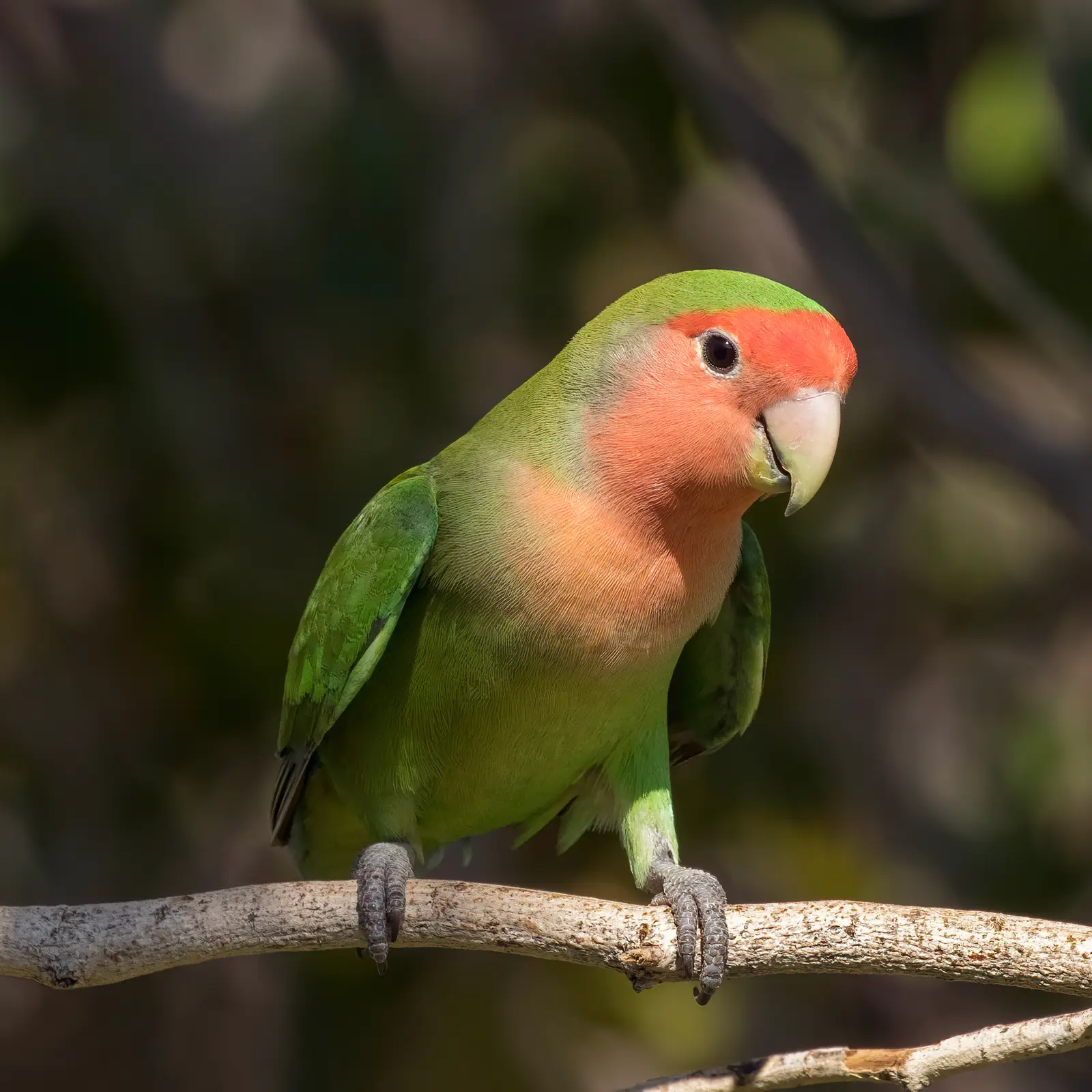
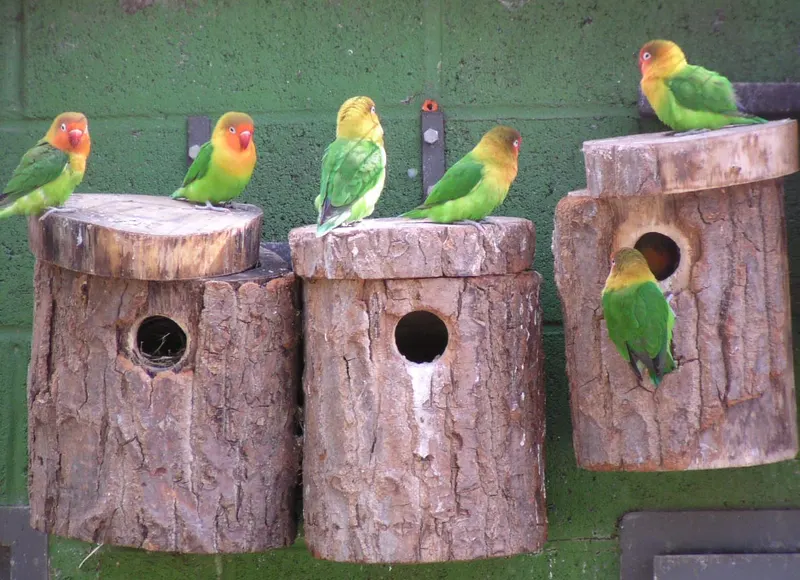
Scientists call these lovebirds monomorphic: both sexes look alike. That covers the peach-faced (also called rosy-faced), Fischer's, masked, black-cheeked and Lilian's lovebirds, which are almost all the lovebirds sold in Pakistan, India and the Gulf.
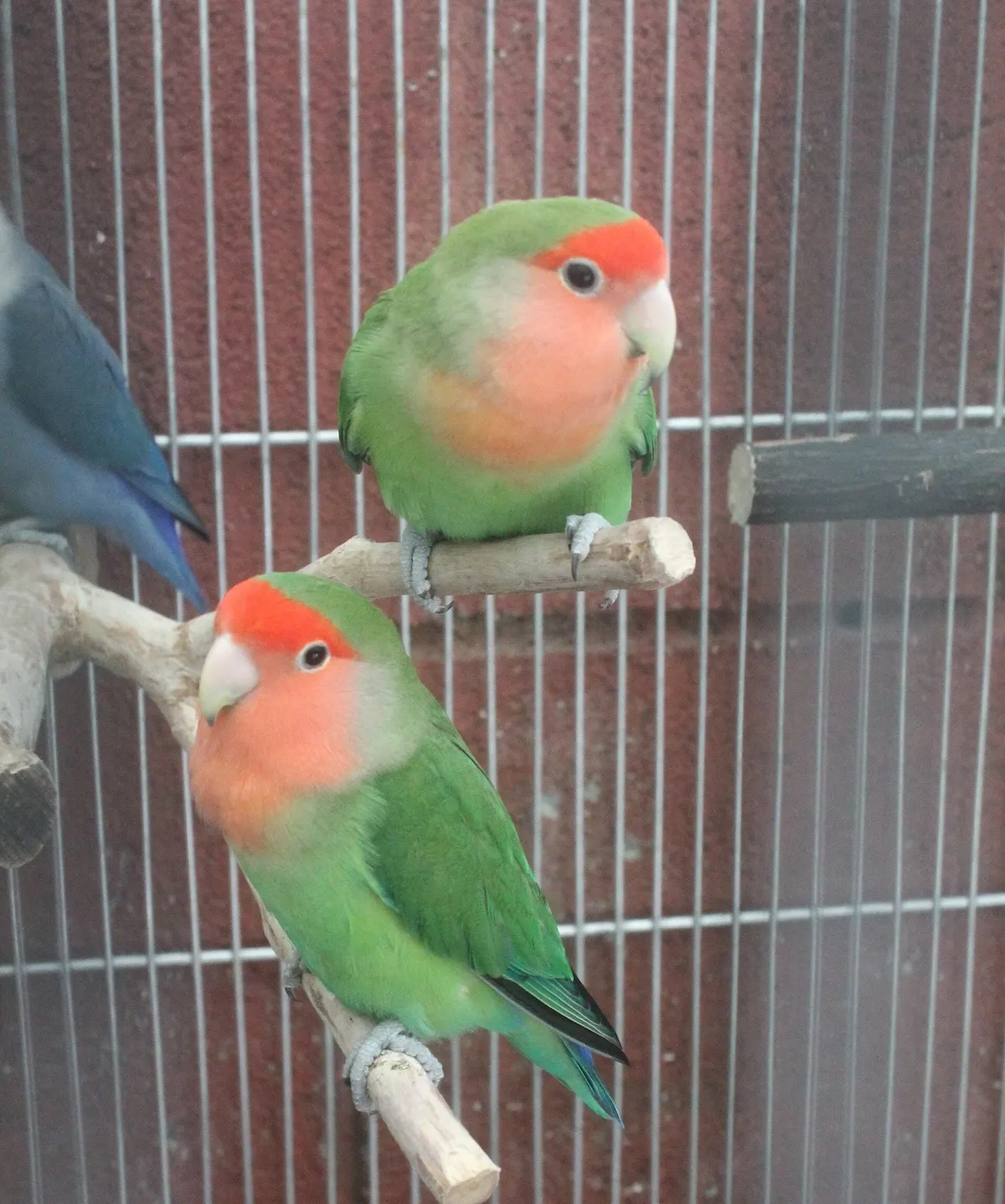
Brighter colour, a bigger body or a flatter head do not reliably mean one sex.
Lovebird species where males and females look different
Three species show the sex in their feathers once they are adult.
- Black-winged (Abyssinian) lovebird. The male has a red forehead and red feathers around the eyes. The female's head is all green.
- Grey-headed (Madagascar) lovebird. The male has a pale grey head and chest. The female is green all over.
- Red-headed (red-faced) lovebird. The male's face is bright red with a sharp edge. The female's face is orange and paler.
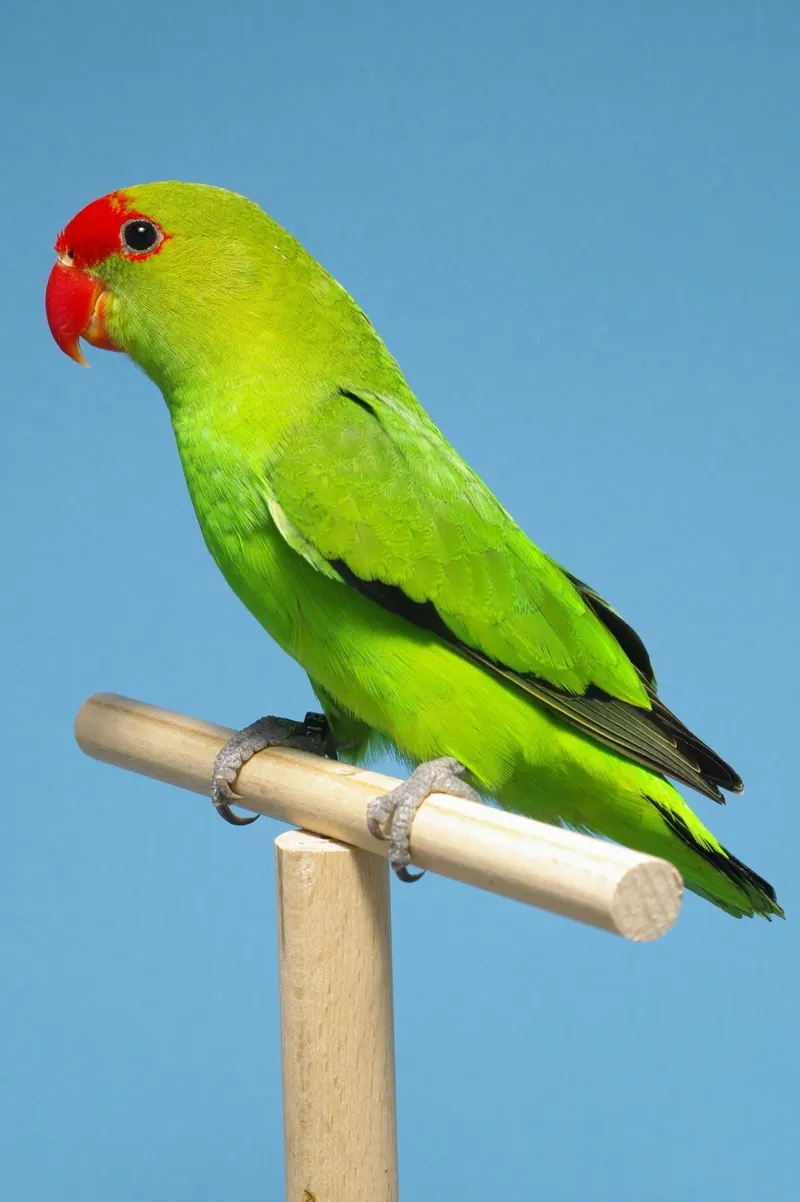
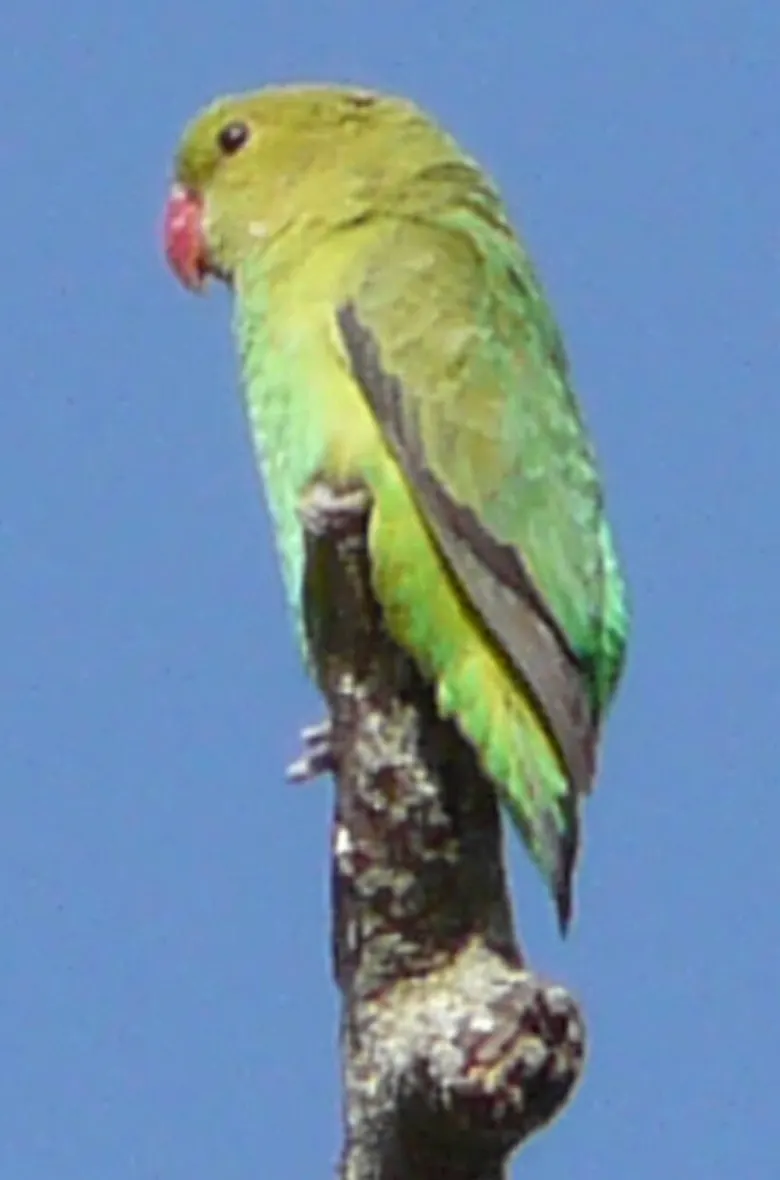
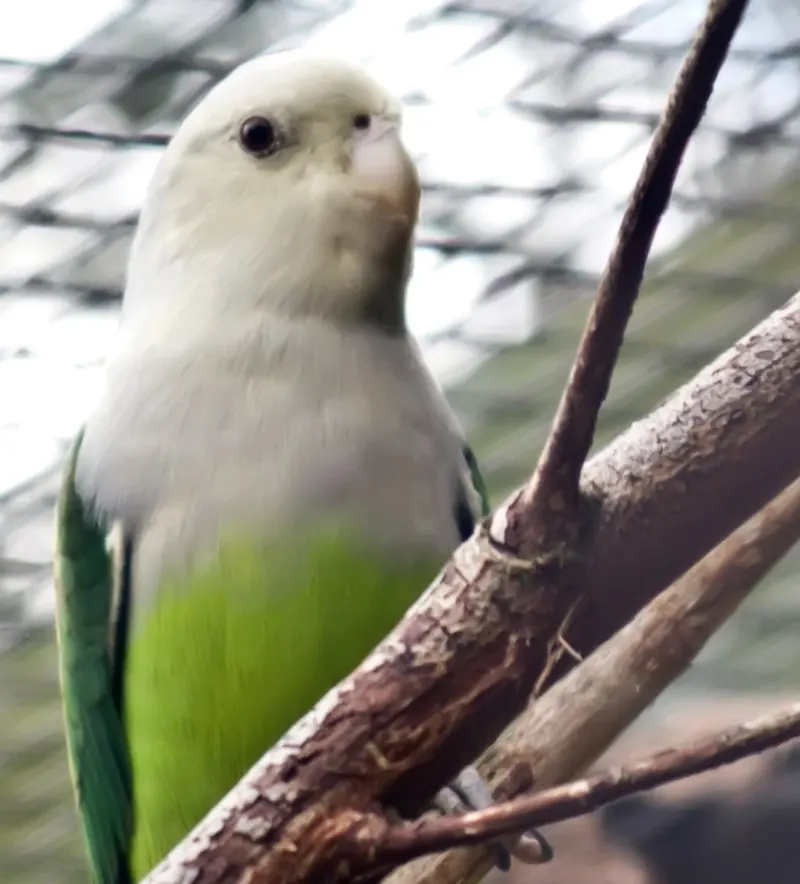
Young birds of all three look like hens until they moult into adult colour, so a green chick is not proof of a hen.
Clues from behaviour and body
These hints help you guess. None is proof on its own.
| Clue | What it suggests | How far to trust it |
|---|---|---|
| Lays an egg | Hen | Proof |
| Tucks paper or leaf strips into the rump feathers | Hen (peach-faced) | Strong hint |
| Wider gap between the two pelvic bones | Hen | Good in a laying hen, weak in young birds |
| Feeds its partner and bobs its head | Cock | Weak, hens do it too |
| Bigger body, flatter head | Hen | Weak, sizes overlap |
| Brighter colour | Either | Useless in peach-faced and Fischer's |
Nest strips. Peach-faced hens tear long strips of paper or leaves and tuck them into the feathers on their back to carry to the nest. Cocks seldom do it. Fischer's and masked lovebirds carry nest material in the beak, so the clue does not work for them.
Pelvic bones. Feel just above the vent. In a hen in breeding condition the two small bones are spread wide. In a cock they sit close together. It takes practice and fails often in young birds.
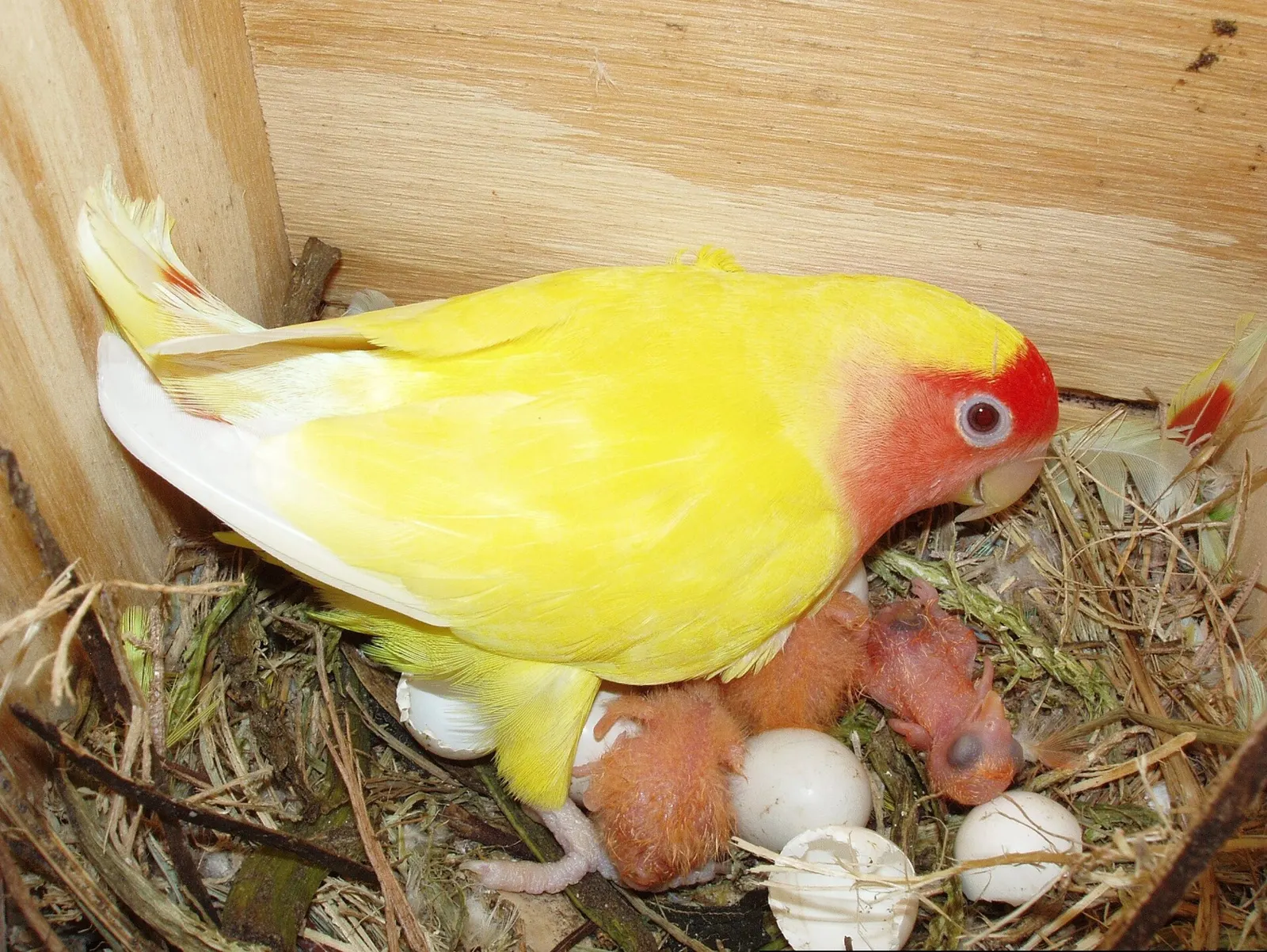
Eggs. A hen can lay with no cock present. One egg proves a hen. A nest with eight or more eggs that never hatch usually means two hens.
DNA sexing: the only sure way
A DNA test reads the sex from the bird's genes. A vet or breeder plucks a few small chest feathers with their roots, or takes a drop of blood from a nail, and sends it to a lab. Results usually take a few days, and the test works at any age.
Ask an avian vet near you or your local bird club where to send samples. The certificate should show the bird's leg ring number.
Telling chicks apart with sex-linked colours
Breeders of peach-faced lovebirds can sex some chicks by colour. Lutino, cinnamon and opaline are sex-linked.
Pair a lutino cock with a normal green hen. Every lutino chick is a hen. Every green chick is a cock, carrying lutino. This only works when the parents' colours are known. In Fischer's and masked lovebirds lutino is not sex-linked, so it does not work for them.
What sellers get wrong
- "The big flat-headed one is the hen." Sizes and head shapes overlap.
- "The bright one is the cock." Not in peach-faced or Fischer's lovebirds.
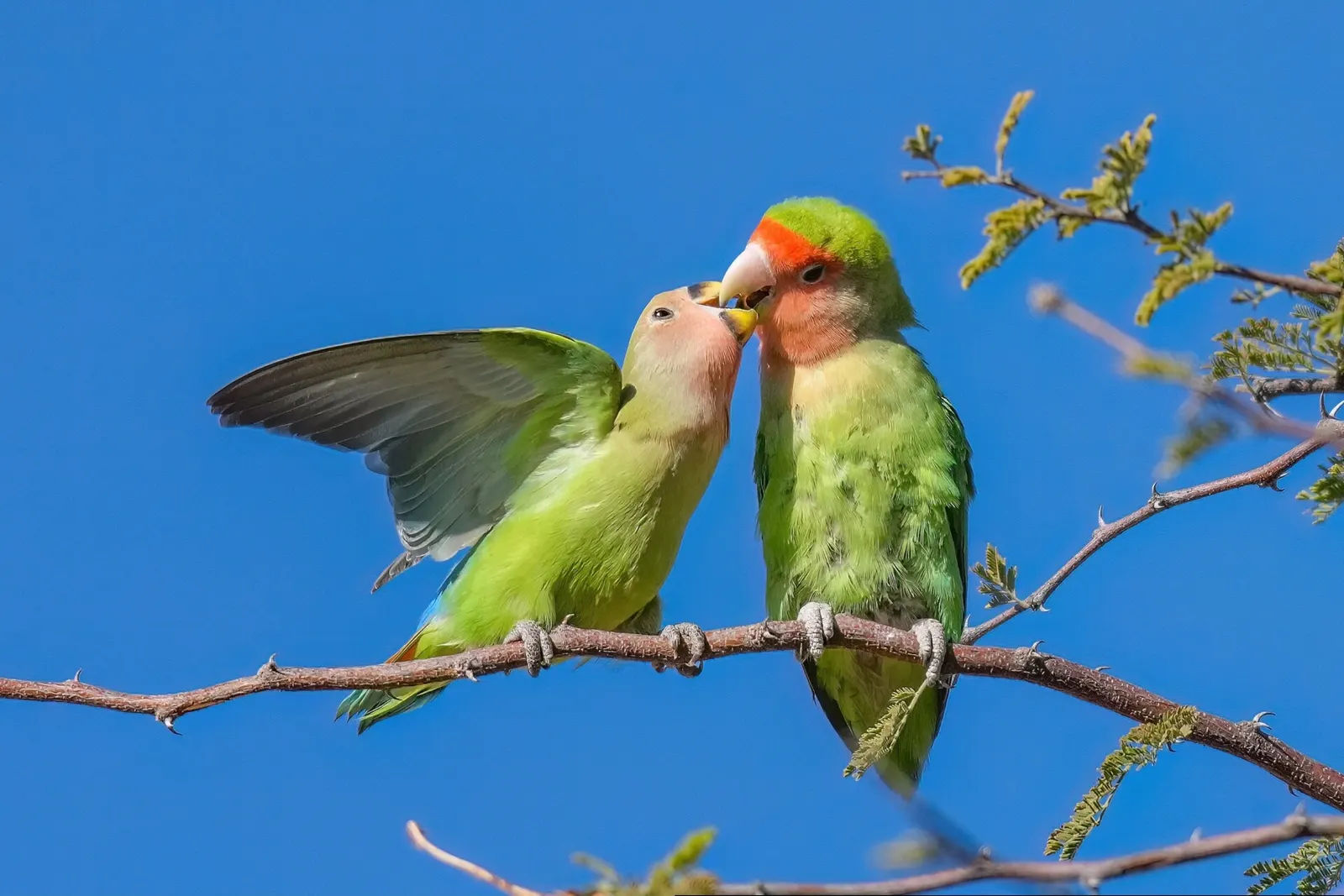
- "They kiss and feed each other, so they are a pair." Two hens or two cocks bond the same way.
- "Proven pair." Without hatched chicks, it proves nothing.
- "DNA tested." Without a certificate that names the ring number, you cannot match it to the bird.
Buying a true pair
Ask for a DNA certificate for each bird, check the ring numbers match, and see the birds before you pay. If you only want one pet, the sex matters less. A single hen may still lay eggs, so give her a calcium source and see a vet if she strains.
Read our guide to buying a pet safely and the love birds breeding season in Pakistan. Browse birds for sale, or post a free ad for your own lovebirds.


References
- Wikipedia, Lovebird, Rosy-faced lovebird and Fischer's lovebird: monomorphic species, nest strips carried in the rump feathers, clutch size.
- Wikipedia, Black-winged lovebird, Grey-headed lovebird and Red-headed lovebird: how the sexes differ.
- Pets Bazar, Love birds in Pakistan: types, colour mutations and care: sex-linked colours in the peach-faced lovebird.
Frequently asked questions
How can I tell if my lovebird is male or female?
In peach-faced, Fischer's and masked lovebirds you cannot tell by looking. Laying an egg proves a hen. Carrying nest strips and a wider gap between the pelvic bones are hints. A DNA test from a few chest feathers or a drop of blood is the only reliable way.
Do male and female lovebirds look different?
In most pet species, no. Cocks and hens of the peach-faced, Fischer's, masked, black-cheeked and Lilian's lovebirds have the same colours. Only the black-winged, grey-headed and red-headed lovebirds differ: the adult male has a red forehead, a grey head or a brighter red face.
Can two female lovebirds lay eggs together?
Yes. Two hens often bond like a pair and both lay in the same nest, so a clutch of eight or more eggs is a common sign. None of the eggs will hatch, because there is no cock.
Does a female lovebird lay eggs without a male?
Yes. A hen can lay eggs with no cock present, much like a chicken. The eggs are not fertile. A single egg in the cage is proof that the bird is a hen.
How is a lovebird DNA test done?
A vet or breeder plucks a few small chest feathers with their roots, or takes a drop of blood from a nail, and sends it to a lab. The lab reads the sex from the bird's DNA, usually within a few days. It works at any age, even on young chicks.
Is a bigger lovebird with a flat head a female?
Not reliably. Hens are often a little heavier and broader, but the sizes overlap a lot and young birds are smaller anyway. Head shape, colour and how a bird sits on the perch are old sellers' rules that fail often.