Lovebirds in Pakistan: Species, Colour Mutations and Care
The lovebirds sold in Pakistan, how their colour mutations pass from parent to chick, what the trade names mean, and how to feed, house and buy them.
By Pets Bazar Editorial Team, Editors · Published · 10 min read
Lovebirds are small, bold parrots and some of the most popular cage birds in Pakistan. Hobby breeders raise them across the country, and they are sold in the bird markets of big cities and online. Much of the interest is in colour, and names like lutino, creamino and split can be confusing. This guide explains the species, how the colours are passed on, and how to keep and buy lovebirds well.
The lovebirds you will see in Pakistan
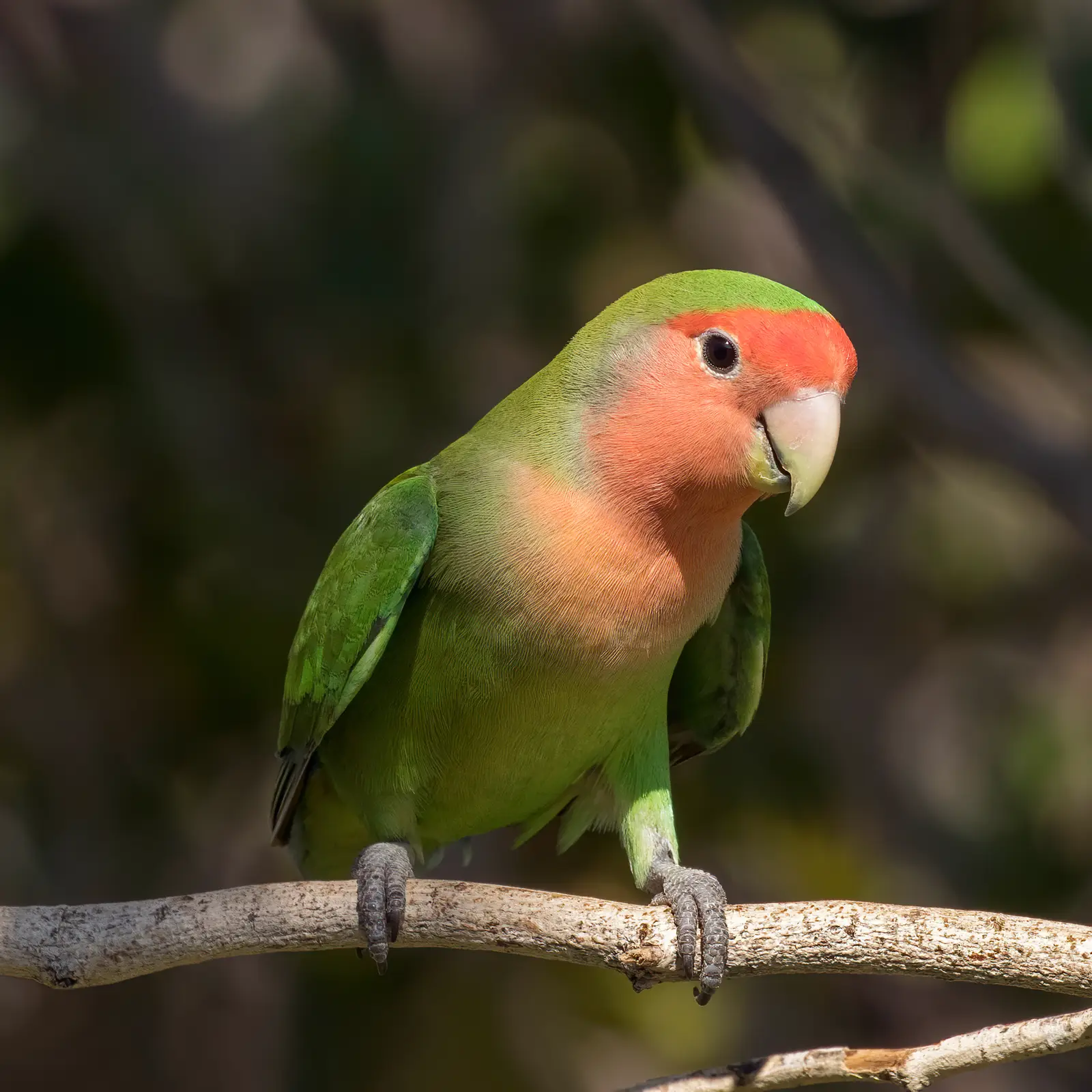
The peach-faced lovebird, also called the rosy-faced lovebird (Agapornis roseicollis), is the most common. In its wild colour it has a green body and a peach face, with no white ring around the eye. This species has more colour mutations than any other lovebird, so most of the colour names you hear belong to it.
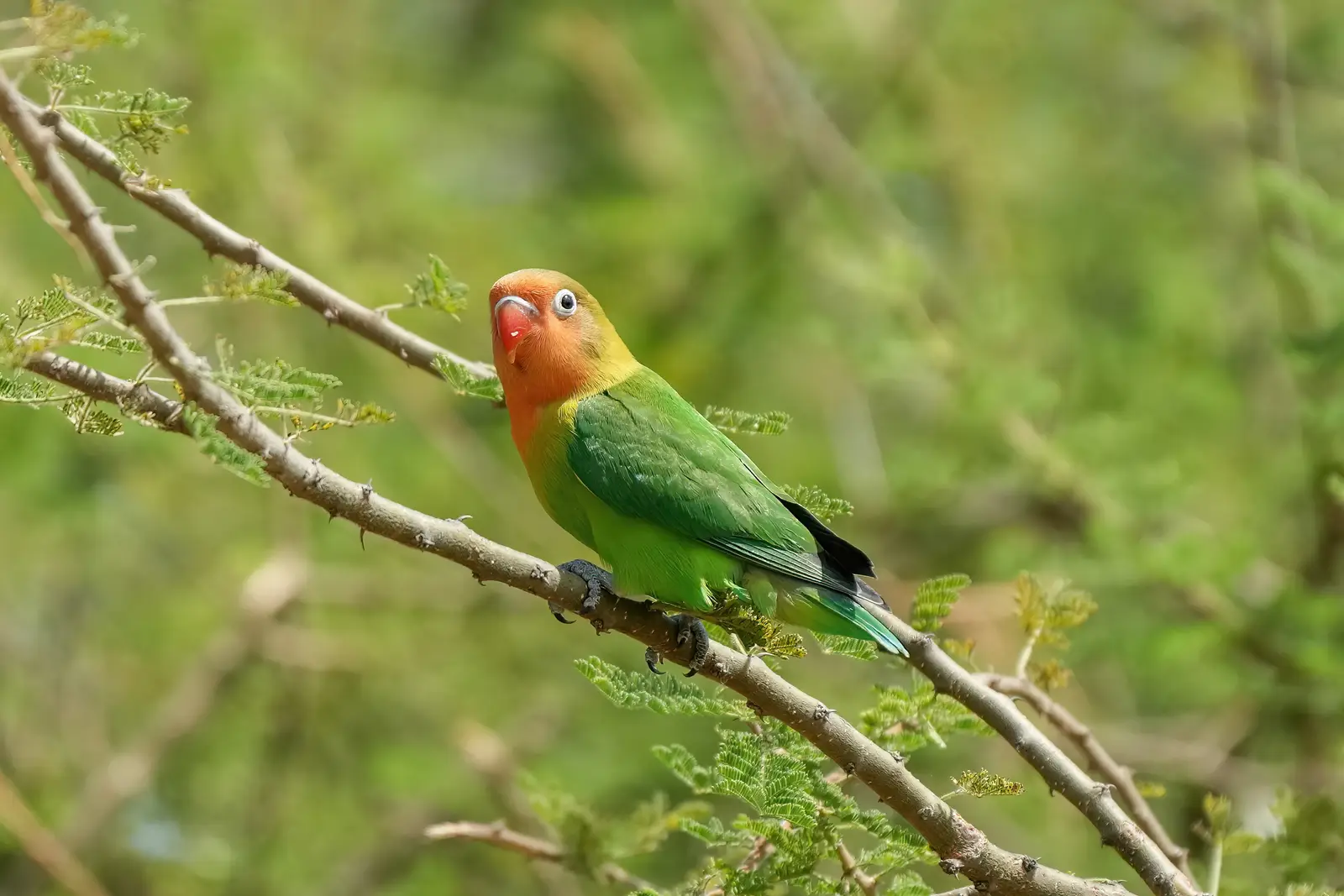
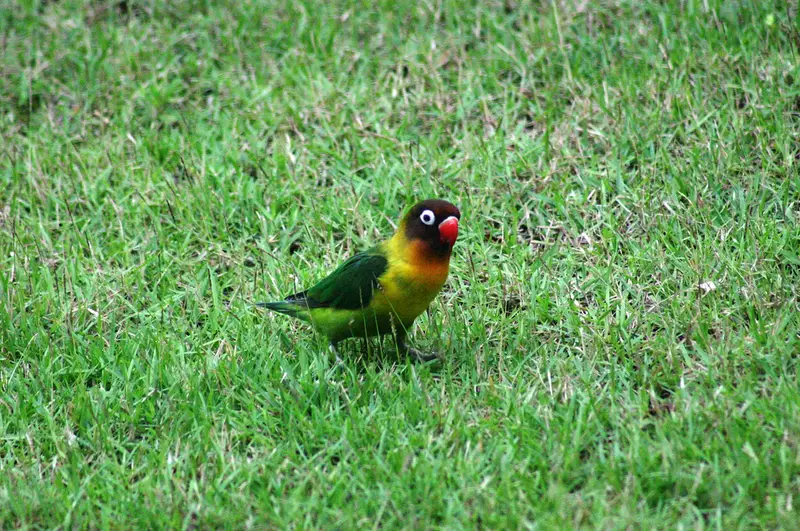
The Fischer's lovebird (Agapornis fischeri) has an orange face and a white ring of bare skin around each eye.
The masked lovebird (Agapornis personatus) is often called "personata" in the local trade. In its wild colour it has a dark head and the same white eye-ring as the Fischer's.
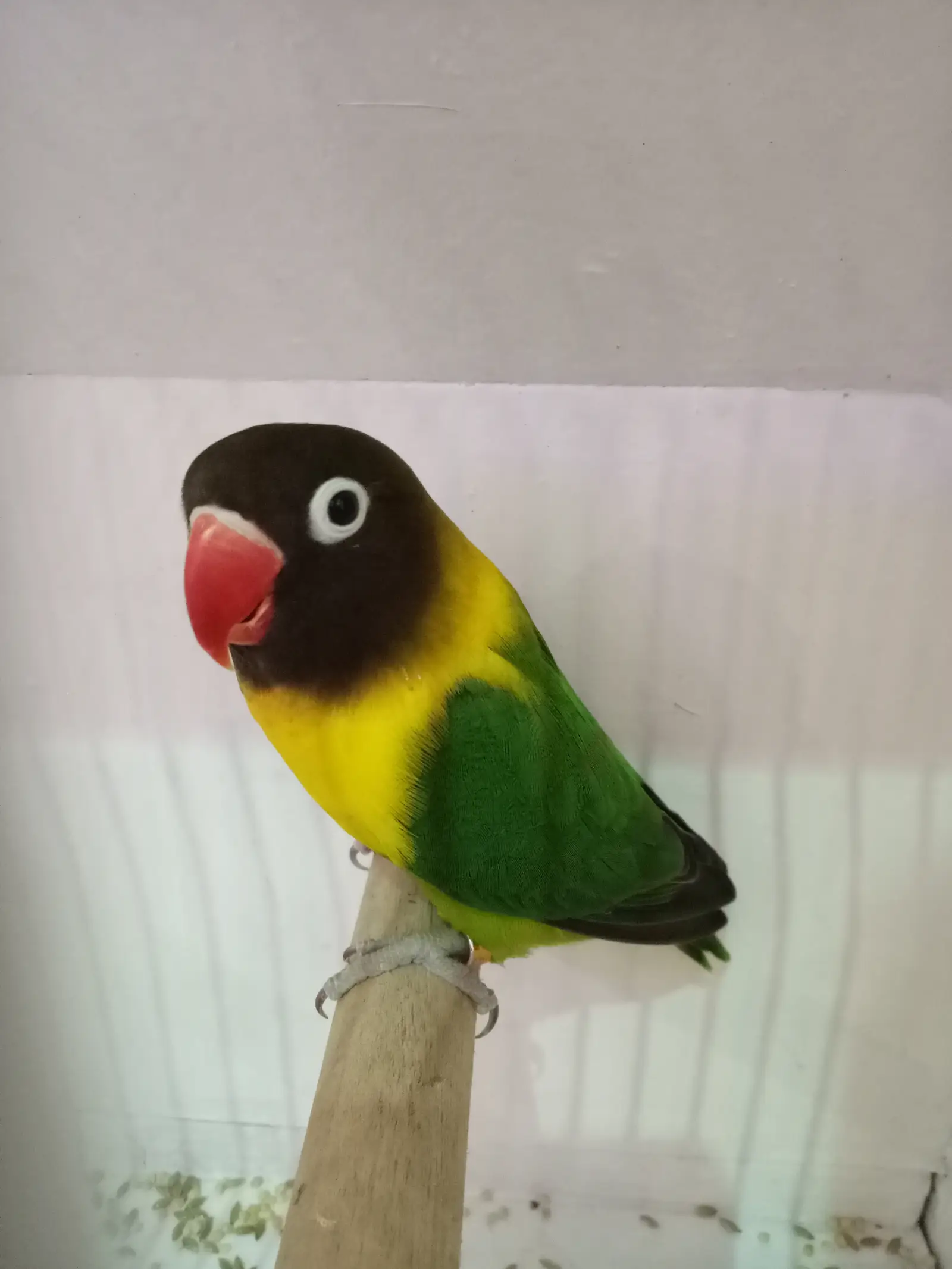
Black-cheeked and Nyasa lovebirds turn up now and then, but they are rare.
The eye-ring is the quickest way to tell the groups apart. No ring means a peach-faced bird. A white ring means a Fischer's, a masked bird, a mix of the two, or one of the rarer species above.
How colour mutations are inherited
A colour mutation is a change in one gene that alters the colour of the feathers. A bird has two copies of most genes, one from each parent, and how a mutation shows depends on its type.
- Dominant. One copy is enough for the colour to show.
- Recessive. The bird needs two copies for the colour to show. A bird with only one copy looks normal.
- Sex-linked. The gene sits on a sex chromosome, so cocks and hens inherit it in different ways.
A bird that carries a recessive or sex-linked colour without showing it is called a split. Breeders write it with a slash, so "green/blue" means a green bird that carries blue.
In birds, the cock has two Z chromosomes and the hen has one Z and one W. In the peach-faced lovebird, the genes for lutino, opaline and cinnamon sit on the Z. A hen has only one Z, so one copy is enough for her to show the colour. That is why she can never be split for a sex-linked mutation: either she shows it or she does not carry it. A cock needs two copies to show the colour, so he can be split.
This gives breeders a useful rule. Pair a cock that is split for lutino with a normal hen, and about half of the daughters will be lutino. The sons will all look normal, but about half of them will be split.
Peach-faced lovebird mutations
The wild-coloured bird is green with a peach face, and breeders call it "normal" or "green". These are the mutations you will meet most often.
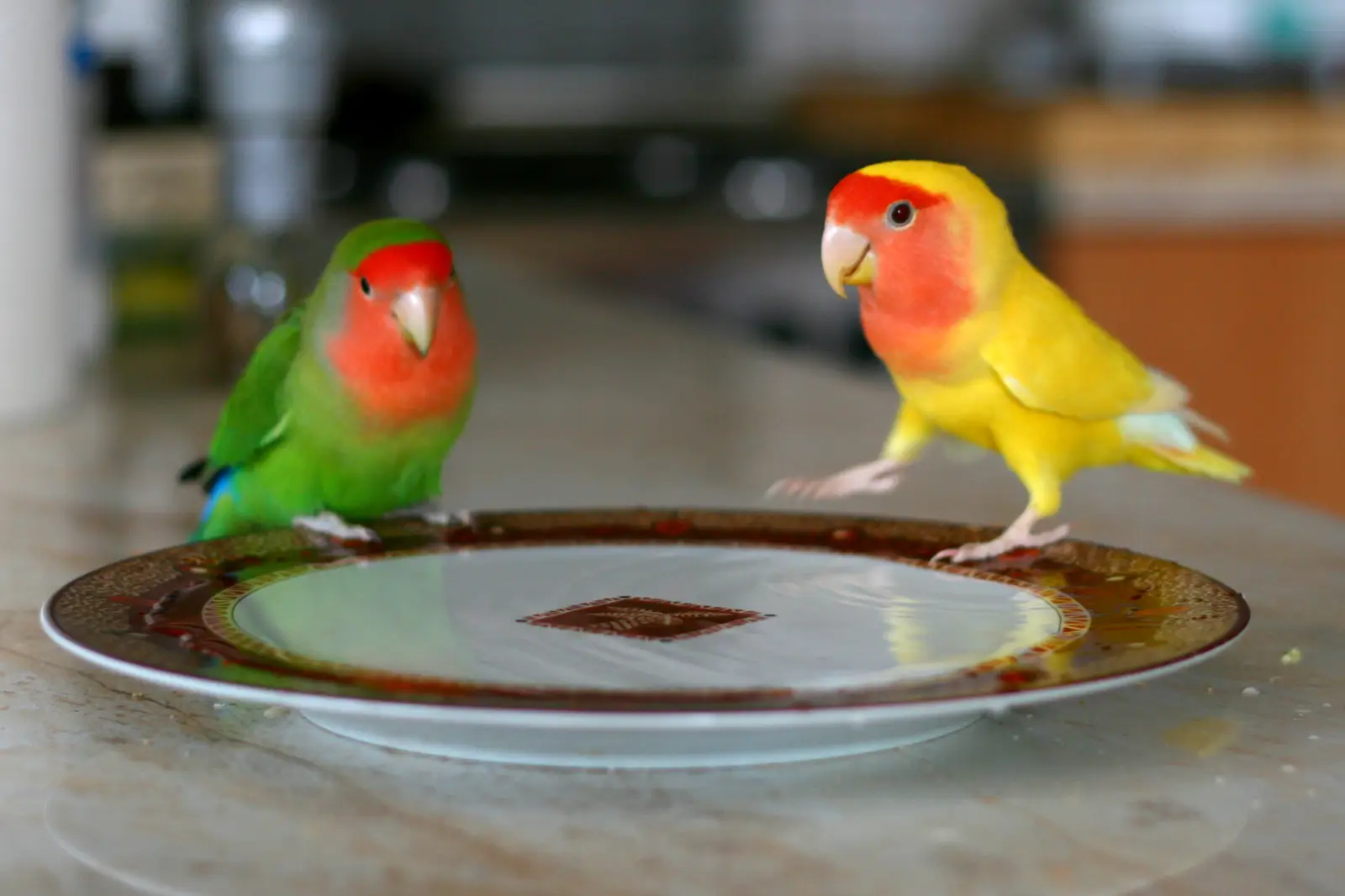
- Lutino. Sex-linked. The body turns yellow, the red-pink face stays, and the eyes are red.
- Opaline. Sex-linked. The face colour spreads back over the head.
- Cinnamon. Sex-linked. The colours take on a soft brownish tint.
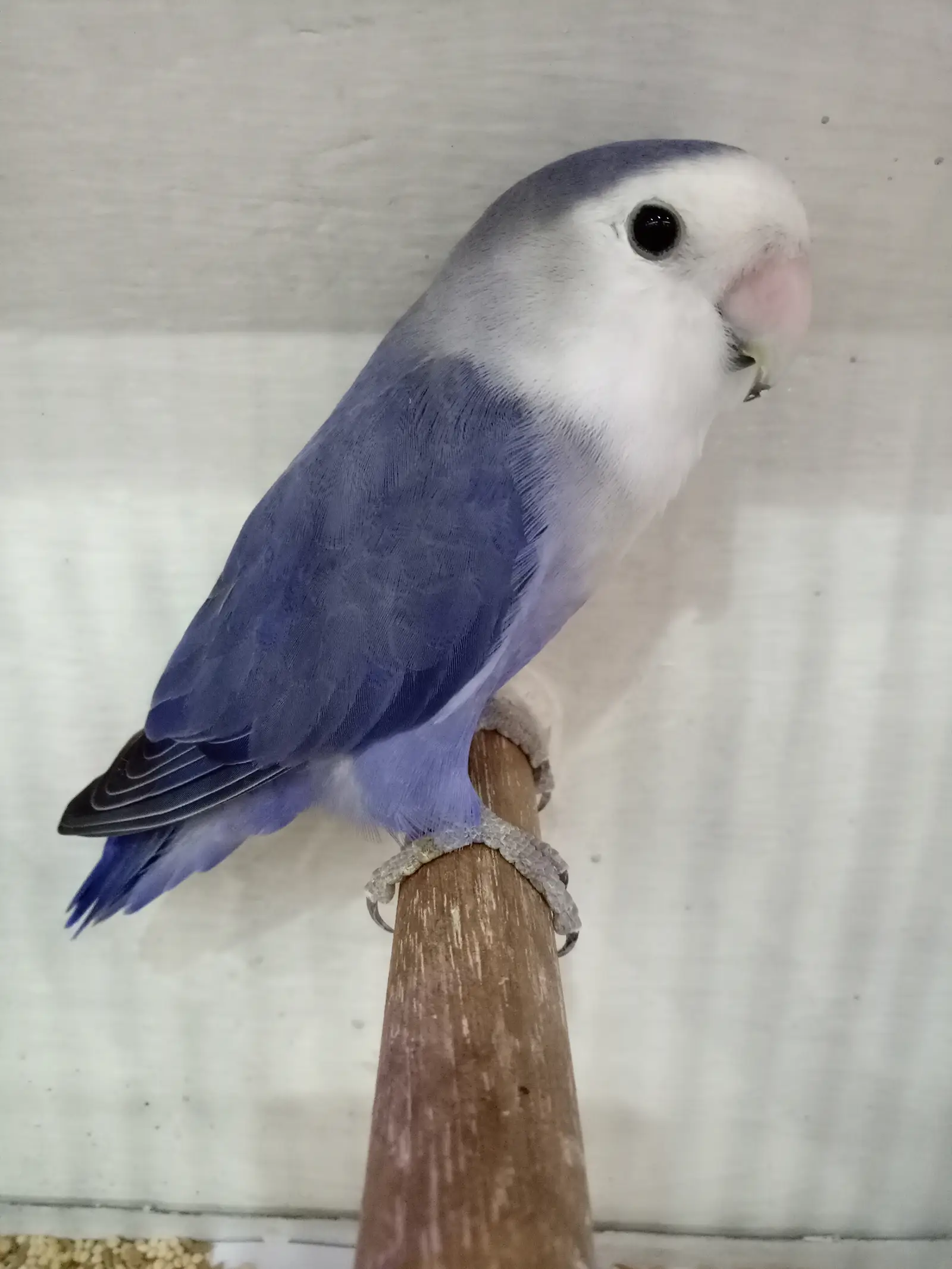
- Aqua. Also called Dutch blue. Recessive. The body turns a soft blue-green, and the face stays a pale peach or cream.
- Turquoise. Also called whiteface blue. Recessive. The body turns blue-green and the face turns white.
- Creamino. Lutino combined with aqua or turquoise, which gives a cream bird with red eyes.
- Dark factor. One copy gives a jade or dark green bird, and two copies give an olive bird.
- Violet factor. Dominant. It adds a violet tone to the colour.
- Pied. Both dominant and recessive forms exist. The bird has patches of yellow among the green.
- Orange-face. Recessive. The face is orange instead of peach.
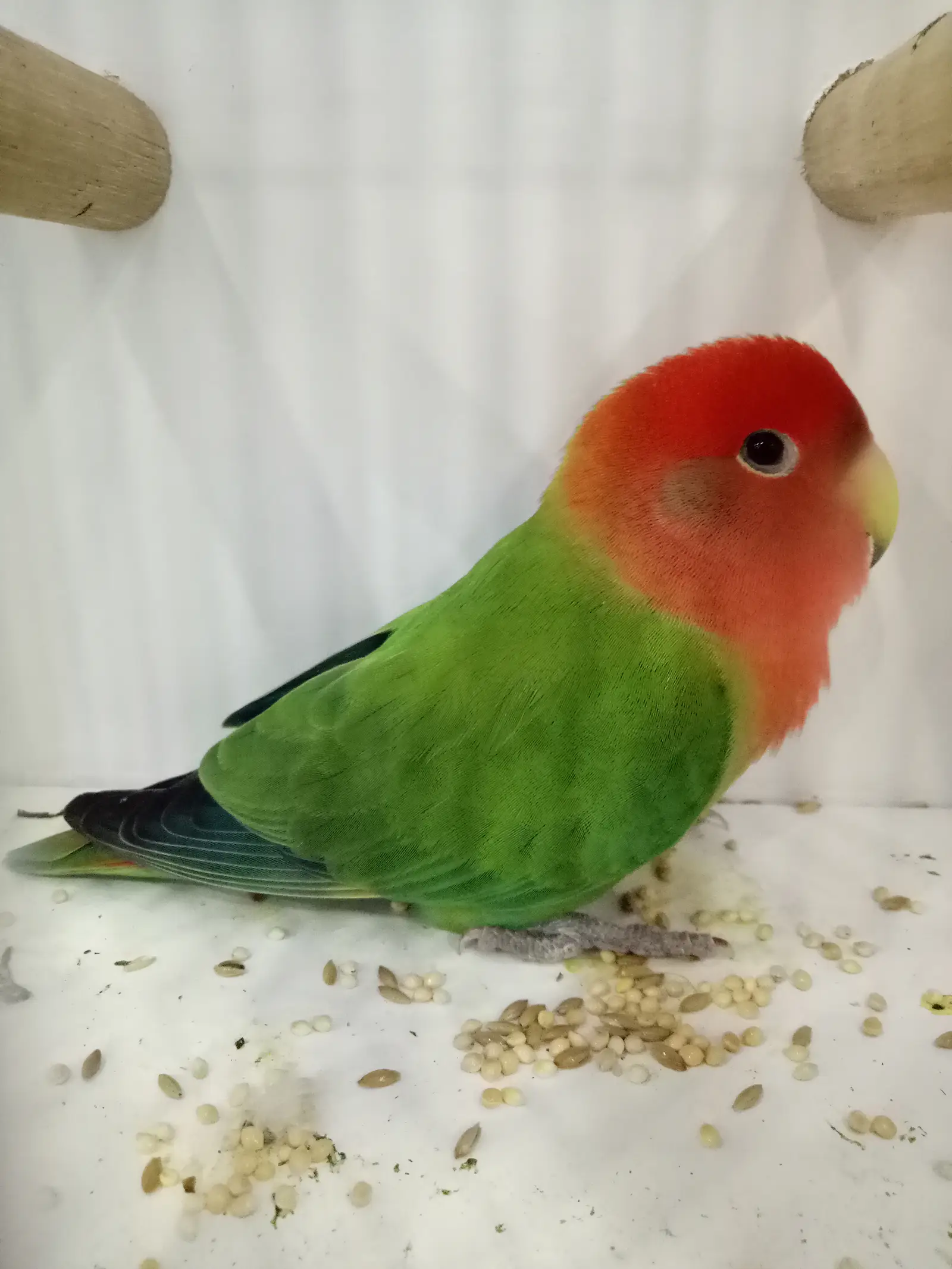
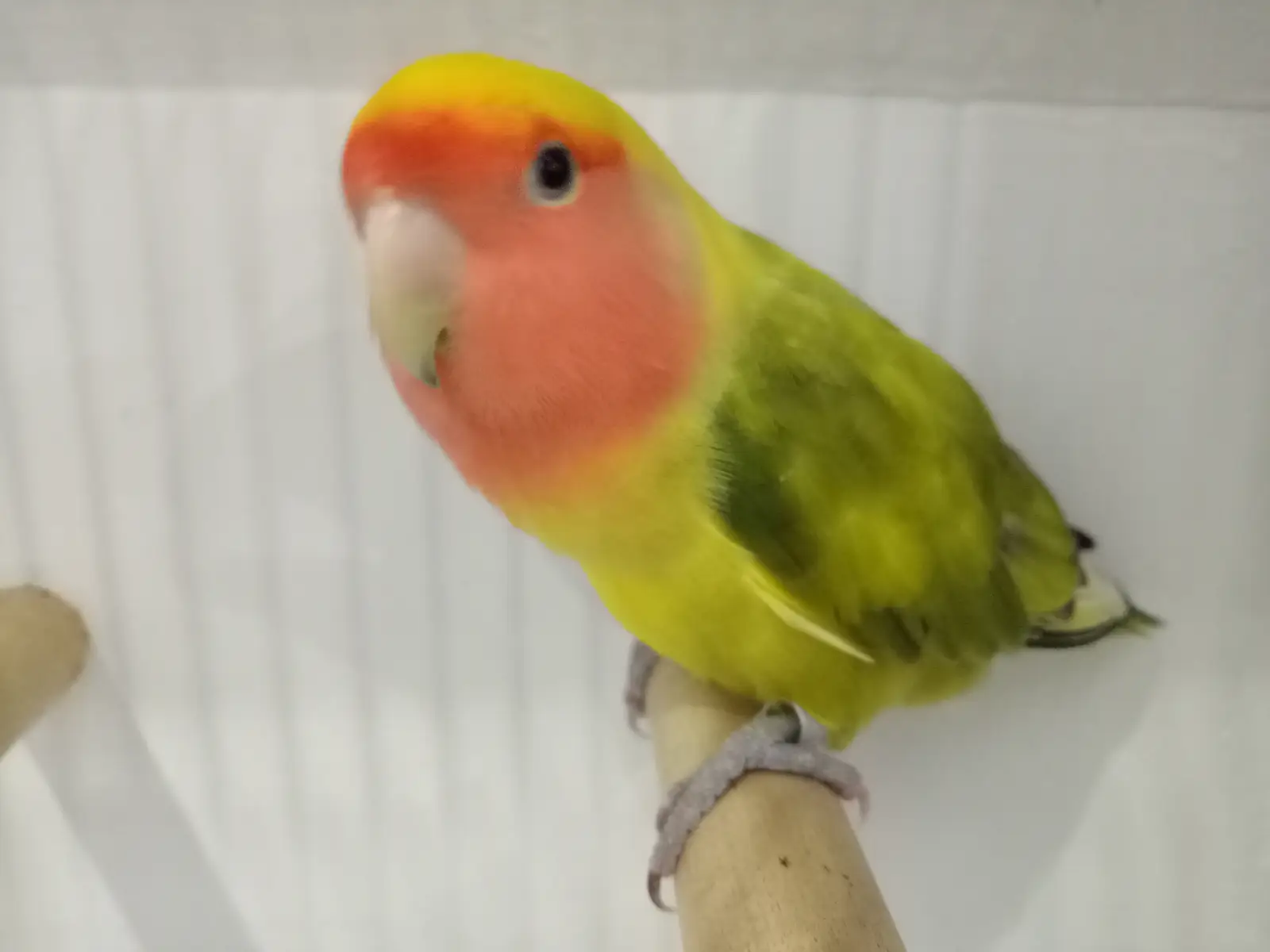
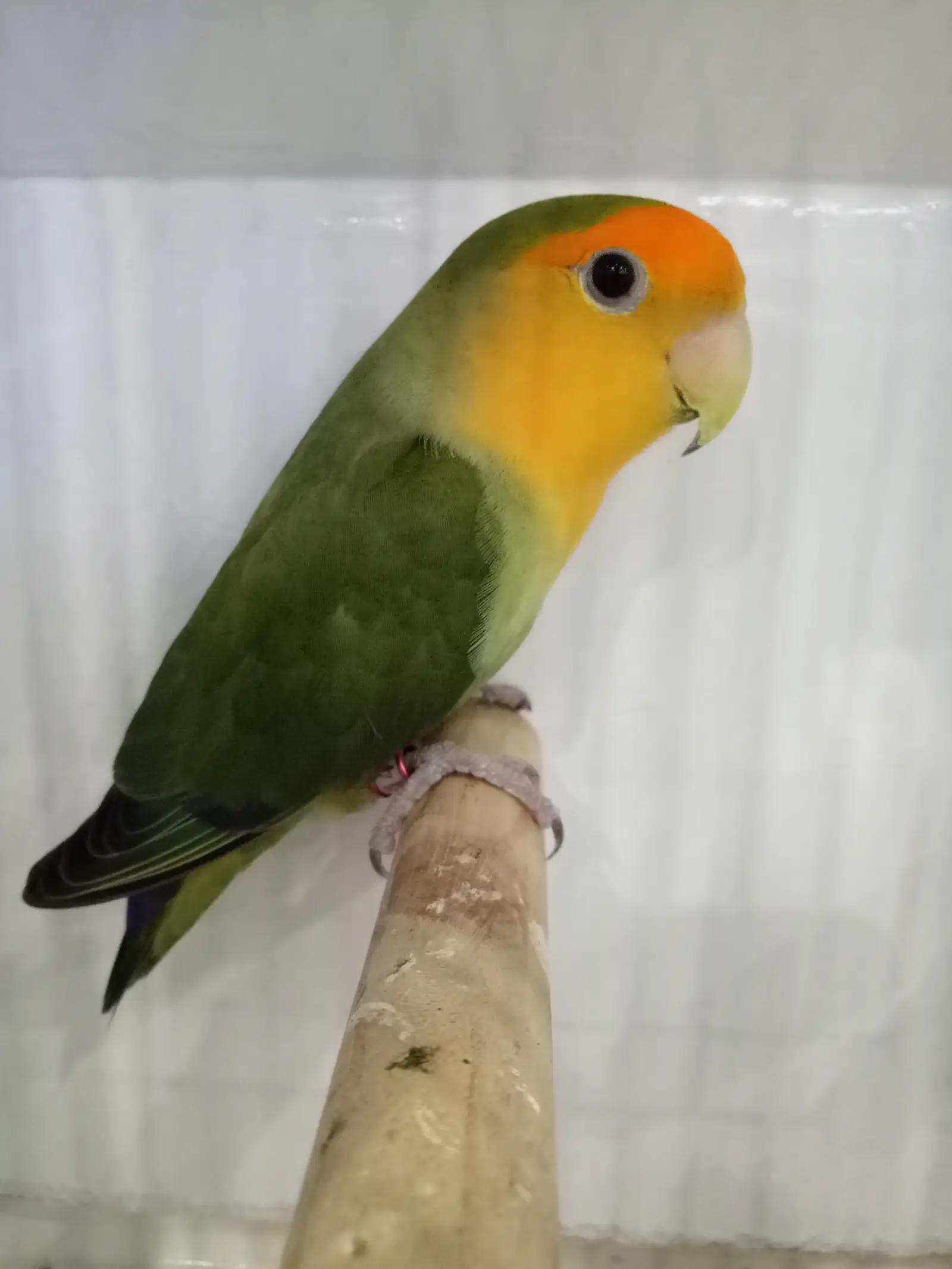
The peach-faced lovebird has no true blue. Aqua and turquoise are called "parblue" colours because some yellow stays in the feathers. This also explains the creamino. Sellers often call it "albino", but a pure white albino does not exist in this species.
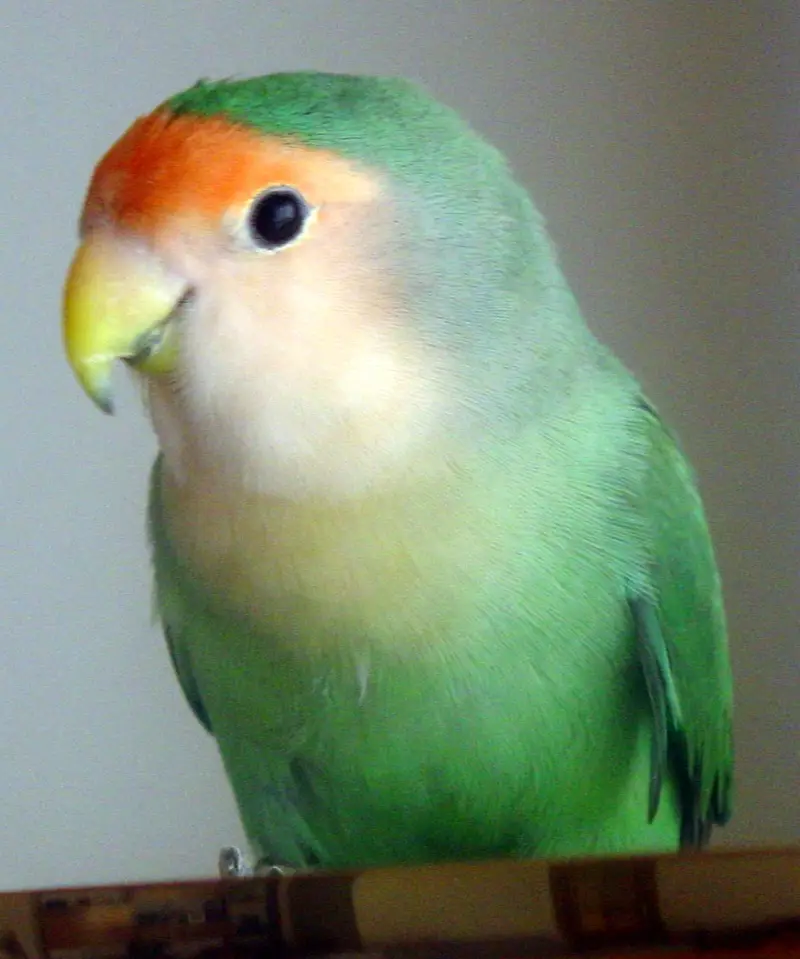
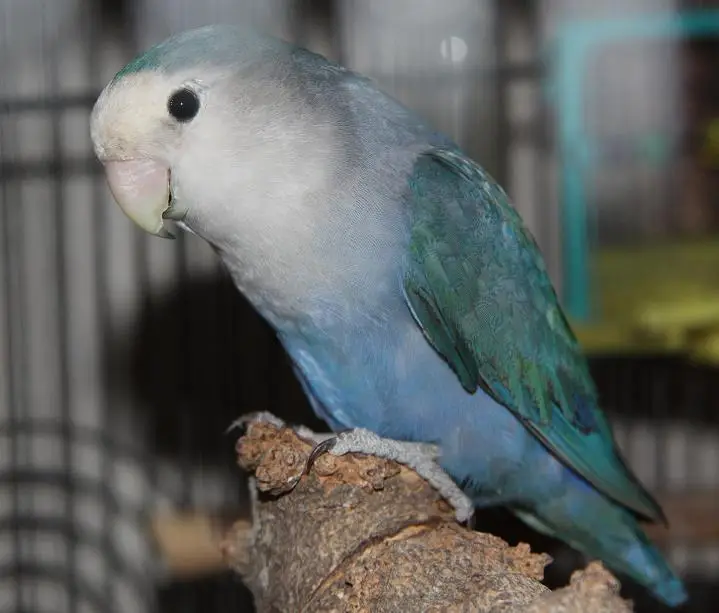
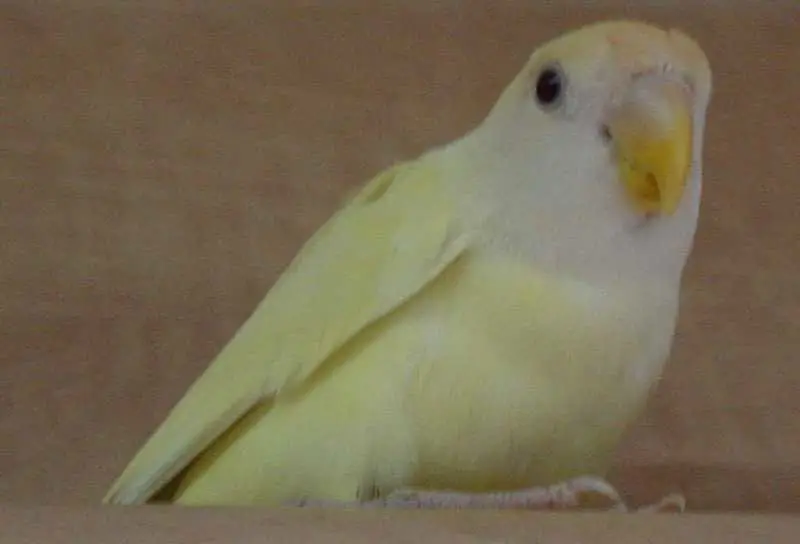
Mutations can combine, so one bird can be opaline, turquoise and pied at once. A longer name does not mean a better or healthier bird.
Fischer's and masked lovebird mutations
The eye-ring species have their own colours. Some share names with the peach-faced colours but are inherited in a different way.
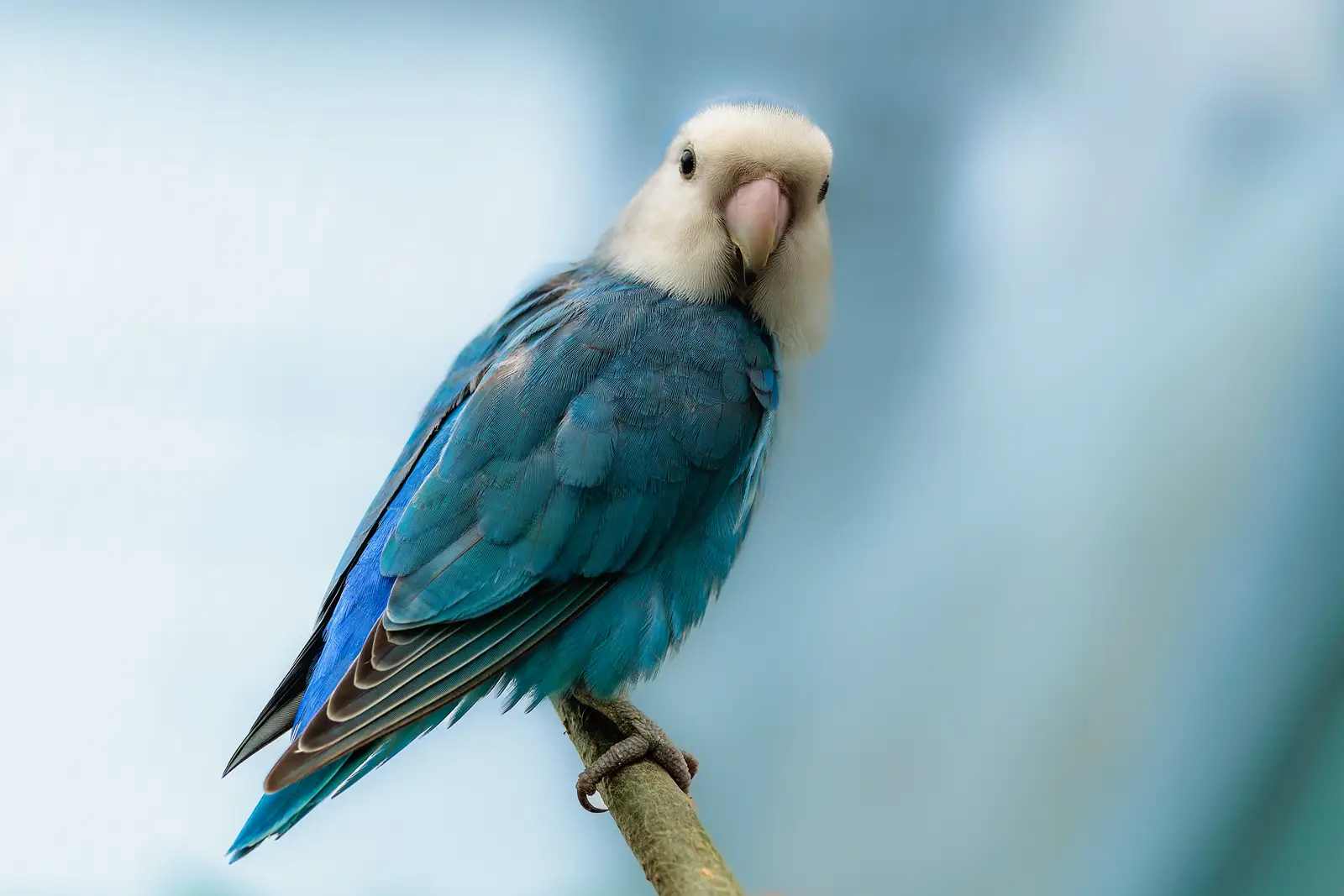
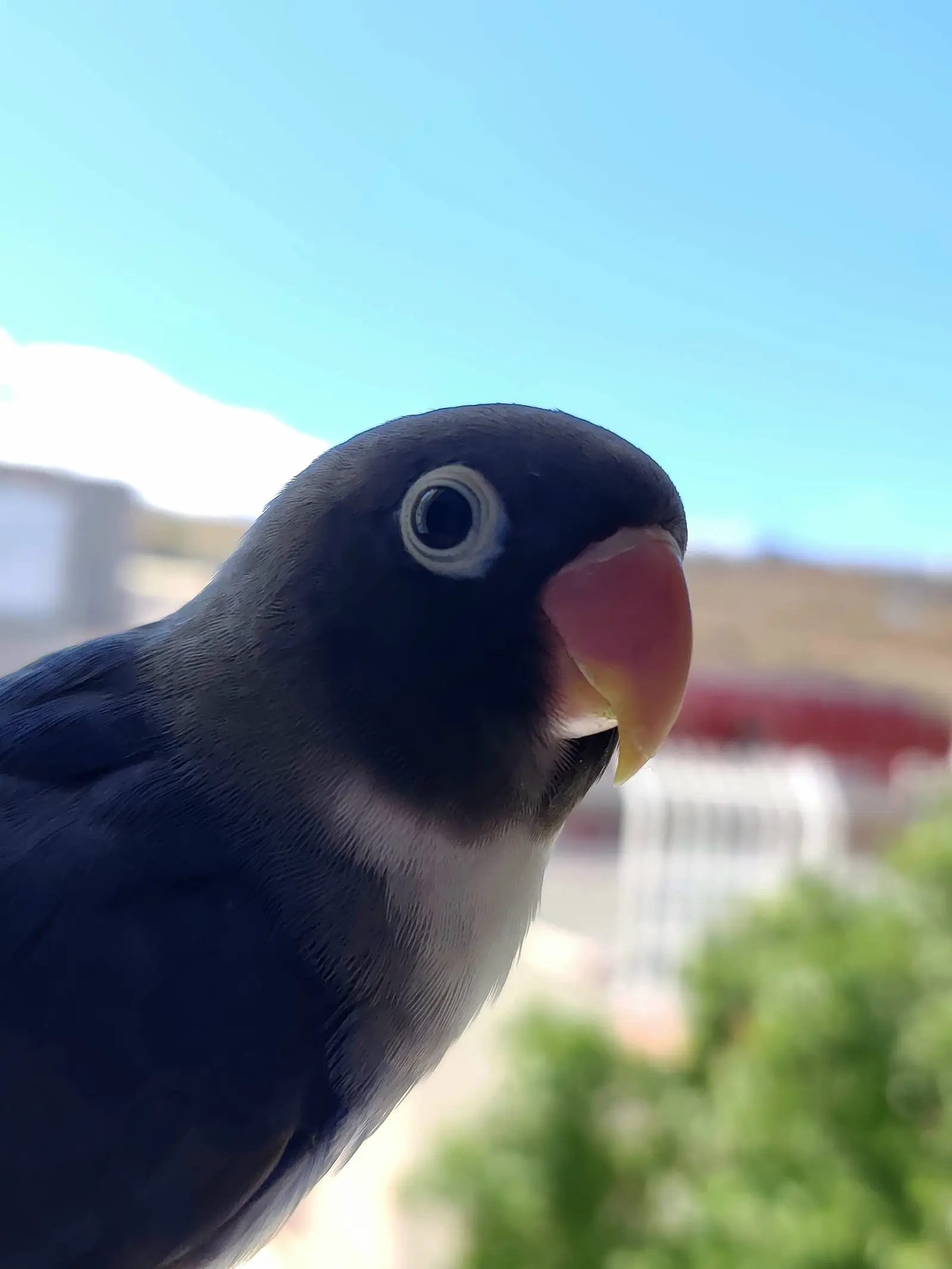
- Blue. Recessive. This is a true blue. A blue masked lovebird shows white where the wild bird is yellow, and a blue Fischer's has a pale face.
- Lutino. Recessive here, not sex-linked, which is the main difference from the peach-faced lutino.
- Albino. Lutino combined with blue, which gives a white bird with red eyes. A true white bird is possible in these species.
- Dark factor. In the blue series, one copy gives cobalt and two copies give mauve.
- Violet. Dominant. It adds a violet tone, as in the peach-faced.
- Dilute. Recessive. The whole bird is paler.
- Euwing. A pale form sold under this name. Breeders do not all use the name the same way, so ask how the parents were bred.
- Pied. Dominant. Patches of a lighter colour break up the body colour.
Hybrids
Fischer's and masked lovebirds pair with each other easily, and their chicks are fertile. Over many years, a lot of the eye-ring birds in the trade have become mixed. A blue bird sold as a Fischer's may have masked blood, and a personata may carry Fischer's genes.
For a pet owner this matters little, since a mixed bird can be healthy and tame. For a breeder it matters a lot. Mixed birds make colour results hard to predict, and a pair may give chicks that match neither parent. If you want to breed for colour, ask how the parents were bred, and expect some surprises.
Trade names you will hear
Sellers in Pakistan mostly use English trade names. Here are the common ones.
- Personata. The masked lovebird.
- Lutino. A yellow bird with red eyes.
- Creamino. A cream peach-faced bird with red eyes.
- Albino. A white bird with red eyes in the eye-ring species. For a peach-faced bird the word usually means a creamino.
- Aqua or Dutch blue. A blue-green peach-faced bird with a pale peach or cream face.
- Turquoise or whiteface. A blue-green peach-faced bird with a white face.
- Jade, olive, cobalt and mauve. Birds with one or two dark factors.
- Opaline. A peach-faced bird whose face colour spreads over the head.
- Euwing. A pale eye-ring bird. Ask how the parents were bred.
- Split. A bird that carries a hidden colour, written with a slash.
Feeding and housing in Pakistan's climate
Start with good pellets or a seed mix of millets, canary seed and a little sunflower. Seed alone is not enough, so add fresh food every day. Lovebirds enjoy carrot, cucumber, apple without the seeds, guava and sprouted chickpeas or mung. Take away fresh food that is left before it goes stale.
Give a cuttlebone or a mineral block for calcium, which laying hens need most. Change the water every day. Never give avocado, chocolate, salty food, caffeine or onion.
A pair needs a cage at least 80 cm long, and longer is better, so they can fly from perch to perch. Lovebirds chew hard, so give safe wood perches and toys and expect to replace them.
With good care, lovebirds can live 10 to 15 years. A single lovebird can live a good life if its owner gives it attention every day. The idea that a lovebird dies without its mate is a myth.
Summer is the biggest danger here. Keep the cage out of direct afternoon sun, in shade with moving air, and check the water more than once a day. On winter nights in the north, cover part of the cage and keep it out of draughts.
Keep birds away from the kitchen. Fumes from an overheated non-stick pan, the kind with a PTFE coating, can kill a bird.
Health
Buy only birds with full, clean feathers. Psittacine beak and feather disease, known as PBFD, shows as missing, broken or badly formed feathers and problems with the beak. It has no cure and it spreads between birds. A bird can carry the virus and still look normal, so ask a vet to test new birds.
Keep any new bird in a separate room, away from your other birds, for about 30 days, and feed and clean it last.
Psittacosis is an infection that can pass from birds to people. Wash your hands after you clean the cage. If you get a fever or a cough after buying a bird, see a doctor and say that you keep birds.
A sick bird sits fluffed up, sleeps a lot and has a dirty vent. Birds hide illness well, so a bird that shows these signs may already be quite ill. Take it to an avian vet without delay.
Telling cocks from hens, and breeding
In these species, cocks and hens look the same. The reliable way to tell them apart is a DNA test. It needs a feather or a drop of blood, and a vet or a lab can arrange it. This matters because two hens kept together often act like a pair. Both can lay eggs, but the eggs never hatch.
For breeding, a pair needs a wooden nest box and nesting material. A peach-faced hen tucks strips of bark or palm leaf into her back feathers to carry them. Fischer's and masked hens carry them in the beak. Either way, the hen builds the nest. Many breeders rest their pairs in the hottest months.
Do not pair close relatives. Mutation breeding tempts people to pair a bird with its brother, sister or parent to fix a colour fast. Bring in unrelated birds instead.
Buying lovebirds on Pets Bazar
Pets Bazar is a marketplace where sellers post their own birds and set their own asking prices. When the site has enough lovebird ads, the price band below shows what sellers are asking now.
A healthy lovebird has bright eyes, quiet breathing, a clean vent and full feathers. Ask what it has been eating and give the same food at first.
Watch for dyed birds, because common birds are sometimes dyed and sold as rare colours. A real colour looks natural right down to the base of the feathers and does not rub off.
Browse all lovebirds for sale on Pets Bazar. Read our guide to buying a pet safely in Pakistan before you pay, and find a vet clinic near you for a first check-up.