Marwari Horse in Pakistan: Origin, Curved Ears and How to Check One
Where the Marwari horse comes from, how to recognise its curved ears and build, what it is used for, and what to check before you buy a horse sold as one.
By Pets Bazar Editorial Team, Editors · Published · Updated · 5 min read
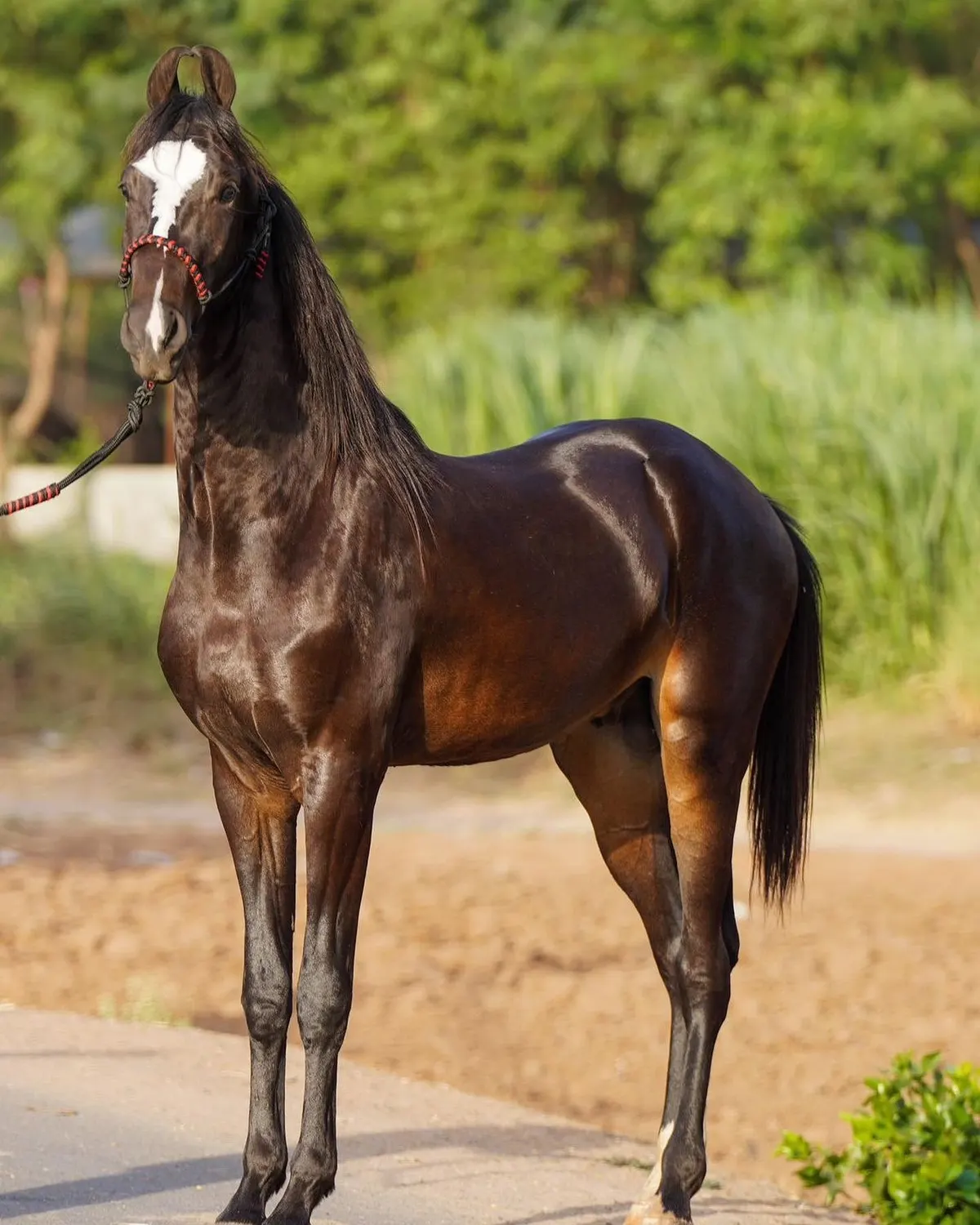
The Marwari is the horse with the curved ears. It comes from the desert of Rajasthan, it carried kings and cavalry into battle for centuries, and today it is one of the most wanted wedding and show horses in India. This guide explains where the breed comes from, how to recognise one, what it is used for, and what to check if a horse is sold to you as a Marwari.
Where the Marwari comes from
The breed is named after Marwar, the old kingdom around Jodhpur in western Rajasthan. It is also called the Malani, after a district of the same region. Breed histories say it grew from hardy local Indian horses crossed with Arabian horses, and possibly with Turkoman horses from Central Asia.
The Rathore rulers of Marwar bred these horses as cavalry mounts from around the 12th century, and the Rajput clans of the region prized them for courage and loyalty. Old stories say a Marwari would stay beside a fallen rider and carry a wounded one home. Whether every story is true or not, they show how much the horse was valued.
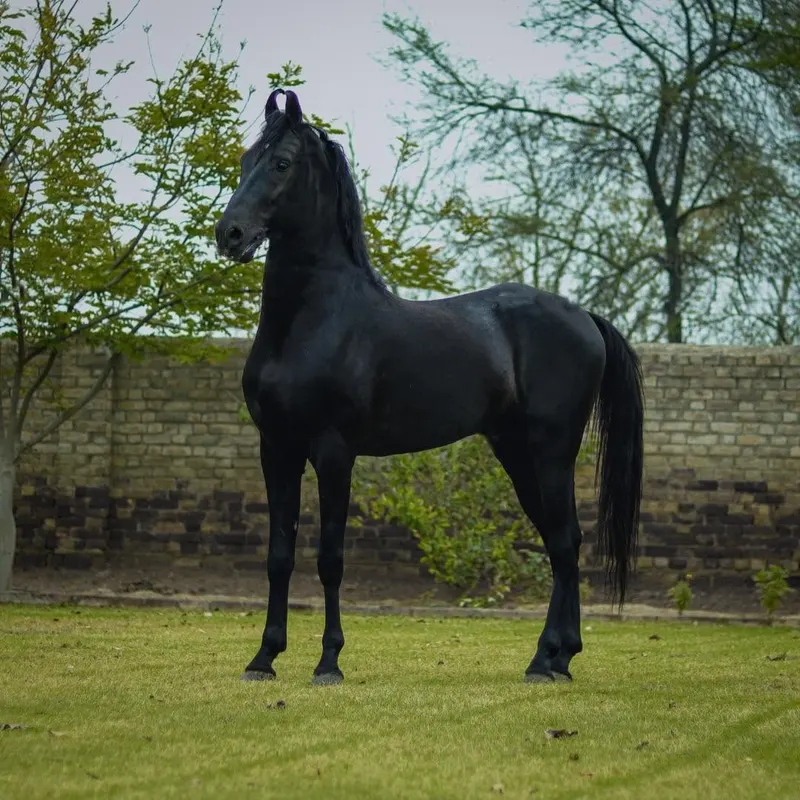
The breed declined under British rule, when imported horses were favoured, and again after 1947, when the old princely states lost their lands and many stables were broken up. Breeders in Rajasthan revived it from the 1990s, and breed societies now keep a register in India. India has long restricted the export of its native breeds, so true Marwaris rarely leave the country.
How to recognise a Marwari
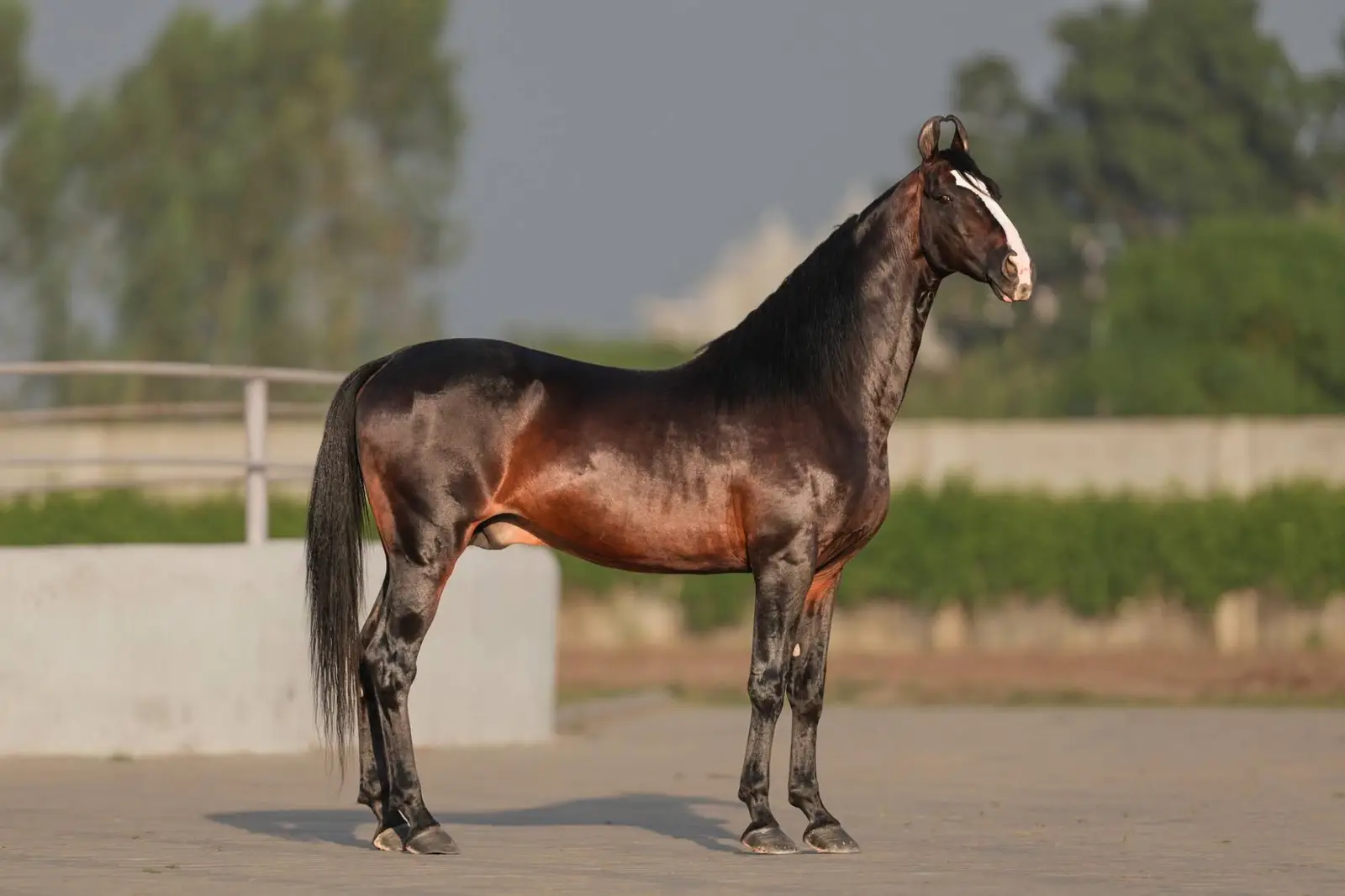
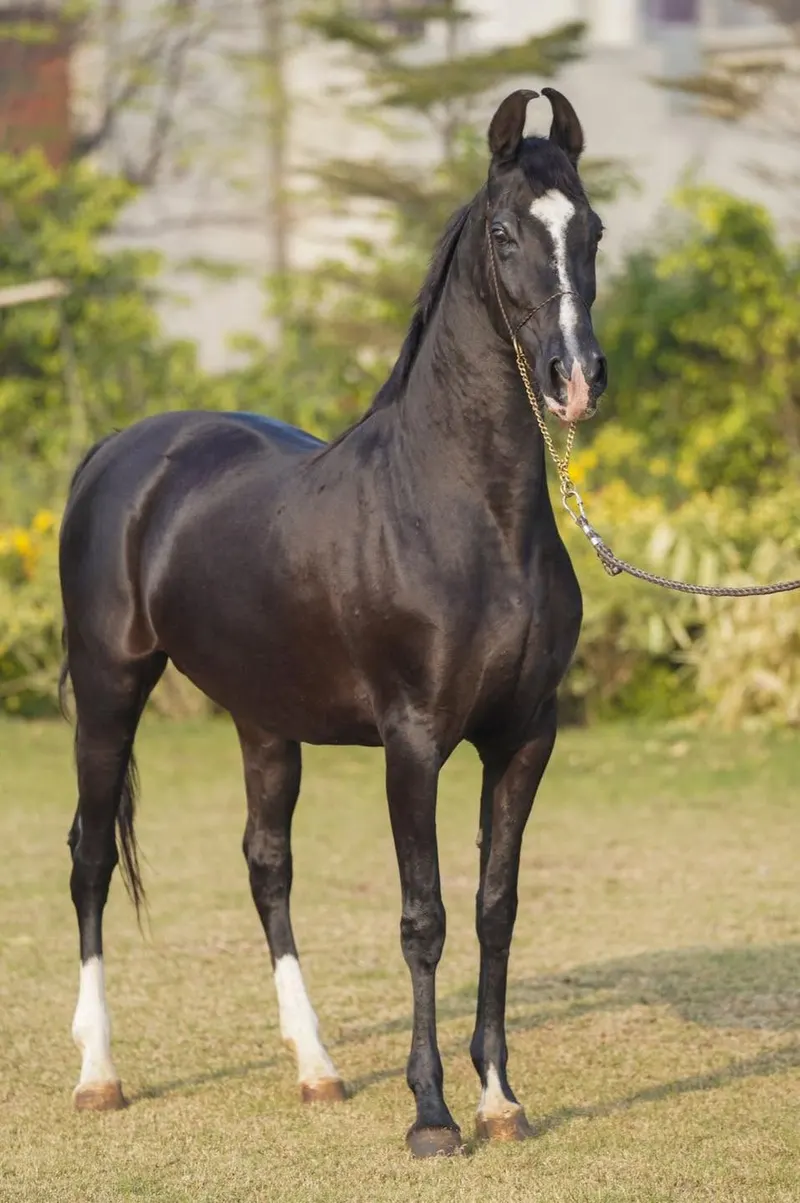
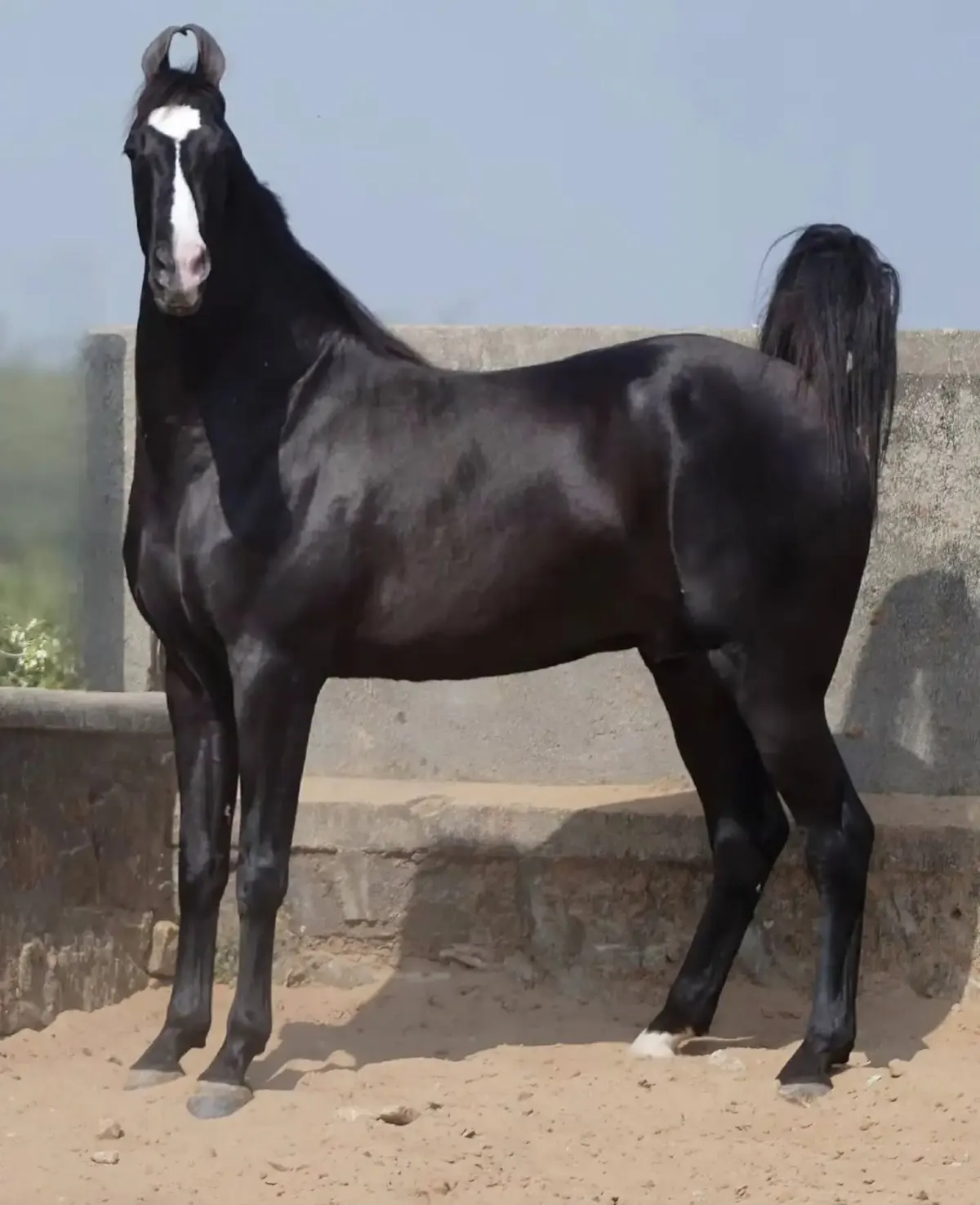
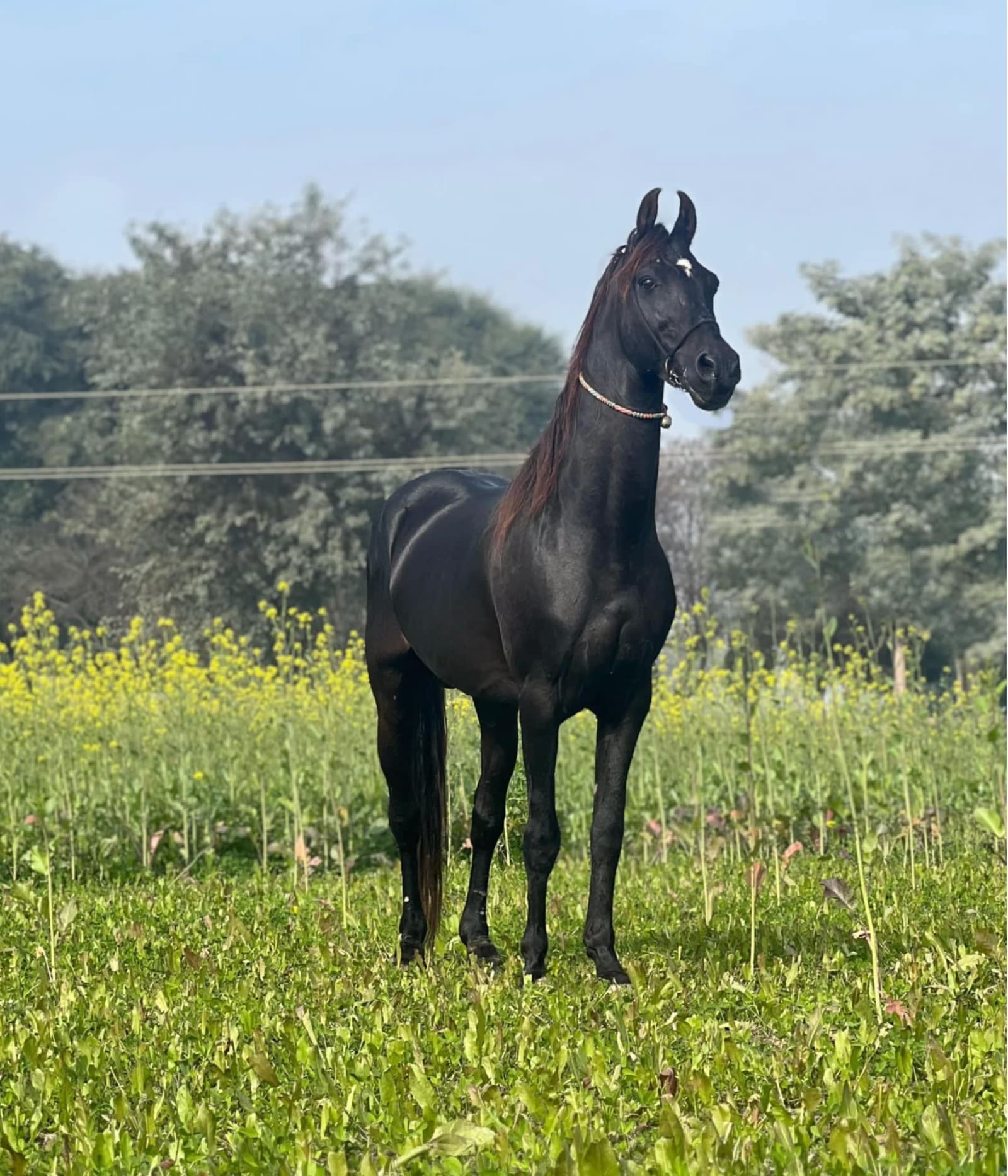
The ears. The tips curve inward and can touch or even cross above the poll. The ears are mobile and can turn a long way to catch sound. No other feature is as well known.
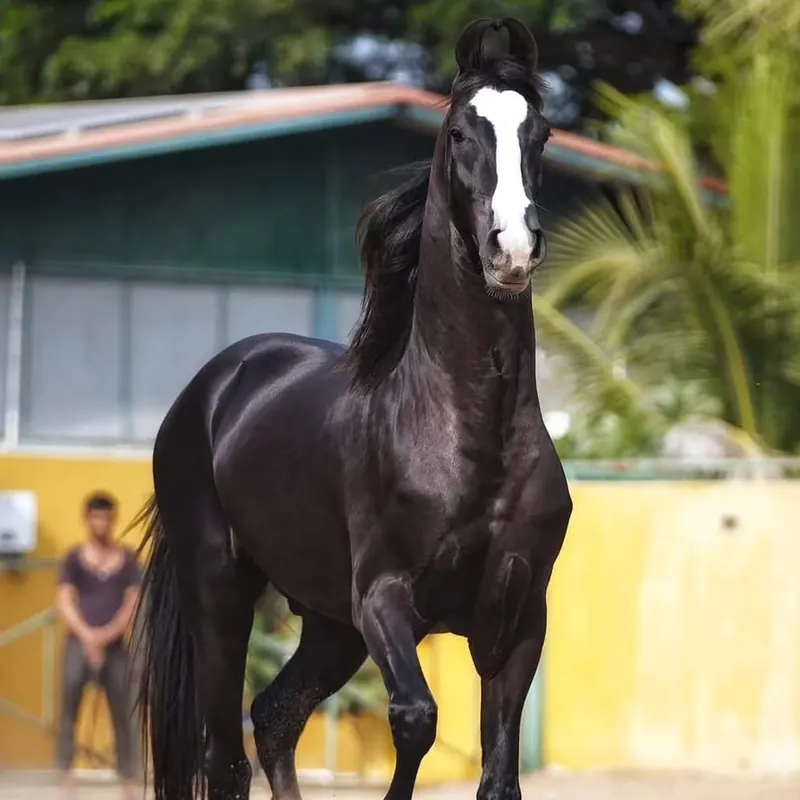
The body. Most Marwaris stand around 15 to 16 hands, roughly 150 to 163 cm. The neck is long and carried high, the face is straight, the chest is deep and the legs are lean with hard, well-shaped hooves.
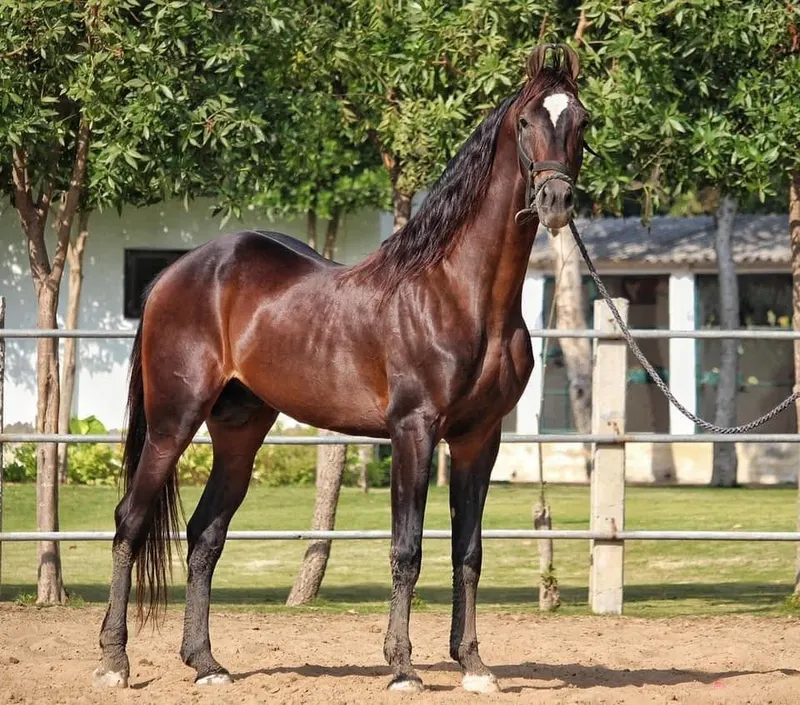
The coat. Bay, brown, black, chestnut, grey and pied coats are all seen, along with the pale Nukra, which is highly prized. Old Rajasthani beliefs rate some colours and markings above others, but many owners now simply choose the coat they like.
The gait. Many Marwaris have a natural smooth amble called the revaal. It is comfortable for long rides, which is one reason the breed was valued in the desert.
The character. The breed is brave, loyal and hardy in heat, and copes on simple feed. It is also spirited and quick to react, so it suits an experienced handler better than a nervous beginner.
Marwari, Kathiawari, Balochi and desi
Buyers in Pakistan often mix these names up, because the ears look alike.
- Marwari: from Rajasthan, usually taller, with a long upright neck.
- Kathiawari: from Gujarat, smaller and finer, with the same curved ears.
- Balochi: from Balochistan, about 14 hands, with ears that also turn inward.
- Desi: not a breed at all, but a Pakistani horse of mixed local ancestry. Our desi horse guide explains the difference in detail.
So curved ears alone do not prove that a horse is a Marwari.
What the Marwari is used for
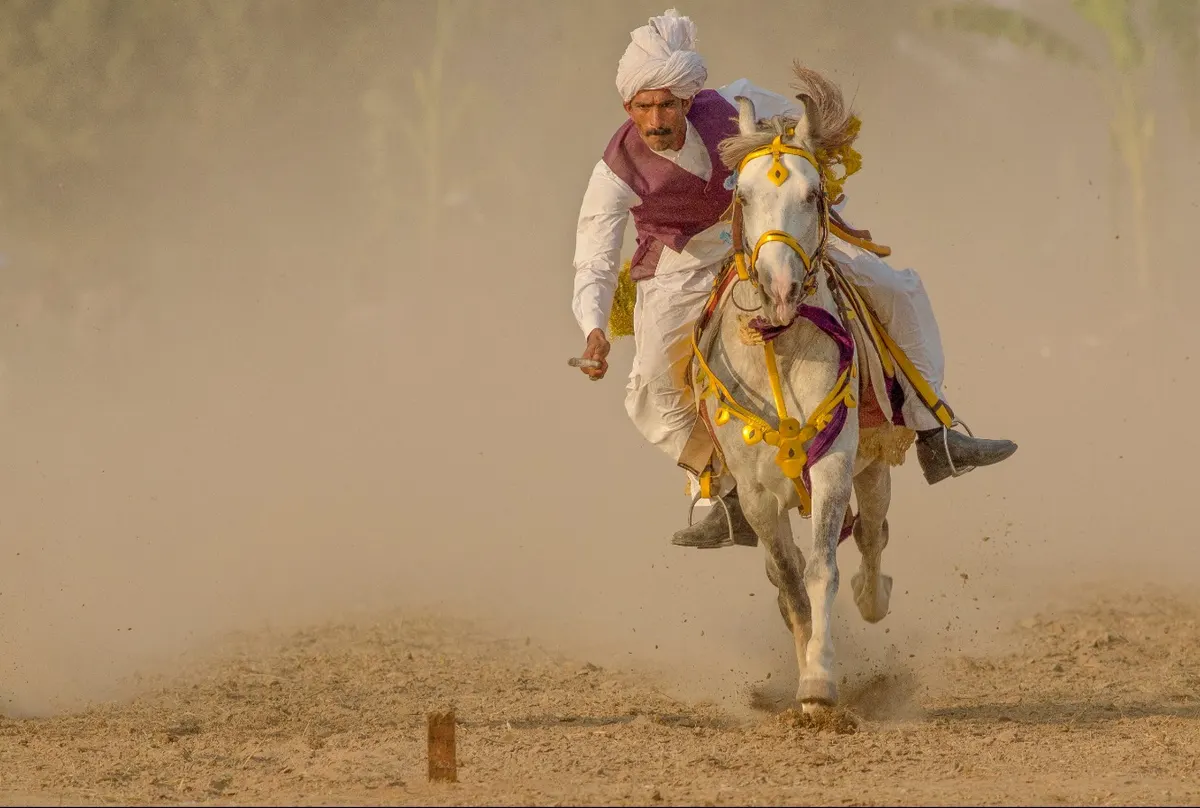
- Weddings and festivals. A tall, upright horse with curved ears is the classic mount for a groom. Some horses are trained to dance to drums at weddings and fairs.
- Shows and fairs. In India, the big horse fairs at Pushkar and Balotra trade and judge Marwaris. In Pakistan, horses sold as Marwari are shown at local melas and horse shows.
- Riding. The smooth revaal makes the breed popular for trail and safari riding in Rajasthan.
- Sport. Marwaris are used for tent pegging, called neza bazi in Pakistan, and in some places for polo. See the results of the Amritsar Cup 2026, an open neza bazi championship in Indian Punjab, and how the Marwari compares with other neza bazi horse breeds.
- Breeding. Stallions with good ears, a strong build and a calm mind are used to improve local horses.
If a horse is sold to you as a Marwari
The Marwari is a breed of India and India restricts its export, so a horse advertised in Pakistan as a Marwari is most likely bred here from Marwari-type parents and is not a registered Marwari. Its pedigree usually cannot be checked against the Indian register. That does not make it a bad horse. It means you should judge the animal in front of you.
Pets Bazar does not set prices. Each seller sets their own, and age, training, ears and bloodline all change the price.
Care is the same as for any horse in a hot climate: clean water and shade at all times, forage little and often, a farrier every 6 to 8 weeks and a vet-led worming plan. Our desi horse guide covers daily care, and our guide to buying a pet safely in Pakistan covers safe payments.
For the other end of the scale, read about Fusaichi Pegasus, the most expensive horse in the world.
Browse horses for sale and desi horses for sale on Pets Bazar, or find a vet clinic near you for a pre-purchase check. Selling a horse? Post a free ad on Pets Bazar and buyers can chat with you directly.


Frequently asked questions
Where does the Marwari horse come from?
From the Marwar region of Rajasthan in north-west India, around Jodhpur. It is also called the Malani. The Rathore rulers of Marwar bred it as a cavalry horse for centuries.
Is there a Marwari horse in Pakistan?
No, the Marwari is a breed of India. India has long restricted the export of its native breeds, so true Marwaris rarely leave the country. Some horses in Pakistan are sold as Marwari, mostly in Punjab and Sindh, but they are Marwari-type horses bred locally, not registered Marwaris. Ask the seller what they know about the parents.
How can I recognise a Marwari horse?
Look at the ears first. The tips curve inward and can touch above the head. The neck is long and carried high, the face is straight and the legs are lean. Pakistan's Balochi horse and the Kathiawari of Gujarat have similar ears, so the ears alone do not prove the breed.
Is a Marwari good for a first-time owner?
Usually not. The breed is brave and loyal but also spirited and quick to react. It suits a rider or handler with some experience, or a first-time owner who has an experienced trainer to help.
How tall is a Marwari horse?
Most Marwaris stand about 15 to 16 hands, roughly 150 to 163 cm. The neck is long and carried high, the chest is deep and the legs are lean.
What colours do Marwari horses come in?
Bay, brown, black, chestnut, grey and pied coats are all seen, along with the pale Nukra, which is highly prized. Many owners now simply choose the coat they like.