Neza Bazi Horse Breeds Compared: Marwari, Kathiawari, Sindhi and Nukra
Which horses are ridden in neza bazi in Pakistan and India, and how do they compare with the Marwari? Height, ears, face and coat of six types, side by side.
By Pets Bazar Editorial Team, Editors · Published · 5 min read
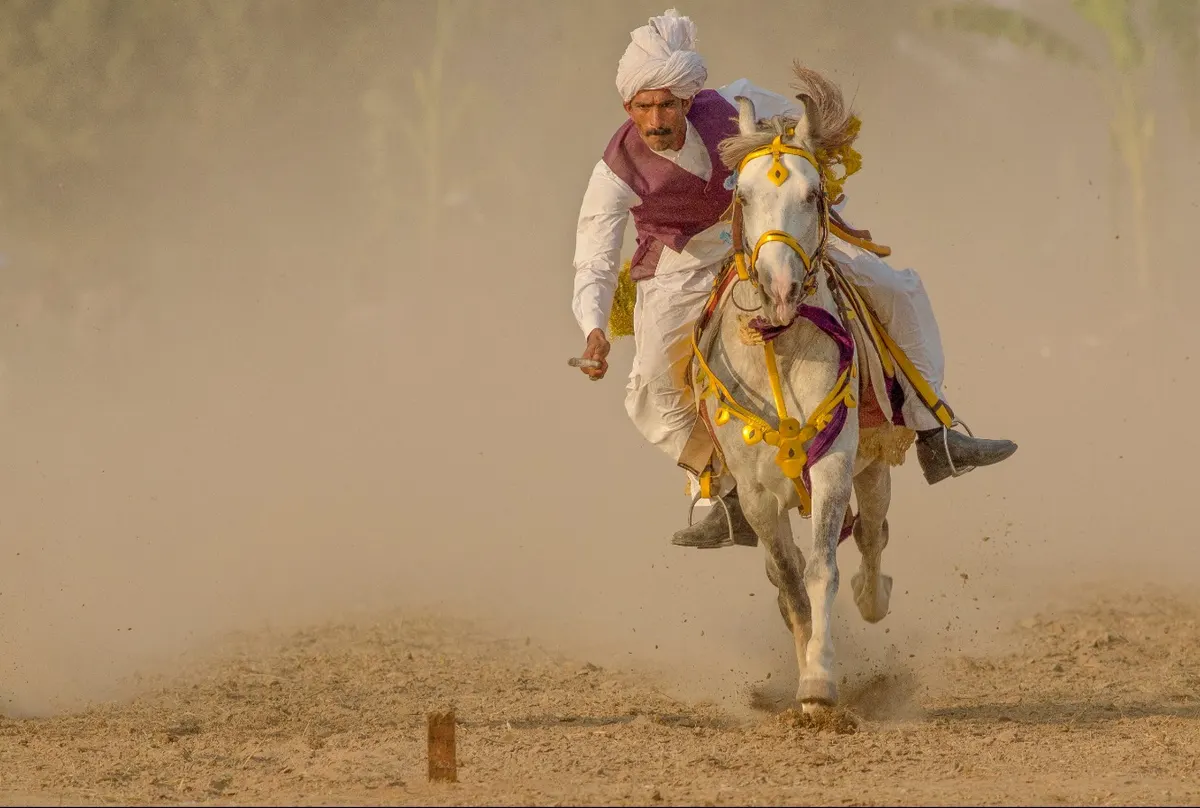
Neza bazi is ridden in Pakistan and India alike. The official results of the Amritsar Cup 2026 name the winning riders and teams, but not the breeds of their horses. So this guide compares the horse types most often named in neza bazi circles on both sides of the border with the Marwari, the best known native horse of India.
For the results themselves, read our report on the Neza Bazi Punjab Championship 2026.
The six types at a glance
| Type | Home | Height at the withers | Ears | Face | Common coats |
|---|---|---|---|---|---|
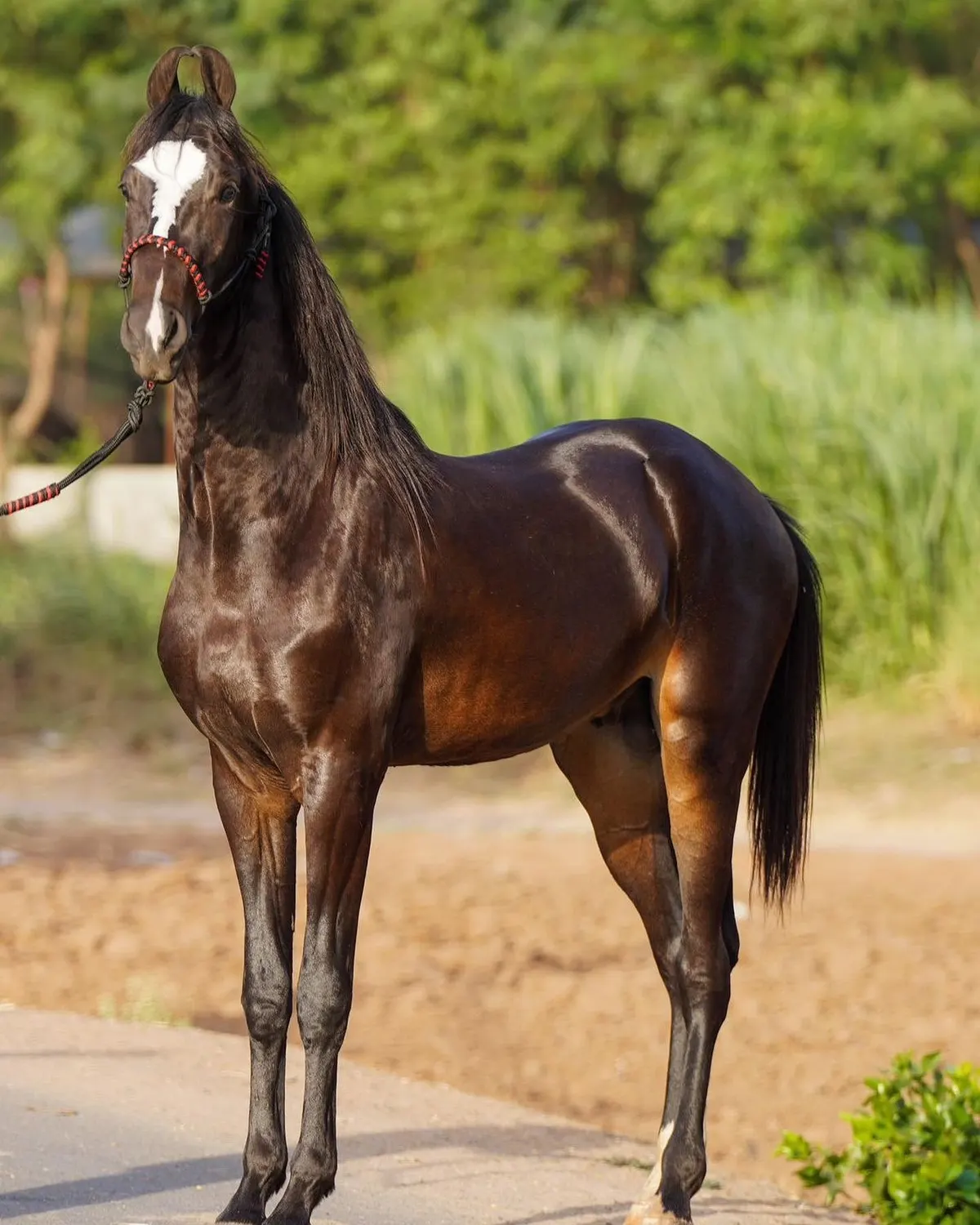
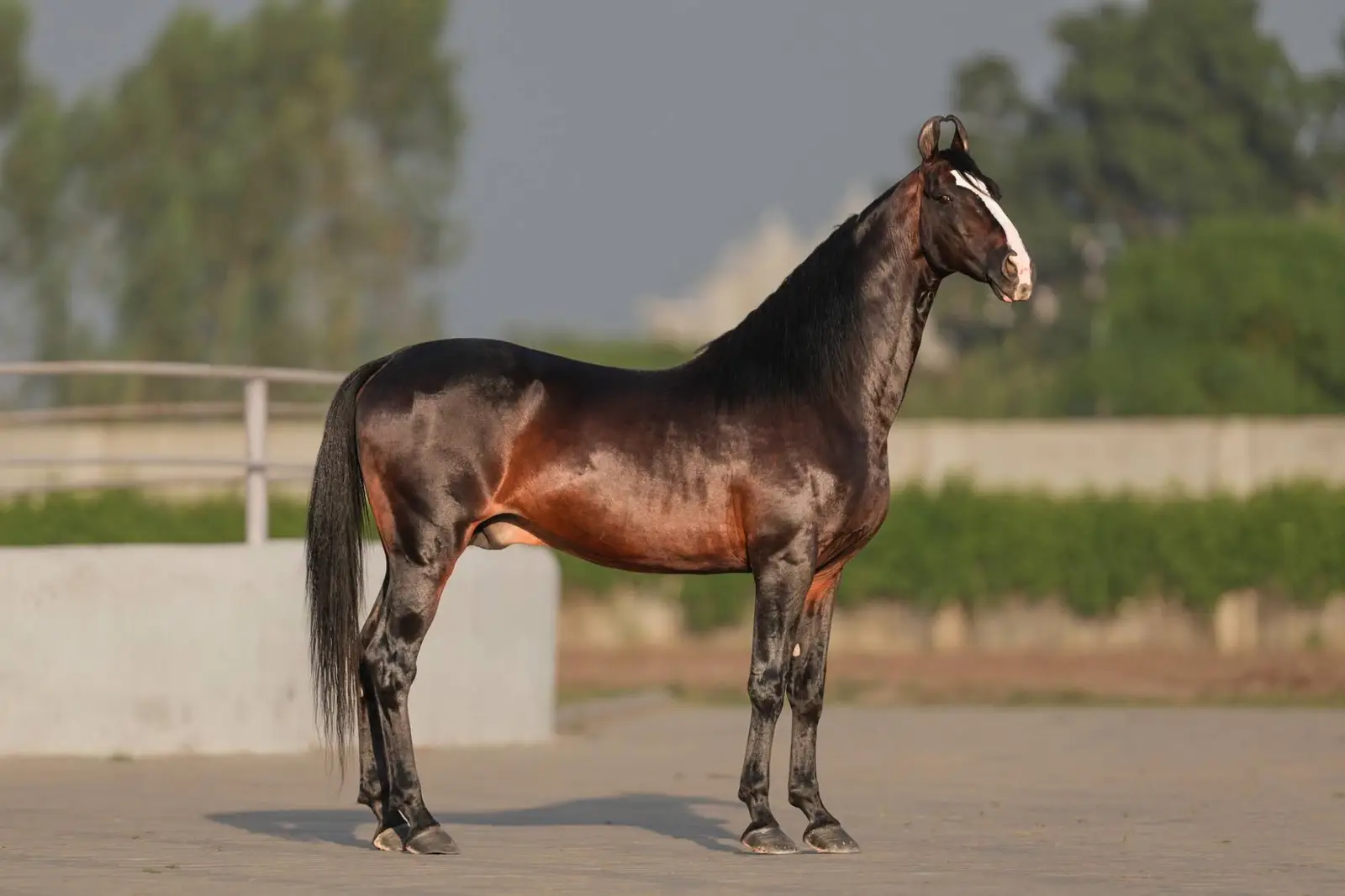
| Marwari | Marwar, Rajasthan | Stallions about 150 cm, taller lines 15 to 16 hands | Curve in, tips meet | Long and lean, straight to slightly Roman | Bay most common, also piebald and skewbald |
| Kathiawari | Saurashtra, Gujarat | About 147 cm | The most curved of any breed | Concave, wide at the eyes | Chestnut, bay, grey and dun |
| Kachchhi-Sindhi | Kachchh in Gujarat, Jaisalmer and Barmer in Rajasthan | About 148 cm | Curved at the tips but not touching | Distinct Roman nose | Bay and chestnut |
| Balochi | Balochistan, Pakistan, also Sistan and Baluchestan in Iran | About 14 hands, roughly 142 cm | Curve in, tips touch | Fine head | Bay, chestnut and grey |
| Nukra | Linked with Punjab | Stallions 155 to 158 cm in the breeders' standard | Not a breed mark | Not a breed mark | White, with pink skin |
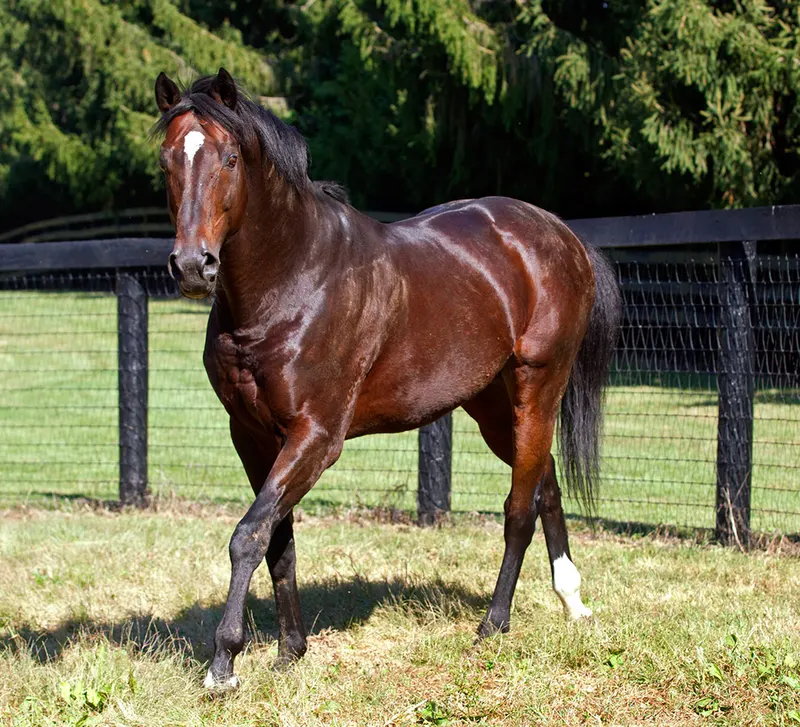
| Desi or country-bred | All over the region | Varies widely | Varies | Varies | Any |
Heights come from ICAR research papers, breed society pages, the breeders' standard for the Nukra and breed references for the Balochi. They are averages, and single horses differ.
What neza bazi asks of a horse
In neza bazi a rider gallops down a straight track and lifts a small wooden peg from the ground with a lance. The horse has three jobs. It must gallop straight without drifting, stay calm among drums, flags and a large crowd, and hold its pace while the rider's weight shifts low to one side.
None of those jobs belongs to one breed. They come from temperament and from years of patient training.
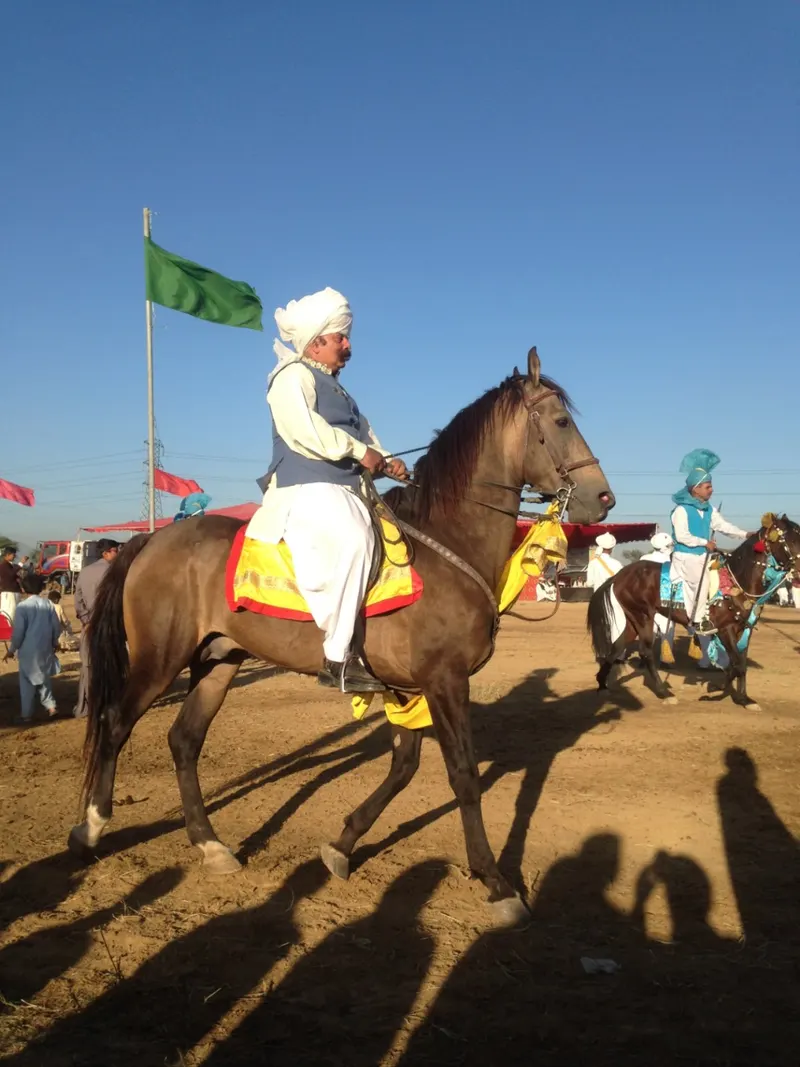
Marwari: the tall one with meeting ears
The Marwari comes from the Marwar region of Rajasthan. In a study of six Indian breeds by the National Research Centre on Equines, it was the tallest and differed from the others on most body measurements. Its ears curve inward until the tips meet, and it can turn them through 180 degrees.
The neck is carried high and the legs are long and lean. Breed societies list tent pegging among the sports where the Marwari is growing in popularity. A tall horse covers the track quickly, but the rider also has farther to lean to reach the peg.
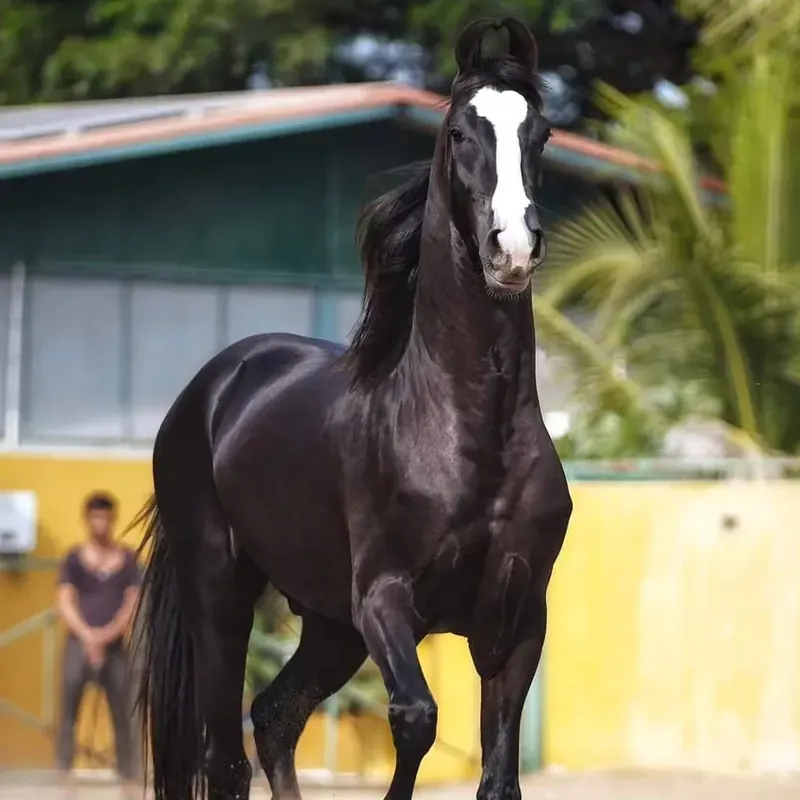
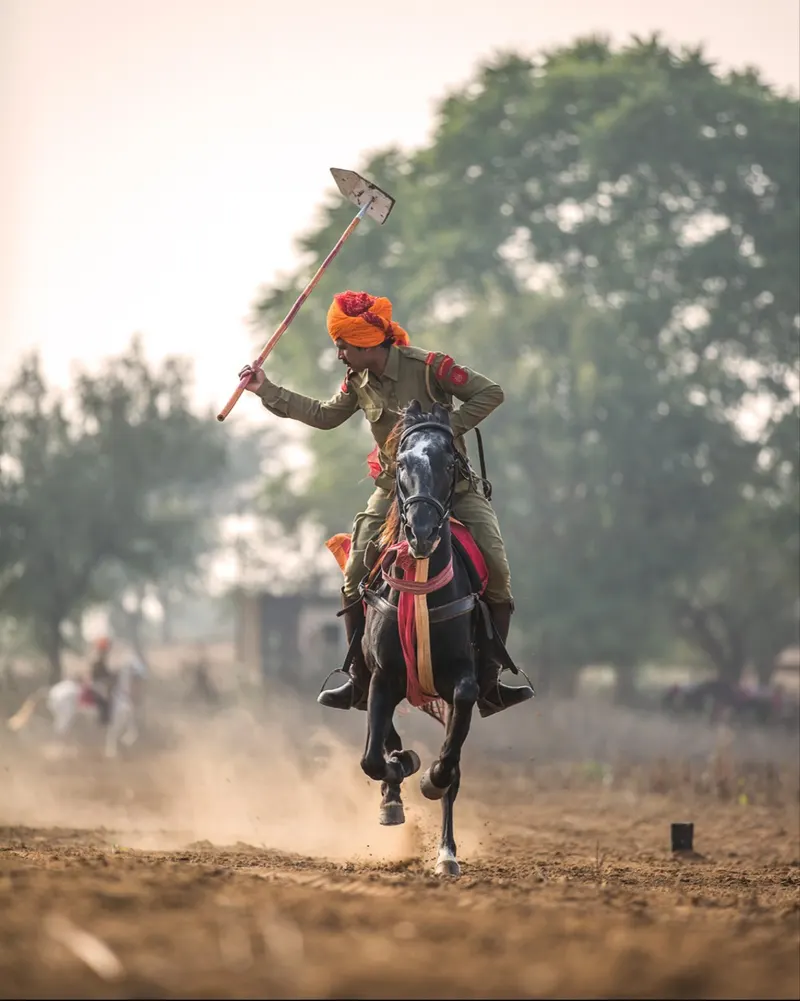
Kathiawari: smaller, and at home in tent pegging
The Kathiawari comes from the Saurashtra region of Gujarat and is a close relative of the Marwari. It averages about 147 cm, and its face is concave, wide at the eyes and narrow at the muzzle. Its ears are the most curved of any horse breed.
It is described as high spirited, intelligent and affectionate. Some Indian police forces ride it, including in tent pegging, which is said to suit the breed well.
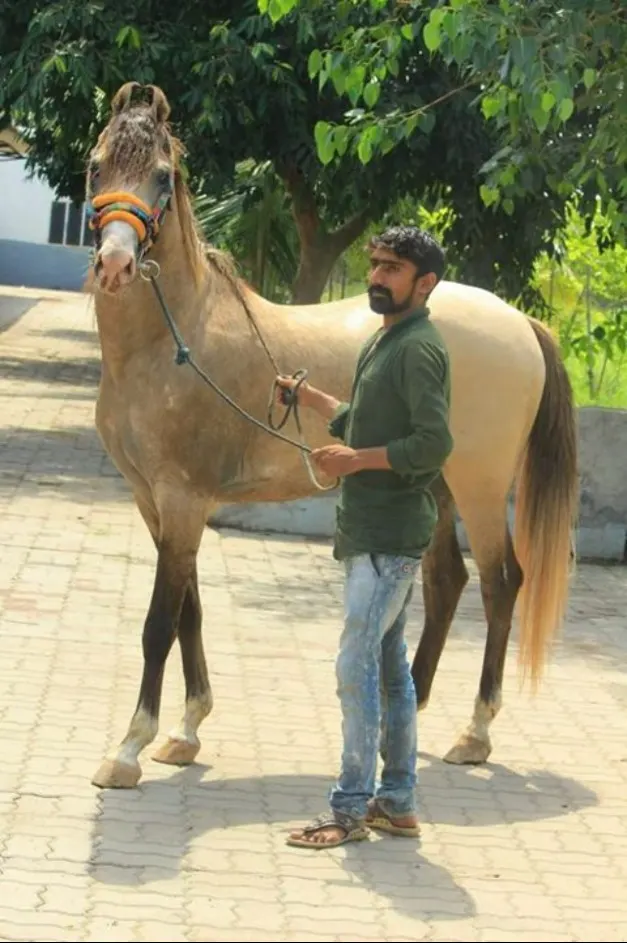
Kachchhi-Sindhi: the desert horse with a Roman nose
The Kachchhi-Sindhi was the seventh horse breed registered by ICAR-NBAGR. Its home is Kachchh in Gujarat and the Jaisalmer and Barmer districts of Rajasthan. Researchers measured an average height of about 148 cm.
Two marks set it apart from the Marwari. The nose is clearly Roman, and the ears curve at the tips but do not touch.
Balochi: the touching ears of Pakistan
The Balochi is native mainly to Balochistan in Pakistan and is also found in the Sistan and Baluchestan province of Iran. It is light in build, with a fine head, a long neck and strong but fine legs. Its ears curve in until the tips touch, much like the Kathiawari's.
It averages about 14 hands, roughly 142 cm, and is usually bay, chestnut or grey. It is ridden, pulls tangas and does light draught work.
Nukra: the white horse of Punjab
The Nukra is the tall white horse seen at weddings, parades and religious events across Punjab. The breeders' standard calls for a white coat, pink or cream skin and stallions of 155 to 158 cm.
It is not on India's national register. ICAR-NBAGR lists seven horse and pony breeds, and the Nukra is not among them.
Desi and mixed horses
Many good neza bazi horses in Pakistan and India are not purebred. A desi or country-bred horse has mixed local ancestry, and its size and shape vary widely. A well trained desi horse can carry a peg as cleanly as any registered animal. Our desi horse guide explains the type.
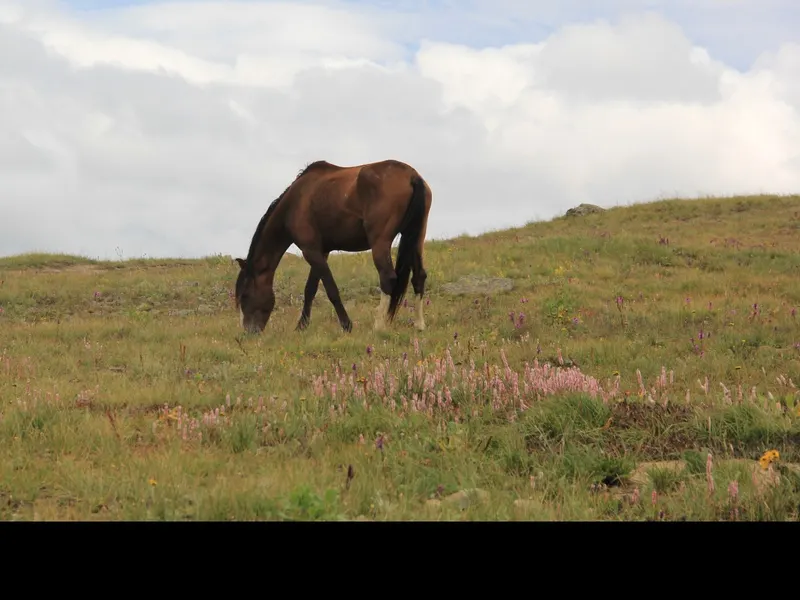
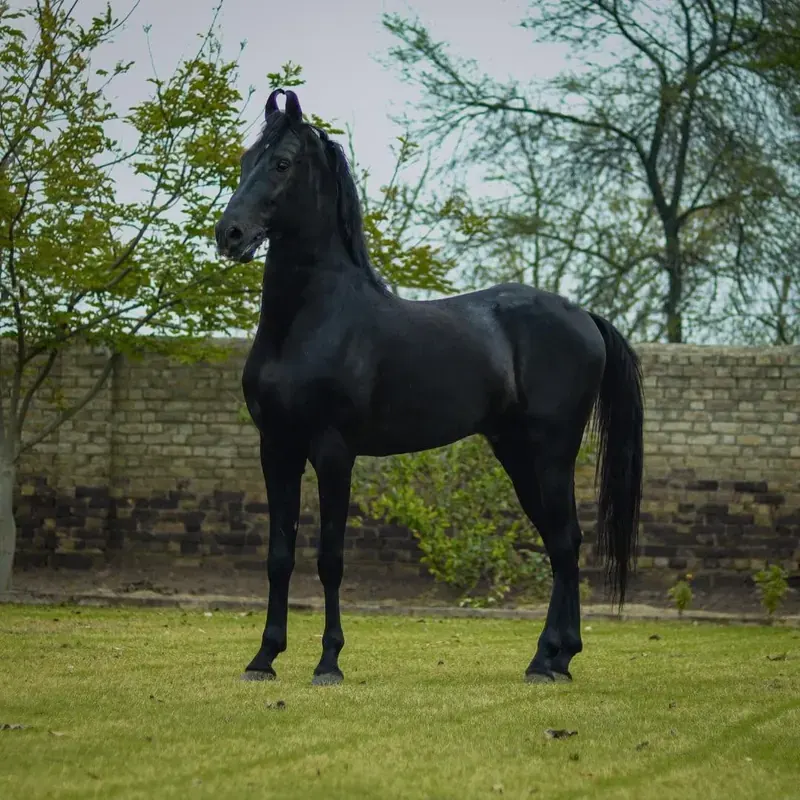
So how does the Marwari compare
- It is the tallest of the native breeds, so it has reach and presence.
- Its meeting ears are shared with the Kathiawari and the Balochi. The Kachchhi-Sindhi's ears stop short.
- It is spirited and quick to react, so it needs an experienced rider.
- India has restricted the export of its native breeds since 1952, so a horse sold elsewhere as a Marwari is usually bred locally from Marwari type stock.
Curved ears alone do not prove a breed, and a breed name alone does not make a neza bazi horse. Judge the horse in front of you. Our Marwari horse guide explains how to check one. For the other end of the scale, read about Fusaichi Pegasus, the most expensive horse in the world.
Sources
- ICAR-NBAGR, registered breeds of horse and pony, read on 18 November 2026.
- Gupta and others, 2012, Phenotypic characterization of Indian equine breeds, Animal Genetic Resources, volume 50.
- Singh, Yadav and Mehta, 2002, Breed characteristics of Marwari and Kathiawari horses, Indian Journal of Animal Sciences.
- Pal and others, 2021, Phenotypic characterization of Kachchhi-Sindhi horses of India, Indian Journal of Animal Research.
- Stud Book of Indigenous Horses, breed information for the Nukra.
- Friends of Marwari and Kathiawari Horse UK, breed page.
- Balochi horse, Wikipedia, citing Oklahoma State University, Breeds of Livestock, read on 18 November 2026.
Frequently asked questions
Which horse breed is best for neza bazi?
No single breed is best. Neza bazi rewards a horse that gallops straight, stays calm in a crowd and holds its line while the rider leans down to the peg. Marwari, Kathiawari, Sindhi, Nukra and mixed desi horses are all ridden, and training matters more than the breed name.
Is the Marwari horse used for tent pegging?
Yes. Breed societies list tent pegging among the disciplines in which the Marwari and the Kathiawari are growing in popularity, alongside endurance riding, safaris and ceremonial work.
What is the difference between a Marwari and a Kathiawari horse?
The Marwari comes from Rajasthan and is taller and heavier, with a long, lean face. The Kathiawari comes from Gujarat, is smaller, and has a concave face that is wide at the eyes and narrow at the muzzle. Both have ears that curve inward.
Is the Nukra a recognised horse breed?
The Nukra is the white horse linked with Punjab. Breeders have written a standard for it, but it is not among the seven horse and pony breeds registered by ICAR-NBAGR, India's national breed registry, as read in November 2026.
How tall is a Marwari horse?
Marwari stallions average about 150 cm at the withers, and taller lines reach 15 to 16 hands, roughly 152 to 163 cm. A government study of six Indian breeds found the Marwari the tallest.
Which horses won the Amritsar Cup 2026?
The official results name the winning riders and teams but do not publish the breed of any horse. Dal Baba Bidhi Chand Team won the team event and the provisional individual winner is Bunty Singh.