Indian Cow Breeds for Milk: Gir, Sahiwal, Red Sindhi and Tharparkar
Gir, Sahiwal, Red Sindhi, Tharparkar, Rathi and Kankrej: India's main desi dairy breeds, how to recognise each and how to choose a good milking cow.
By Pets Bazar Editorial Team, Editors · Published · 5 min read
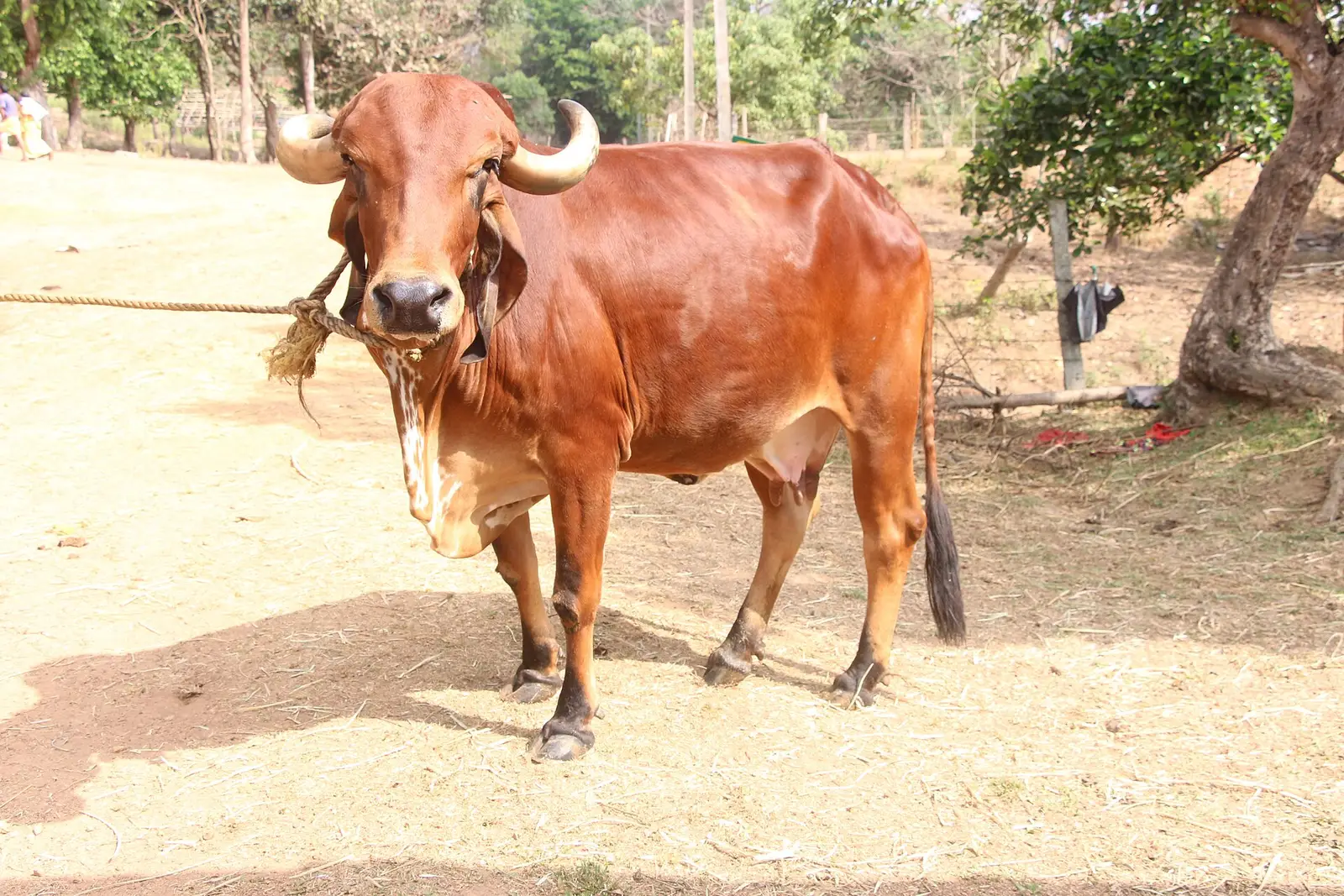
India's best-known desi breeds for milk are Gir, Sahiwal, Red Sindhi and Tharparkar. Rathi and Kankrej also give useful milk. All are zebu cattle, the humped type of the Indian subcontinent. They cope with heat and ticks better than European dairy cows, so they do well where feed and care are simple.
A desi cow will not match a well-fed Holstein cross for volume. She offers a steady yield with fewer problems in hot weather. If you farm in Pakistan, see our guide to cow breeds in Pakistan.
The breeds compared
| Breed | Home area | Look | Best for |
|---|---|---|---|
| Gir | Saurashtra, Gujarat | Red or red and white, domed forehead, long folded ears | Milk |
| Sahiwal | Punjab and north Rajasthan, and Sahiwal district in Pakistan | Reddish brown, loose skin, short horns | Milk |
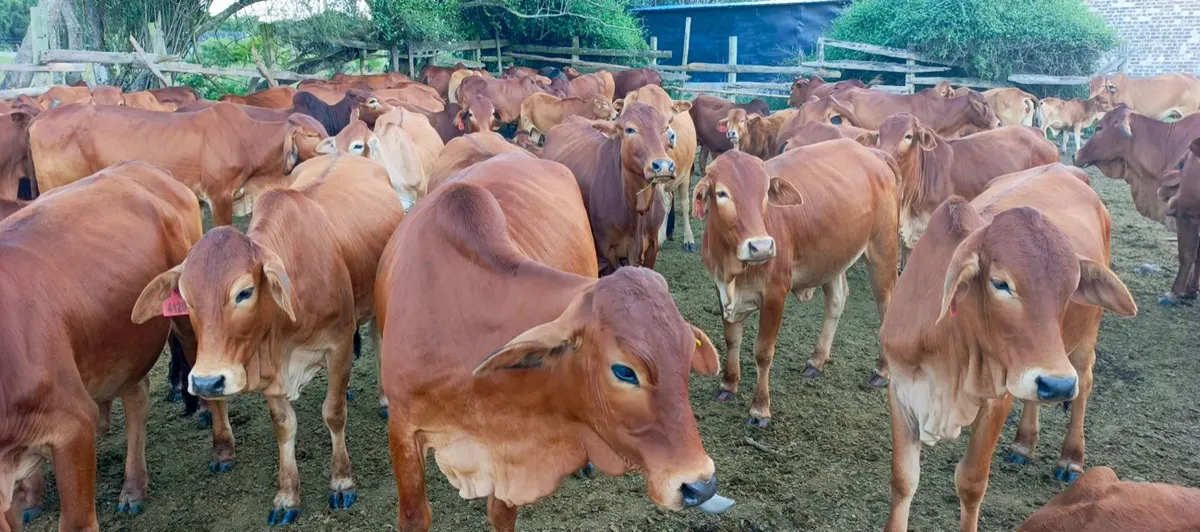
| Red Sindhi | Sindh and Balochistan in Pakistan | Deep red, small and rounded | Milk |
| Tharparkar | Thar desert of Rajasthan and Sindh | White to light grey, lyre-shaped horns | Milk and farm work |
| Rathi | North-west Rajasthan | Brown with white patches | Milk |
| Kankrej | Kutch in Gujarat and west Rajasthan | Silver grey to iron grey | Milk and farm work |
A breed name in an ad is a claim, not proof. Many cows sold as Gir or Sahiwal are crosses, so judge the animal in front of you.
Gir: the cow of the Gir hills
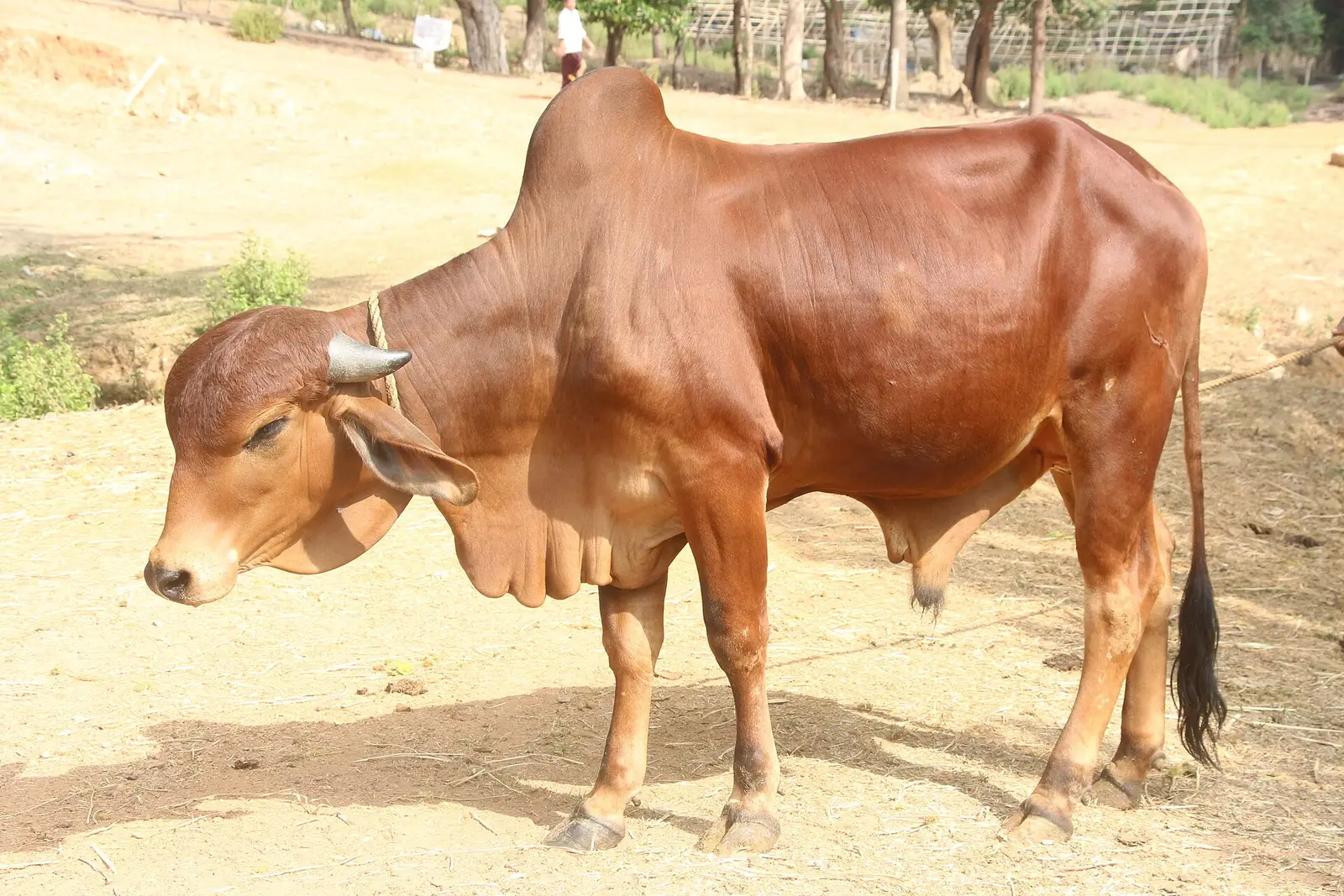
Gir comes from the Gir hills of Kathiawar in Gujarat, mainly Junagadh, Amreli, Bhavnagar and Rajkot districts. Local names include Kathiawari and Sorthi.
- Forehead: broad and domed, so the eyes look half closed.
- Ears: long and hanging, folded like a leaf, with a notch near the tip.
- Horns: they curve down and back, then turn up in a half-moon shape.
- Coat: red, or red and white in patches.
Gir cattle were exported to Brazil, Mexico, the United States and Venezuela. In Brazil the breed is called Gyr. Tamil Nadu Agricultural University gives 1,200 to 1,800 kg of milk per lactation.
Sahiwal: the red dairy cow of Punjab
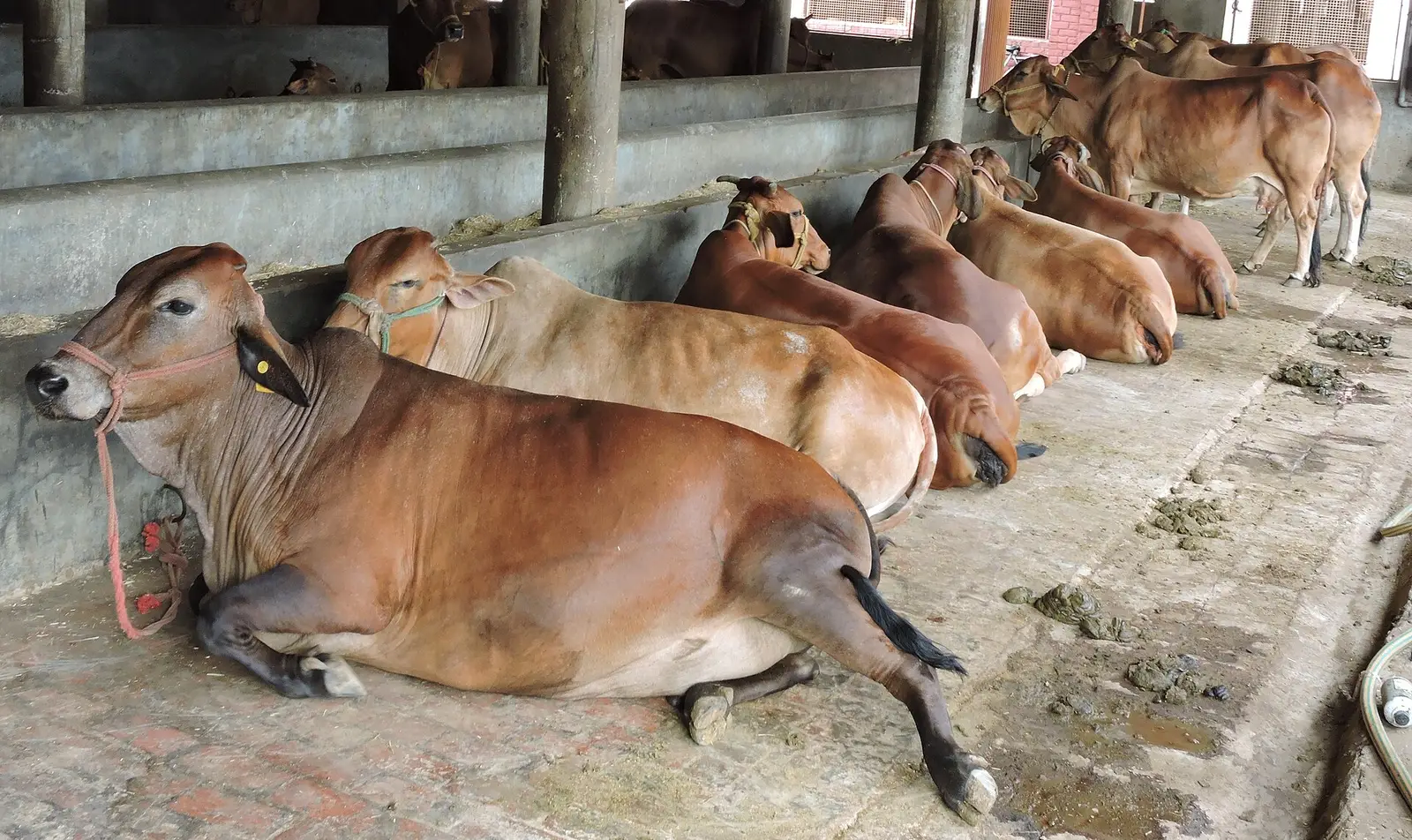
Sahiwal is named after Sahiwal district in Pakistani Punjab. In India its home area is Ferozepur and Amritsar in Punjab and Sri Ganganagar in Rajasthan. The university calls it the best indigenous dairy breed and gives 1,400 to 2,500 kg per lactation.
- Coat: reddish brown or pale red, sometimes with white patches.
- Body: heavy and rounded, with loose skin.
- Horns and hump: short horns. Bulls have a large hump.
Sahiwals were taken to Kenya in colonial times. In Australia, Sahiwal and Red Sindhi cattle were crossed with Jerseys to create the Australian Milking Zebu, bred for heat tolerance and tick resistance.
Red Sindhi, Tharparkar, Rathi and Kankrej
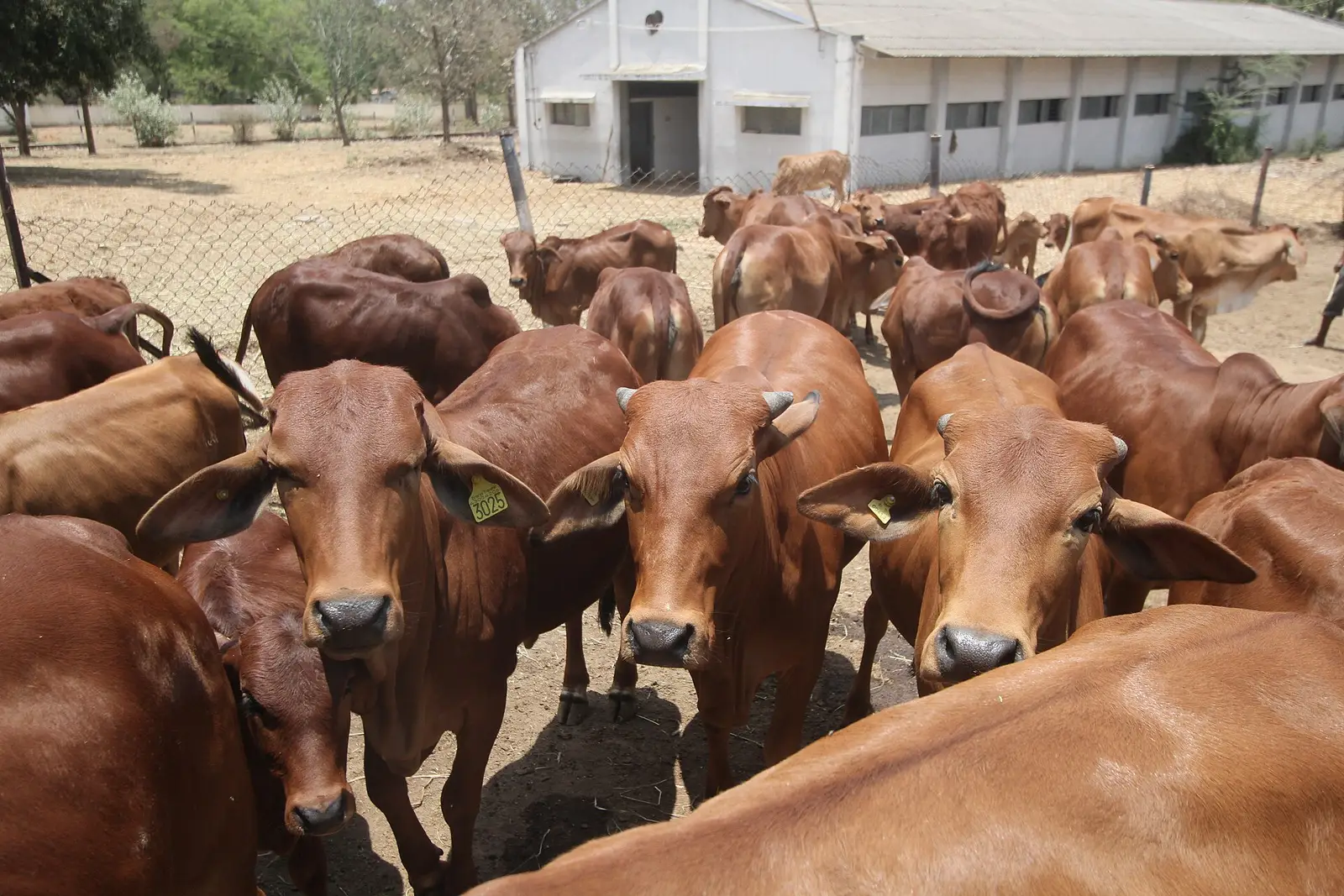
Red Sindhi. Its home area is around Karachi and Hyderabad in Sindh and Las Bela in Balochistan. In India it is kept mostly on organised farms. It is small and rounded, deep red to light red, with short curved horns. The university gives 1,250 to 1,800 kg per lactation.
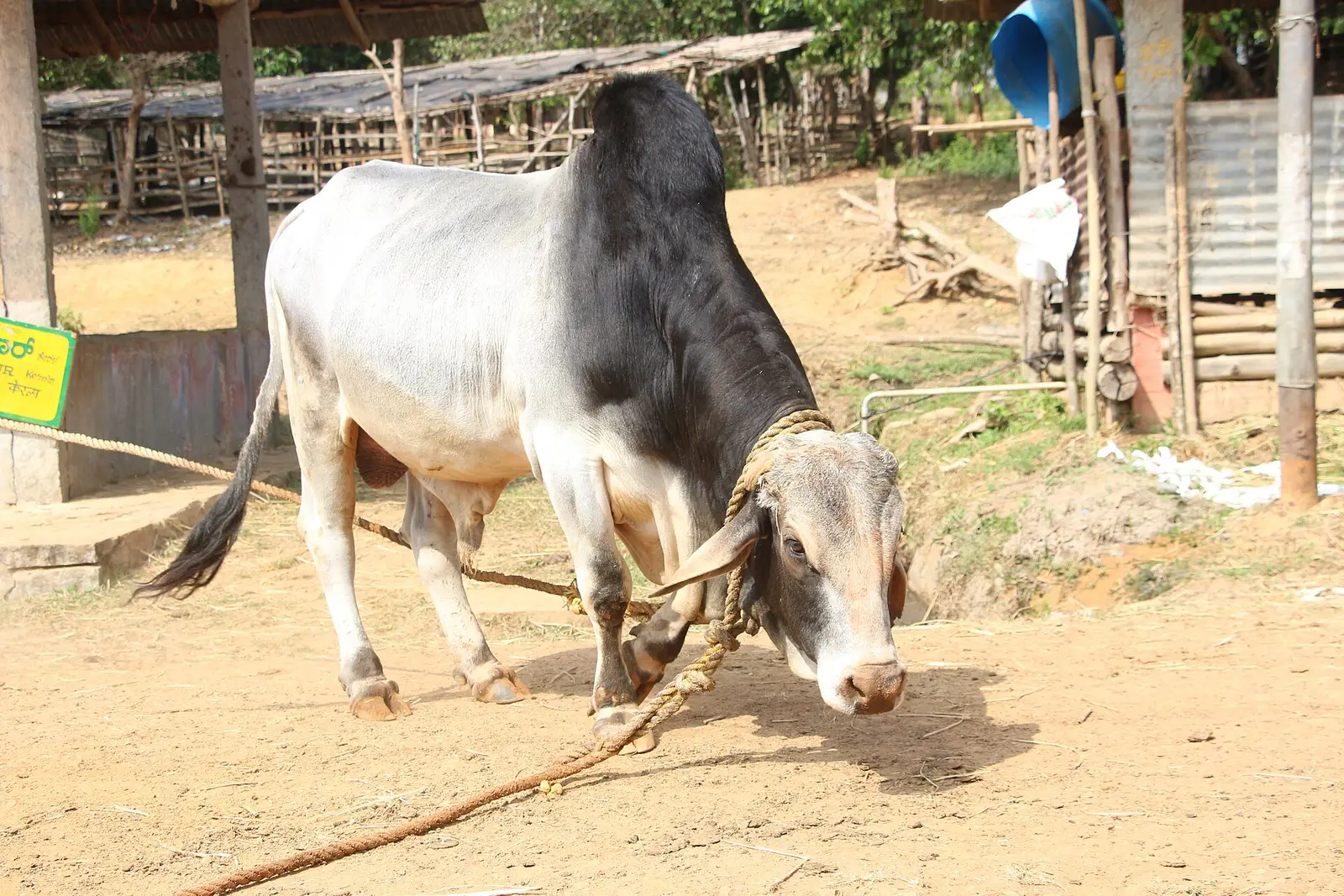
Tharparkar. Named after Tharparkar district in Sindh, it is also bred in the Thar desert of Rajasthan. It is white or light grey, with lyre-shaped horns. Cows give milk and bullocks plough.
Rathi. A dairy breed of Bikaner, Sri Ganganagar and Jaisalmer in Rajasthan, usually brown with white patches. FAO breed data give about 1,530 kg per lactation.
Kankrej. From the Rann of Kutch in Gujarat and Barmer and Jodhpur in Rajasthan. It is silver grey to iron grey, with lyre-shaped horns. Cows give about 1,400 kg per lactation, and the bullocks are strong draught animals.
How to choose a dairy cow
Pick a breed that does well near you. Then judge the cow herself.
- Age: check her teeth and ask for her calving dates. A cow in her first few lactations has more milking years ahead.
- Milk: watch her milked, morning and evening if you can.
- Udder and teats: the udder should feel soft after milking, with no hard lumps. Check all four teats, and look at the first milk for clots, a sign of mastitis.
- History: ask how many calves she has had and when she last calved.
- Health: look for bright eyes, a clean nose, a good appetite and steady walking.
- Records: ask for her ear tag number and vaccination record.
Keep a new cow apart from your herd for two to three weeks, and have a vet check her.
Feeding and care in Indian heat
Desi cows handle heat well, but they still need help in summer.
- Shade: trees are best. Otherwise use a shed with a thatched or white-painted roof.
- Water: clean, cool water at all times. Cows drink much more in hot weather.
- Feeding times: feed in the early morning, evening and night, when it is cooler.
- Diet: green fodder, dry fodder and concentrate matched to her milk. Ask your vet about a mineral mixture.
Crossbred cows: more milk, more care
Holstein Friesian and Jersey crosses are common on Indian dairy farms. A well-kept cross can give much more milk than a desi cow. But crosses cope worse with heat than pure zebu cattle. They need steady fodder, clean water, shade, cooling and regular vet visits. Without that, a good desi cow is often the safer choice.
Sources
- Tamil Nadu Agricultural University, indigenous cattle breeds.
- Gaur, Kaushik and Garg (2003), The Gir cattle breed of India, FAO.
- Press Information Bureau (2026), National Animal Disease Control Programme.
Buying a cow safely on Pets Bazar
Start on our India page, or browse all cows for sale and filter by city and breed.
- See the cow in person before you pay, and never send an advance to a seller you have not met.
- Take an experienced farmer or a vet with you.
- Read our safety tips first.
Frequently asked questions
Which Indian cow breed gives the most milk?
Tamil Nadu Agricultural University calls Sahiwal the best indigenous dairy breed. Gir, Red Sindhi and Tharparkar are also kept mainly for milk. Feed, health and care make a bigger difference than the breed name, so judge the cow you are buying.
How can I recognise a Gir cow?
A Gir has a broad, domed forehead, long hanging ears folded like a leaf and horns that curve down and back, then turn up. The coat is red, or red and white in patches. Many cows sold as Gir are crosses, so ask about the parents.
Is Sahiwal an Indian or a Pakistani breed?
Both. It is named after Sahiwal district in Pakistani Punjab. In India its home area is Ferozepur and Amritsar in Punjab and Sri Ganganagar in Rajasthan.
Which vaccines does a dairy cow need in India?
India's national programme vaccinates cattle against foot-and-mouth disease every six months and gives female calves aged 4 to 8 months a single brucellosis dose. Haemorrhagic septicaemia vaccine is usually given once a year before the monsoon. Ask your local veterinary doctor about other vaccines for your area.
Is a Holstein or Jersey cross better than a desi cow?
A well-kept cross gives more milk, but it feels the heat more and needs steady fodder, concentrate, shade, cooling and a vet nearby. If you cannot provide that, a good desi cow is often the safer choice.
How old should a dairy cow be when I buy her?
A young cow that has calved once or twice and is milking now is a good choice. You can see her yield and her udder, and she has more milking years ahead. Check her teeth and ask for her calving dates.
Which breed suits a dry area?
Tharparkar, Rathi and Kankrej come from the dry lands of Rajasthan, Gujarat and Sindh and cope with scarce fodder and water. Tharparkar and Kankrej bullocks are also used for farm work.