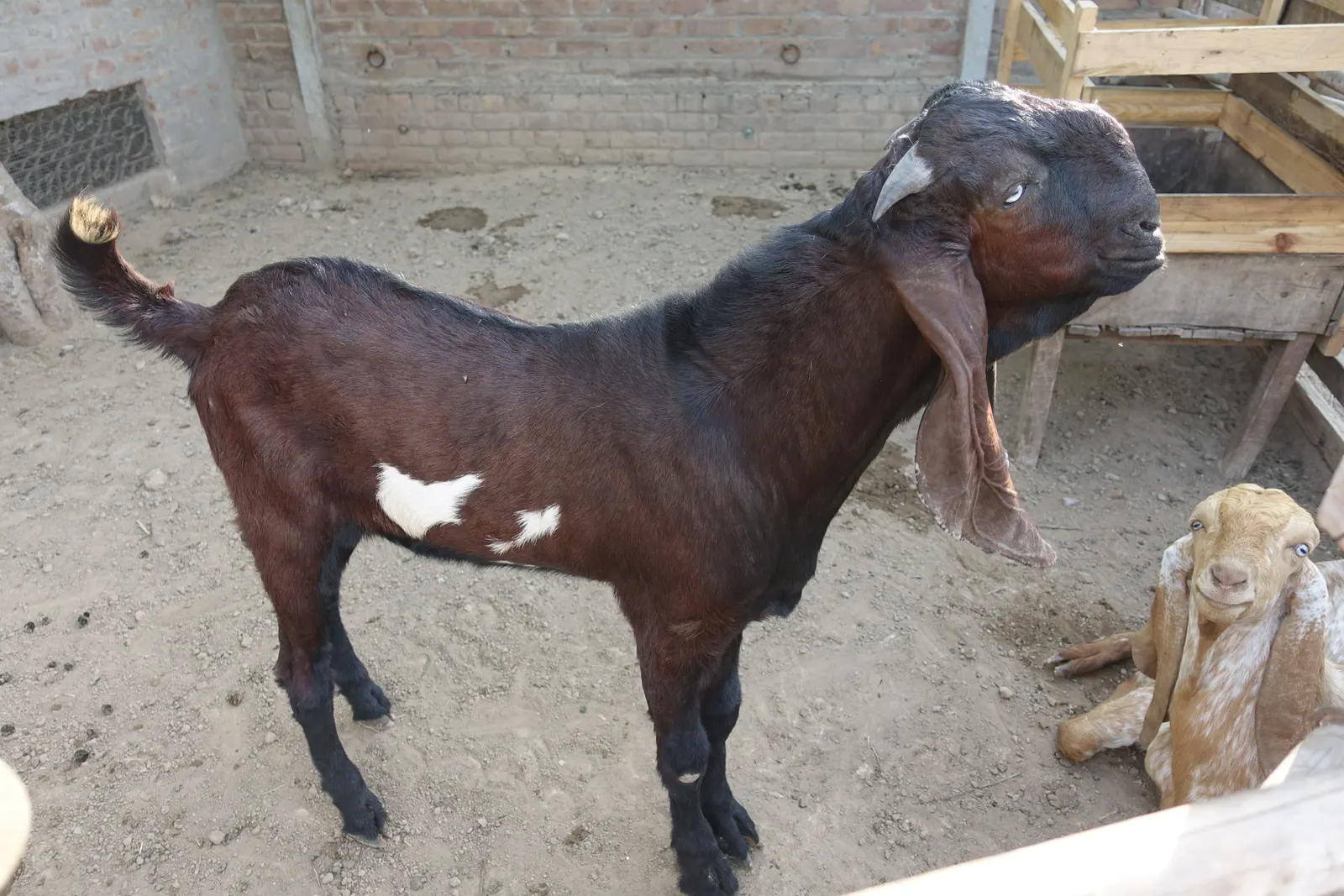
Orf in Goats: Sore Mouth Signs, Care and How to Protect Yourself
Scabs on your goats' lips? It may be orf, also called sore mouth. How it spreads, why kids suffer most, how it reaches people, and what vets advise.
In this article6 sections
If your goats have rough brown scabs on their lips and muzzle, and they eat slowly as if their mouths hurt, the likely cause is orf. It is also called sore mouth, scabby mouth or contagious ecthyma. Orf is caused by a pox virus, spreads fast through a herd, and can pass to the people who handle the animals. The good news is that most goats recover in a few weeks. The care you give in those weeks, especially to young kids, decides how much you lose.
How to recognise orf
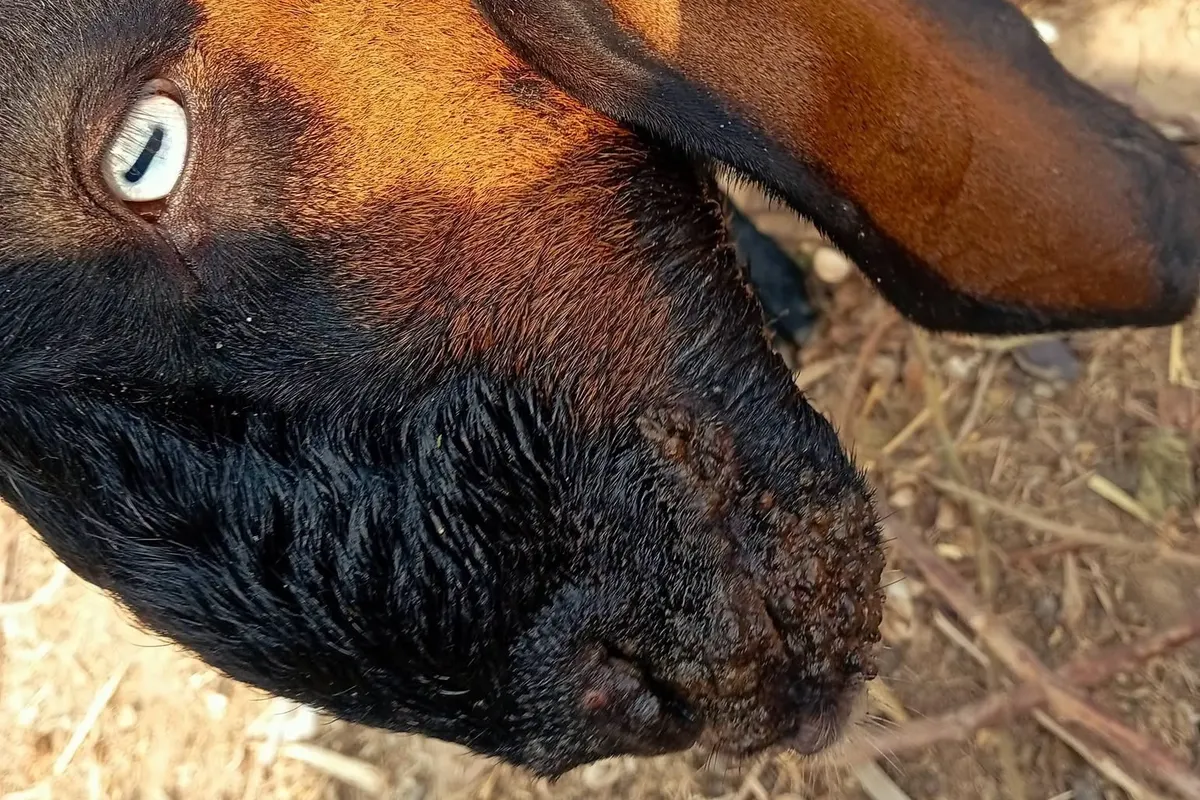
Orf starts as small red spots on the lips, usually where the lips meet the skin and around the front teeth. These turn into blisters and then into thick, crusty scabs. In bad cases the lips and muzzle swell, and the sores spread to the nostrils, face, ears and feet. Sick goats eat less because chewing hurts, and young kids may stop suckling.
Note: the next two photos show close-ups of sores on a goat's muzzle and a doe's udder.
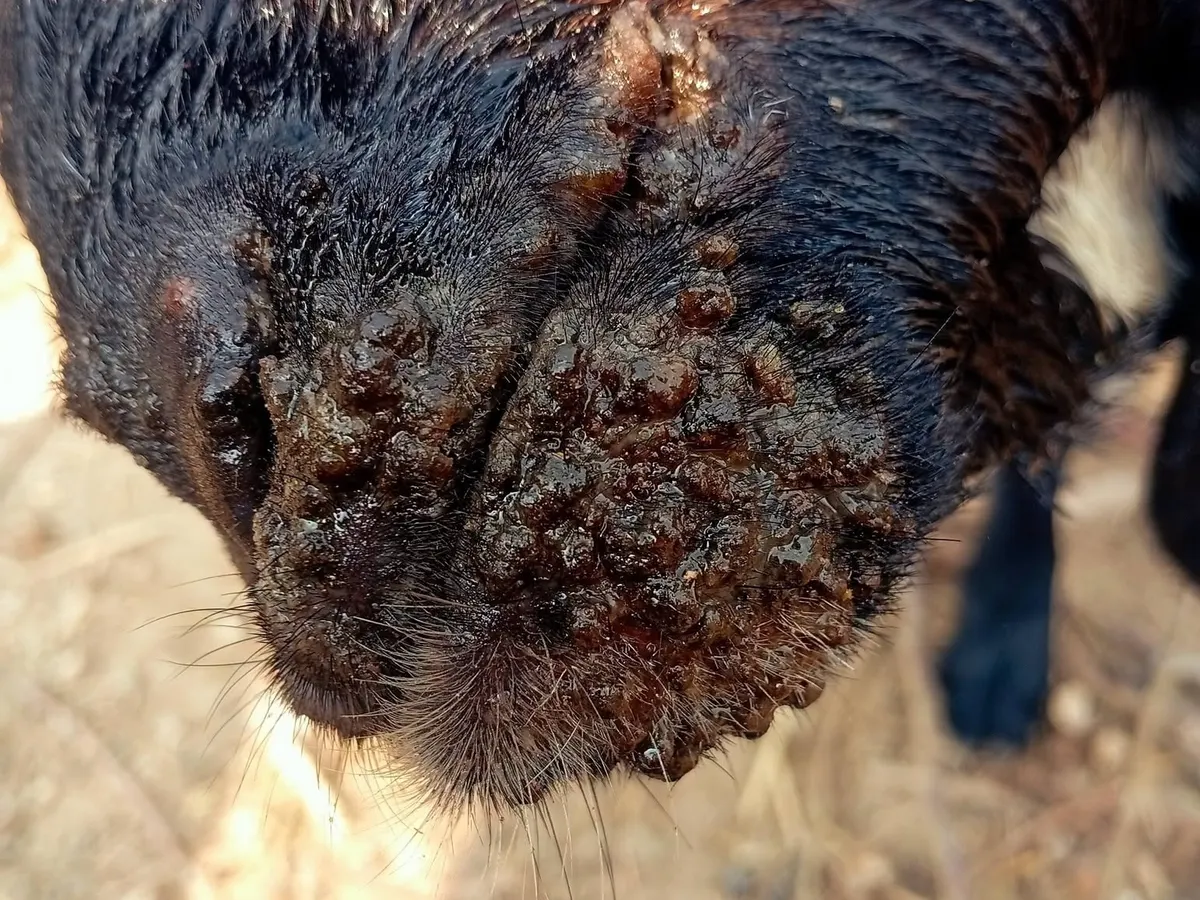
Orf can look like other diseases, including goat pox and foot and mouth disease. If many goats are sick, an adult goat seems very ill, or sores appear on the feet with lameness, call a vet to confirm what it is.
How it spreads and why it returns
The virus enters through small cuts and scrapes in the skin of the mouth. Rough forage, thistles and thorny brush cause many of these scrapes. A study of sheep and goats in Punjab by the University of Veterinary and Animal Sciences, Lahore, sampled from 2020 to 2021, found most orf from September to December, and linked it to skin injuries from prickly trees and cotton stubble. That matches what farmers see each November: goats graze dry cotton bolls, or are fed kikar (acacia) branches while green fodder is short, and both scratch the lips and let the virus in.
From one sick goat it spreads by direct contact and through shared feed troughs, water bowls, feeders, bedding and pens. The virus is tough. Dried scabs that fall on the ground or in the shed can stay infectious for months, and in cool, dry places for years. That is why the same farm often sees orf again.
Kids and does are most at risk
Young kids suffer most, because their soft lips are easily scratched and their immune systems are still developing. In the same Punjab study, almost half of kids up to four months old had been infected, against about one in fourteen adult goats. When a kid with a sore mouth suckles, it can pass the virus to its mother's teats and udder.
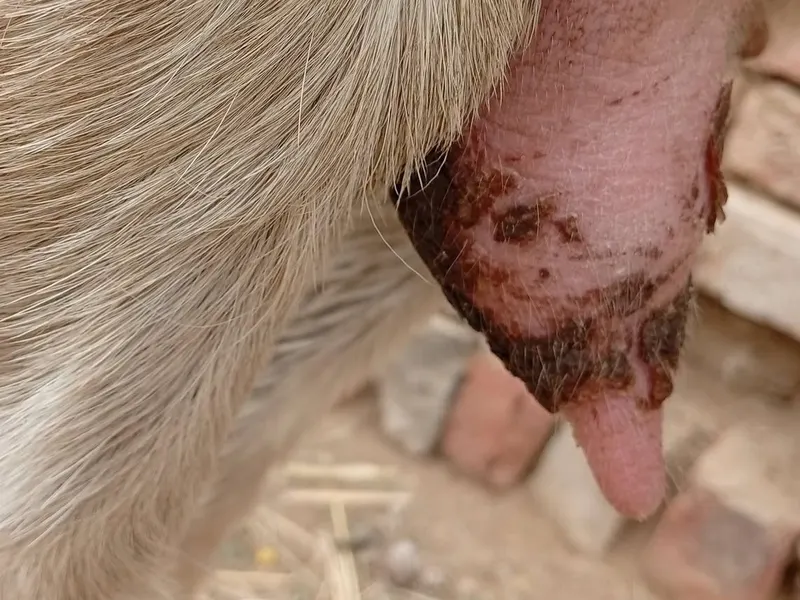
This is where orf becomes dangerous. A kid with a sore mouth struggles to drink, and a doe with sore teats may refuse to feed it. Hungry kids weaken fast and can die. Teat sores can also lead to mastitis in the doe. So while orf is rarely fatal on its own, it is not harmless.
Caring for a herd with orf
There is no medicine that kills the orf virus. Most goats heal in one to four weeks and the scabs fall off without a scar. Your job is to keep every animal eating and to stop the spread.
- Wear gloves. Use rubber or disposable gloves whenever you touch sores, scabs or sick animals, and wash your hands with soap afterwards.
- Separate sick and healthy goats. Give each group its own feed and water bowls, and clean shared equipment.
- Feed soft food and clean water. Soft green fodder is easier on a sore mouth than dry, rough feed. Keep thorny branches out of the feed while the herd heals.
- Watch every kid. If a kid is not suckling, help it feed or hand feed it with milk. Do not move it onto another doe, or you spread the virus.
- Leave the scabs alone. Pulling them off slows healing and puts virus on your hands and in the shed.
- Keep flies away. Open sores attract flies, and maggots in the wounds are a real risk in warm weather.
- Call a vet if sores look infected, a doe's udder turns hard, hot or swollen, or a goat stops eating. Some vets suggest a softening ointment for thick scabs. Only a vet should decide on antibiotics, pain relief, injections or any ointment.
Burn or bury fallen scabs and bedding from sick pens where you can, so they do not seed the next outbreak.
Can people catch orf?
Yes. Orf passes to people who touch sores or contaminated equipment, usually through a cut on the hand. Farmers, butchers and people who bottle feed lambs and kids are most at risk. It causes a raised sore on a finger or hand, sometimes with mild fever or swollen glands, and usually heals by itself in about six weeks. It does not spread from person to person. See a doctor if the sore is painful or spreading, and tell them you work with goats.
Is there a vaccine?
Yes, but it needs care. Orf vaccine is a live vaccine scratched onto the skin, usually on the inside of the thigh or the underside of the tail. Vets advise using it only on farms that have already had orf, because it brings live virus onto the farm, and the vaccine can infect people too. Pregnant does are usually vaccinated about two months before kidding, and vaccinated goats are kept apart until their scabs fall off. Immunity is good but not complete.
Farmers in Punjab report that orf vaccine is not part of the free government vaccination drives, so it has to be bought privately and given by a vet. If orf comes back to your herd every November, ask your vet whether to vaccinate and how far ahead of the risk season to do it.
If you are building or growing a herd, our guide to goat breeds in Pakistan covers housing, feeding and health basics. When buying, see the goats in person and check the lips, feet and udder before you agree. Browse goats on Pets Bazar to find sellers near you.
Frequently asked questions
What is orf in goats?
Orf is a skin disease of goats and sheep caused by the orf virus, a type of pox virus. It is also called sore mouth, scabby mouth or contagious ecthyma. It causes blisters that turn into thick scabs on the lips, muzzle and sometimes the teats, feet and face.
Can humans get orf from goats?
Yes. People catch orf by touching sores, scabs or contaminated equipment, usually through a cut on the hand. It causes a sore on the finger or hand that heals by itself in about six weeks. Wear rubber or latex gloves, wash your hands with soap, and see a doctor if the sore is painful, spreads or you get a fever. It does not spread from person to person.
How long does orf last in goats?
Usually one to four weeks. The scabs then fall off and the skin heals without a scar. Do not pull the scabs off, because that slows healing and puts virus on your hands.
Is orf in goats fatal?
Orf itself is rarely fatal. The danger is to young kids that stop suckling because their mouths hurt, and to does whose sore teats make them refuse to feed their kids. Those kids can weaken and die without hand feeding. Bacterial infection, maggots in the sores and mastitis in the doe can also make the disease serious.
Is there a vaccine for orf?
Yes, a live vaccine is given by scratching it onto the skin. Vets advise using it only on farms that have already had orf, because it brings live virus onto the farm. It must be timed before the risk period, and vaccinated goats must be kept apart until their scabs fall off. Ask your vet whether and when to use it.
What is the treatment for orf in goats?
There is no medicine that kills the virus. Care means isolating sick goats, giving soft feed and clean water, helping kids that cannot suckle, and keeping flies off the sores. A vet may prescribe antibiotics if the sores become infected. Do not use any injection without a vet's advice.
Sources
6
- Merck Veterinary Manual, "Contagious Ecthyma in Sheep and Goats", reviewed 2026, read on 23 November 2026.
- US Centers for Disease Control and Prevention, "About Orf Virus" and "Orf Virus in Animals", read on 23 November 2026.
- Schoenian, S., University of Maryland Extension, "Soremouth (orf) in small ruminants", republished by Ohio State University Sheep Team, 2019.
- Hussain, I., Khan, M. U. R., Aslam, A., Rabbani, M. and Anjum, A., "Seroprevalence of Contagious Ecthyma and Its Associated Risk Factors in Sheep and Goats of Punjab, Pakistan", Zoological Society of Pakistan, published 2023.
- Iowa State University, Center for Food Security and Public Health, "Contagious Ecthyma" factsheet, 2023.
- NC State Extension, "Controlling Sore Mouth in Meat Goats", read on 23 November 2026.