Sahiwal Cow: Milk per Day, How to Identify One and What to Feed
How much milk a Sahiwal cow gives per day, how to tell a pure Sahiwal from a cross, what to feed for more milk, and where the breed comes from.
By Pets Bazar Editorial Team, Editors · Published · 5 min read
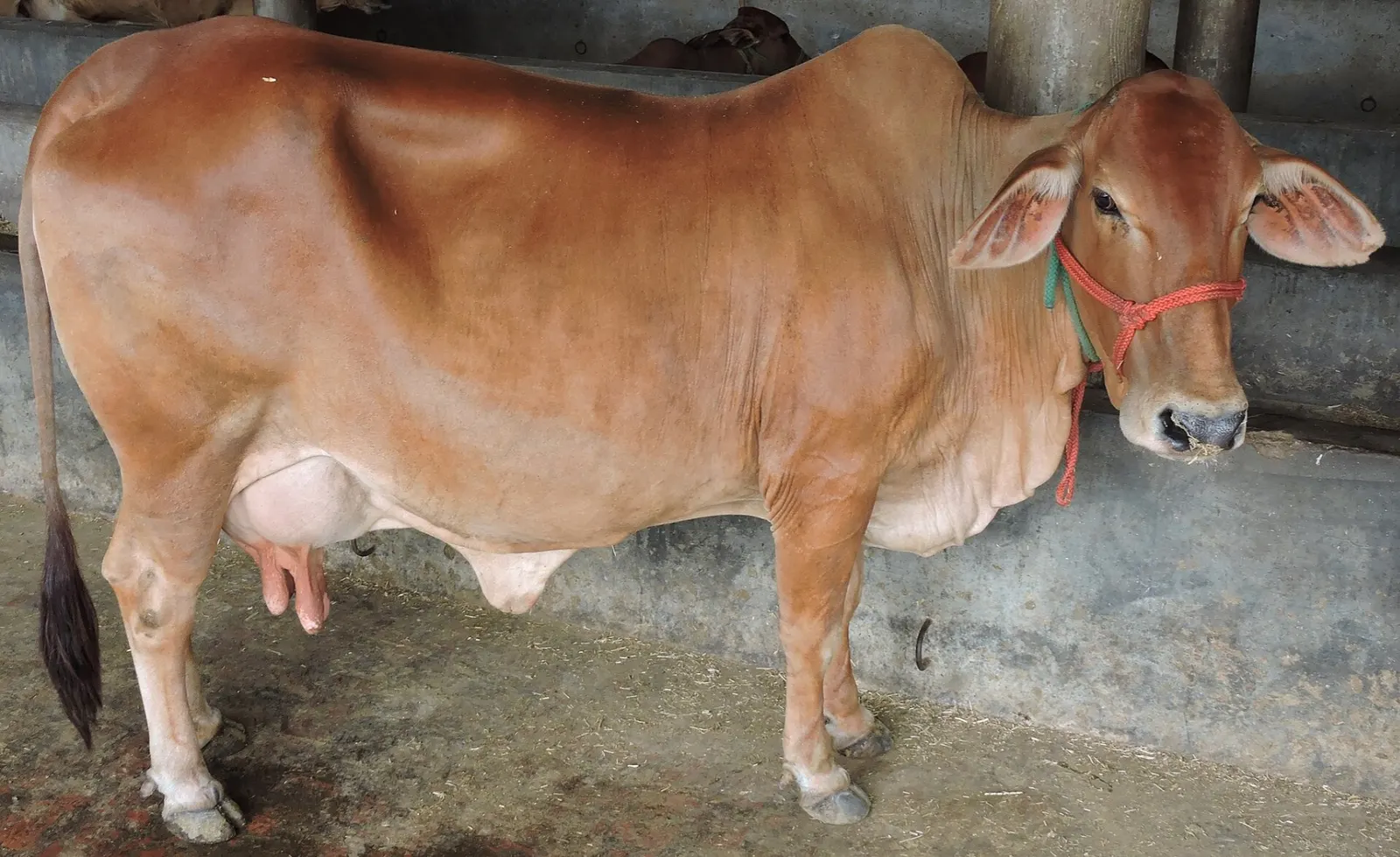
A Sahiwal cow gives about 6 to 7 litres of milk a day on average across a lactation. Recorded herds give about 1,475 to 1,550 litres per lactation in Pakistan and about 2,325 kg in India's organised herds. The milk is rich, at about 4.5 to 4.9 percent fat.
For the other local breeds, see our guide to cow breeds in Pakistan.
Sahiwal cow quick facts
| Fact | Sahiwal cow | Source |
|---|---|---|
| Home tract | Sahiwal, Okara, Pakpattan, Multan and Faisalabad, Punjab | LDDB |
| Other names | Lola, Montgomery | Khan et al., 2008 |
| Adult cow weight | About 300 to 350 kg | LDDB |
| Milk per lactation | About 1,475 to 1,550 litres (Pakistan), 2,325 kg (India) | Bajwa et al., 2004; Khan et al., 2008; Punjab, India |
| Lactation length | About 235 to 250 days (Pakistan), 318 days (India) | Same |
| Milk fat | About 4.5 to 4.9 percent | LDDB; SKUAST |
| Age at first calving | About 41 to 45 months | Khan et al., 2008; SKUAST |
| Calving interval | About 440 to 450 days | Khan et al., 2008; Punjab, India |
Where the Sahiwal comes from
The breed takes its name from Sahiwal district in Punjab, called Montgomery in British times. Herders once kept large herds in the dry country along today's Pakistan and India border; irrigation later turned them into smaller farm herds. Pakistan had about 2.75 million Sahiwal cattle in the 2006 census.
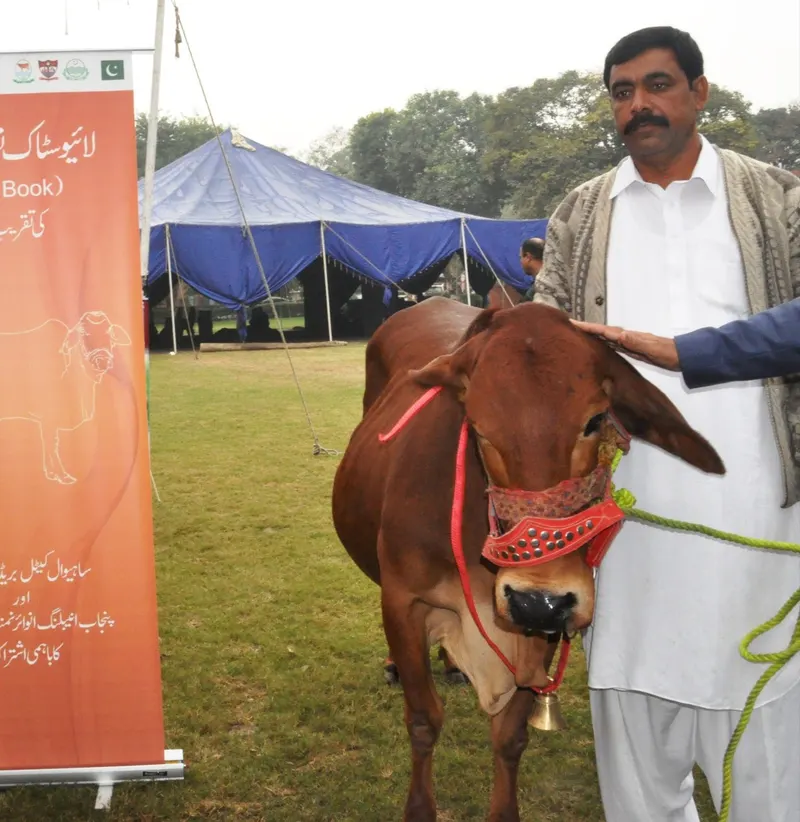
Recorded herds are kept on government farms such as the Livestock Experiment Station at Bahadurnagar, Okara. A research centre for Sahiwal conservation opened in 2004, and in 2017 the Punjab Livestock and Dairy Department launched the province's first herd book to register and improve local breeds.
How much milk does a Sahiwal cow give per day
Across the whole lactation, about 6 to 7 litres a day. Recorded averages:
- Okara, Pakistan: 1,475 kg in 248 days over 2,039 lactations, about 6 kg a day (Bajwa et al., 2004).
- Pakistan, national figure: about 1,550 litres in 235 days, about 6.6 litres a day (Khan et al., 2008).
- Indian Punjab, organised herds: 2,325 kg in 318 days, ranging from 1,600 to 2,750 kg, with an average of 7.3 kg a day.
- Kenya: 1,574 kg in 293 days, from 972 to 2,490 kg depending on management.
A cow gives much more in the first weeks after calving and less near the end. The best Sahiwal cows have given 36.3 litres in a day at national competitions in Pakistan. Sellers often quote the peak, so watch the cow milked morning and evening.
Season matters. In the Okara herd, cows that calved in winter gave about 1,546 kg against 1,362 kg for summer calvers.
How to identify a pure Sahiwal cow
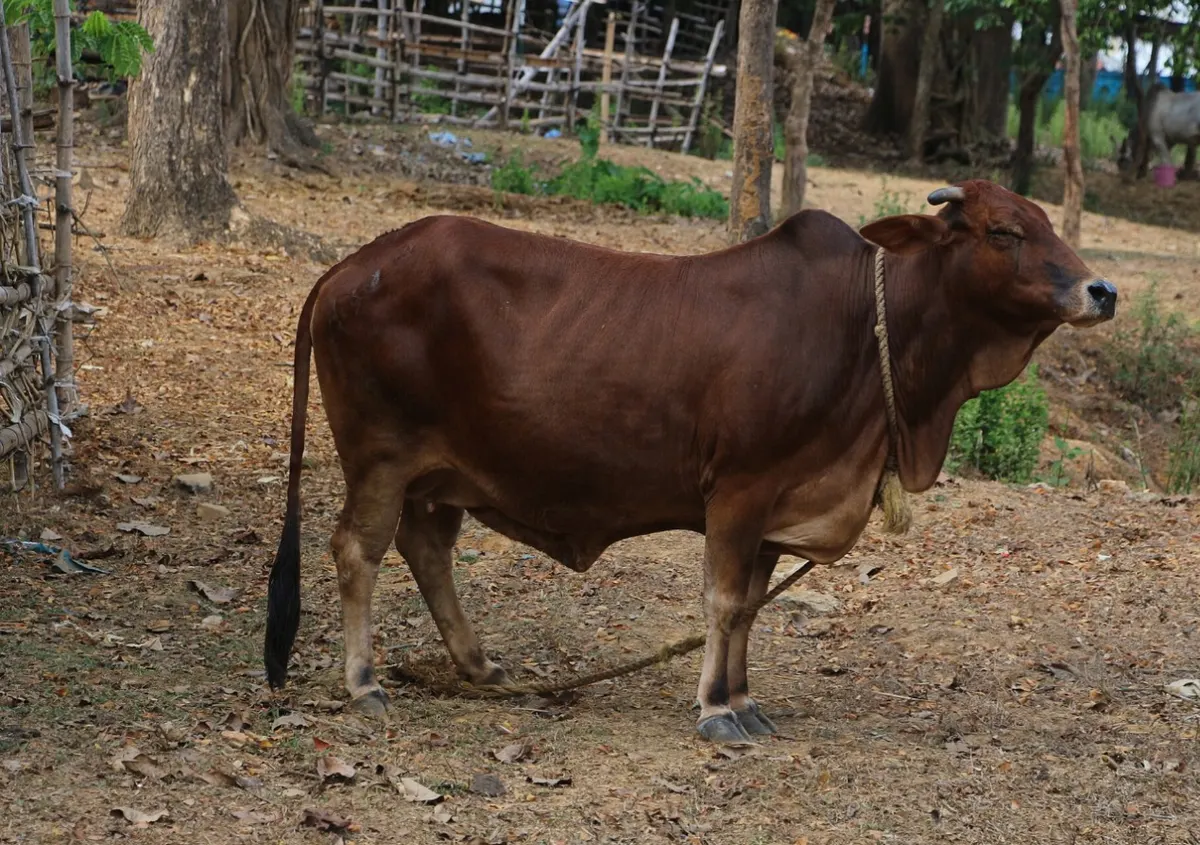
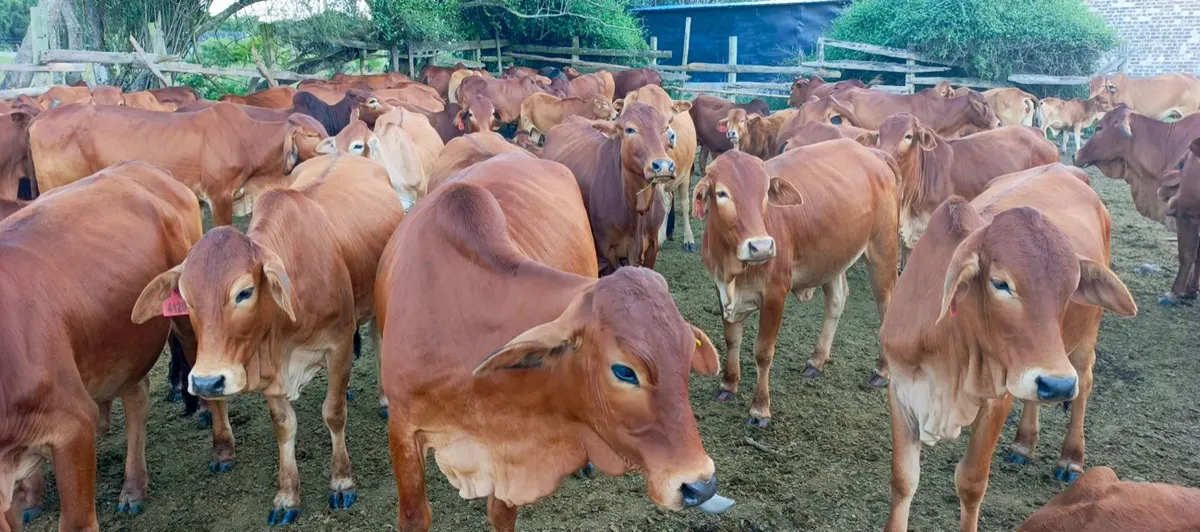
- Colour: reddish brown, from light red to mahogany, sometimes with small white patches. Bulls are darker at the head, hump and legs.
- Skin and dewlap: loose, fine skin and a large, deep dewlap.
- Hump: big in bulls, small in cows.
- Head: medium drooping ears, short thick horns, a lighter muzzle and a pale ring around the eye. The Red Sindhi, often confused with the Sahiwal, has a darker muzzle.
- Tail: a black switch that nearly reaches the ground.
- Udder and nature: a large udder and a calm temper.
Black and white patches, a long straight Holstein frame or a small dewlap point to Friesian or Jersey blood. For one such cross, see the Friesian Cholistani cross cow.
What to feed a Sahiwal cow for more milk
- Green fodder. Berseem and lucerne in winter, maize, sorghum and mott grass in summer. About 6 to 8 kg of lucerne equals 1 kg of concentrate in protein.
- Dry roughage. Wheat straw fills gaps, but it is low in protein, so pair it with concentrate.
- Concentrate. About 1 kg of a balanced mix for every 2.5 to 3 litres of milk.
- Minerals and salt. A mineral mixture every day, at the amount on the bag or set by your vet.
- Water. About 1 litre per 10 kg of body weight plus 1.5 litres per litre of milk. A 330 kg cow giving 7 litres needs about 44 litres a day, more in summer.
Change feed slowly over a week or two.
Care, breeding and heat
The Sahiwal tolerates heat and resists ticks and parasites better than European breeds, but shade, water near the shade and feeding in the cool hours still raise milk. Recorded cows first calve at about 41 to 45 months and calve every 440 to 450 days. Feeding heifers well and breeding cows on time shortens both. Give a dry period of about two months, and ask your vet about vaccines for foot and mouth disease and haemorrhagic septicaemia.
Sahiwal around the world
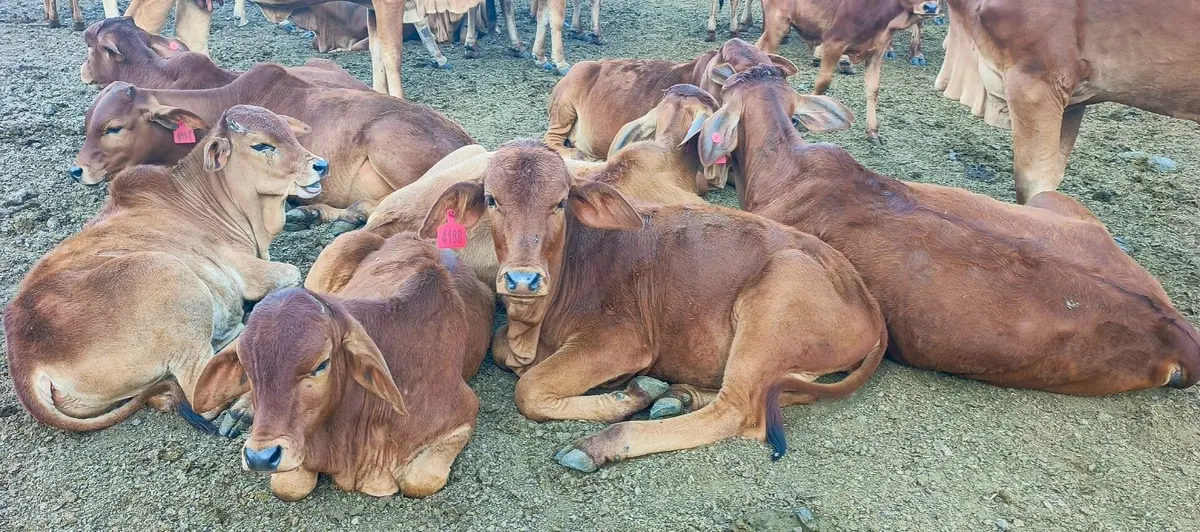
The FAO records the Sahiwal in 12 African countries. Kenya's National Sahiwal Stud at Naivasha, founded in 1962, keeps the breed for milk and beef. Australia brought Sahiwal cattle in the early 1950s and used them to breed the Australian Milking Zebu and the Australian Friesian Sahiwal. India keeps herds in Punjab and Rajasthan and crossed the Sahiwal with Holsteins to make the Frieswal. For India's native milk breeds, see Indian cow breeds for milk.
Buying tips
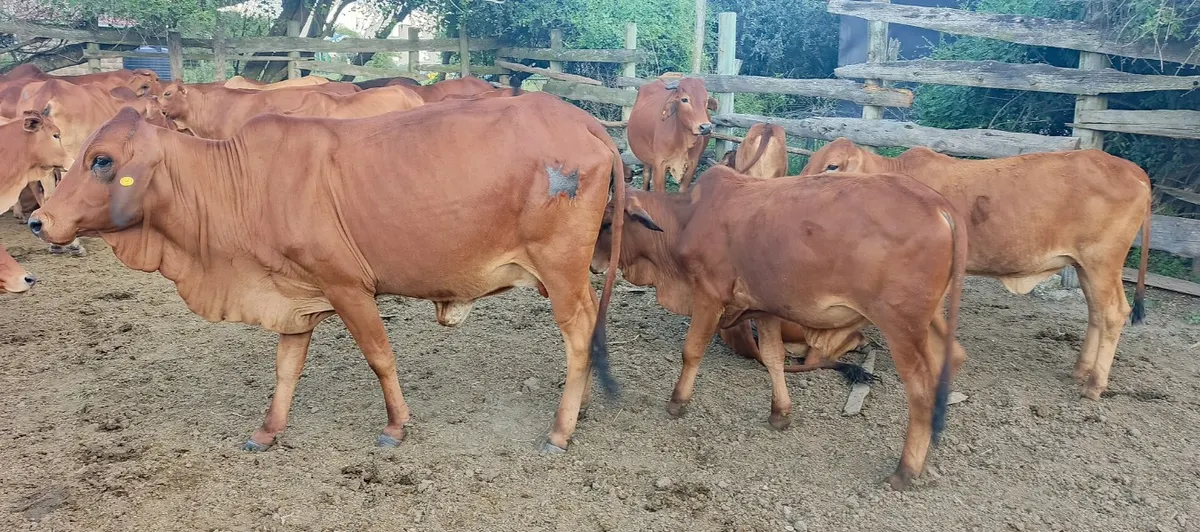
Ask the cow's age, lactation number and calving date, watch her milked twice, check all four teats and ask for herd book or insemination papers. Read our guide to buying an animal safely and find a vet near you. Browse cows for sale, including Sahiwal cows, or post a free ad.
References
- Bajwa et al. (2004), Environmental factors affecting milk yield and lactation length in Sahiwal cattle, Pakistan Veterinary Journal.
- Khan et al. (2008), Genetic resources and diversity in Pakistani cattle, Pakistan Veterinary Journal.
- LDDB, Breeds; NDDB, Sahiwal.
- SKUAST Jammu, Sahiwal cattle; Dairying in Punjab: a statistical profile, cattle and buffalo breeds (2014).
- Oklahoma State University, Sahiwal cattle; ILRI, Kenyan Sahiwal; Rare Breeds Trust of Australia, Sahiwal.
- Kerala Agricultural University, Cattle feeding; CIMMYT and ILRI, Water for dairy cattle.
Frequently asked questions
How much milk does a Sahiwal cow give per day?
About 6 to 7 litres a day on average across the whole lactation. A Pakistani government herd at Okara averaged 1,475 kg in 248 days, and India's organised herds average about 7.3 kg a day. Cows give much more at the peak, and the best have passed 36 litres in a day at national competitions in Pakistan.
How can I identify a pure Sahiwal cow?
Look for an even reddish brown coat, loose skin, a deep dewlap, medium drooping ears, short thick horns, a lighter muzzle with a pale ring around the eye, a black tail switch that nearly reaches the ground and a calm nature. Black and white patches, a long straight back or a very small dewlap suggest Friesian or Jersey blood. Ask for herd book or insemination papers.
What is the fat percentage of Sahiwal milk?
About 4.5 to 4.9 percent. Pakistan's Livestock and Dairy Development Board gives 4.5 percent, an Indian university extension page gives 4.9 percent, and Kenyan herds range from 3.5 to 5.3 percent. That is richer than Holstein milk.
What should I feed a Sahiwal cow for more milk?
Green fodder such as berseem, lucerne, maize, sorghum or mott grass, some wheat straw, about 1 kg of concentrate mix for every 2.5 to 3 litres of milk, a mineral mixture with salt, and clean water all day. Change feed slowly and ask a vet or livestock officer to set the amounts.
Is a Sahiwal better than a Holstein Friesian?
It depends on the farm. A Holstein gives far more milk with strong feed, cooling and vet care. A Sahiwal gives less but richer milk, handles heat and ticks much better and lives longer on simple feed. For small farms in hot regions, the Sahiwal is usually the safer cow.
Where does the Sahiwal breed come from?
From the Sahiwal district of Punjab, Pakistan, once called Montgomery. Its home tract covers Sahiwal, Okara, Pakpattan, Multan and Faisalabad. The breed is also kept in India, Kenya and other hot countries, and it helped create Australian dairy breeds.
At what age does a Sahiwal heifer first calve?
On recorded farms, at about 41 to 45 months, and cows calve about every 440 to 450 days. Good feeding of young heifers and timely breeding bring both figures down.