Parrots in Pakistan: Ringneck, Raw, Grey, Cockatiel and Budgie
Ringneck, Raw, Grey, cockatiel and budgie compared: size, lifespan, talking, male or female signs, and the Punjab rules on keeping native parrots.
By Pets Bazar Editorial Team, Editors · Published · 5 min read
Pakistan's most popular pet parrots are the ringneck (green tota), the Raw (Alexandrine), the Grey (African grey), the cockatiel and the budgie. Ringnecks and Raws are native wild birds, and in Punjab they may only be kept when registered. Cockatiels and budgies are home bred and easiest for beginners. Greys talk best but need the most care.
Parrots in Pakistan at a glance
| Bird | Size | Lifespan in care | Talking | Native to Pakistan |
|---|---|---|---|---|
| Ringneck (rose-ringed parakeet) | About 40 cm | 25 to 30 years | Good, clear speech | Yes |
| Raw (Alexandrine parakeet) | 56 to 62 cm | Up to 40 years | Good | Yes |
| Grey (African grey) | About 33 cm | 40 to 60 years | Best of all | No, Central Africa |
| Cockatiel | 30 to 33 cm | 16 to 25 years | Whistles, some words | No, Australia |
| Budgie (Australian parrot) | About 18 cm | About 8 years on average | Males can learn many words | No, Australia |
Sizes include the long tail. Lifespans are for birds kept well.
Ringneck parrot (green tota)
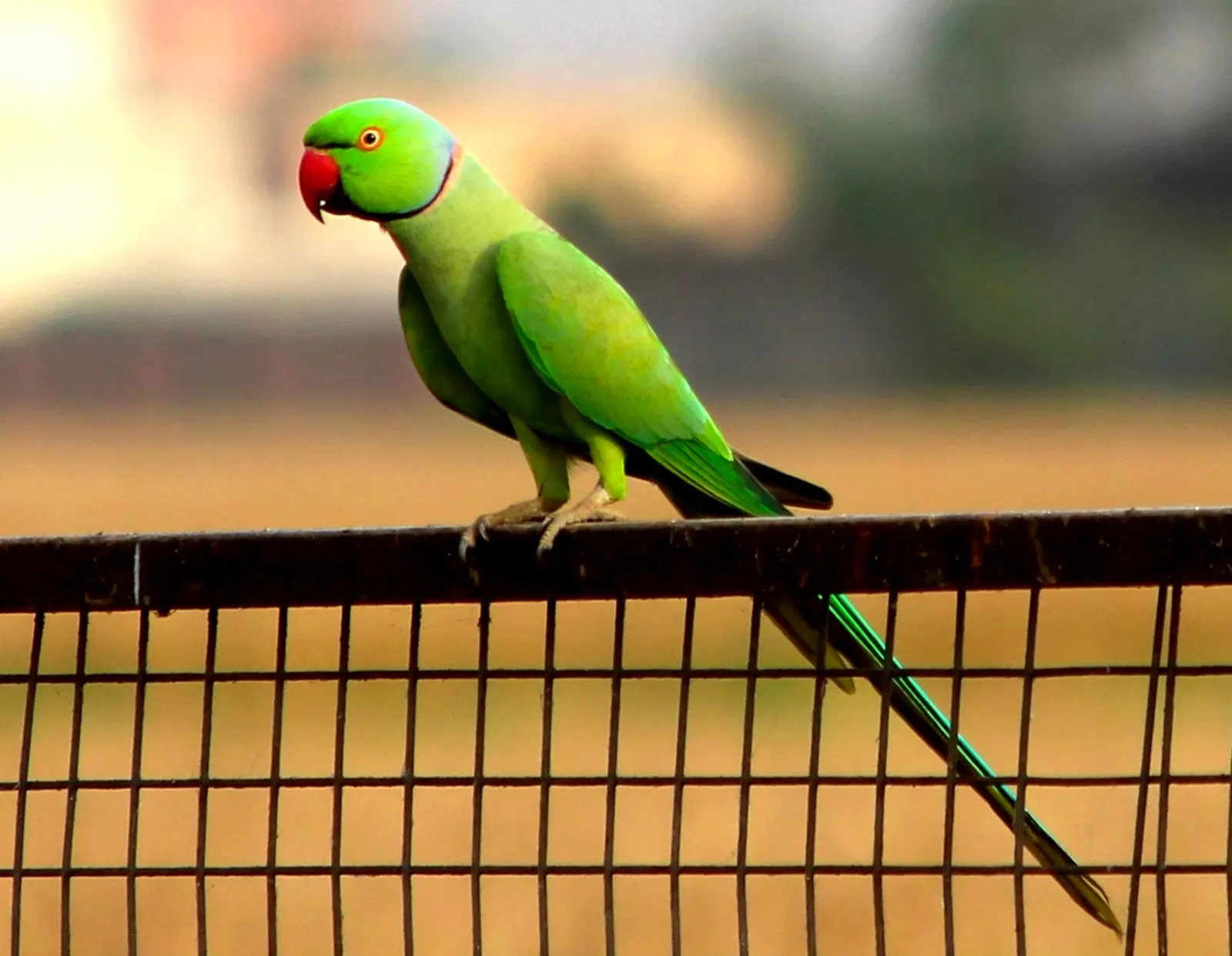
The rose-ringed parakeet is the green parrot seen across Pakistan, from the Indus valley east into India. Both sexes can learn words, and hand raised birds speak very clearly. It is loud, especially at dawn and dusk.
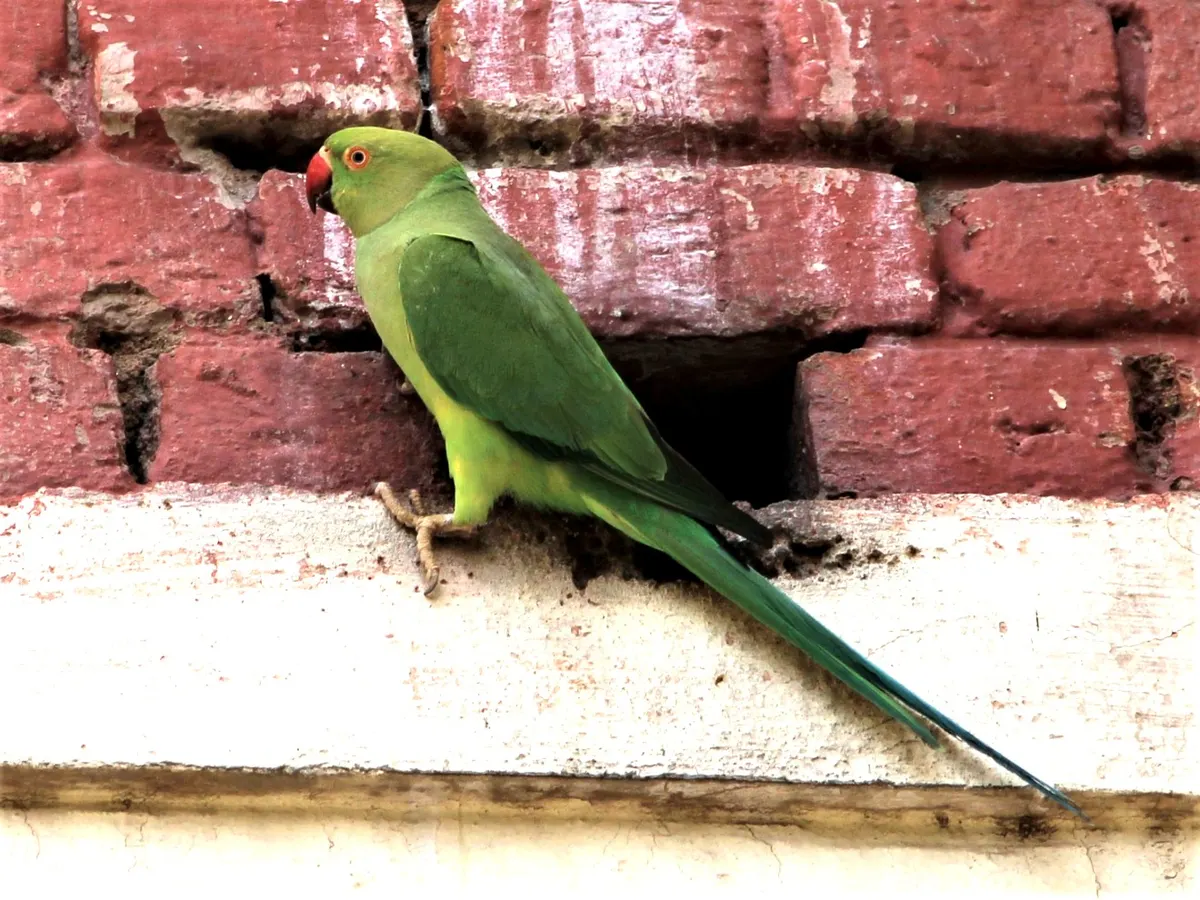
Breeders also keep colour mutations: blue, turquoise, cinnamon, yellow (lutino), white and grey. In the wild, pairs form from September to December and chicks fledge from April to June.
Raw parrot (Alexandrine)
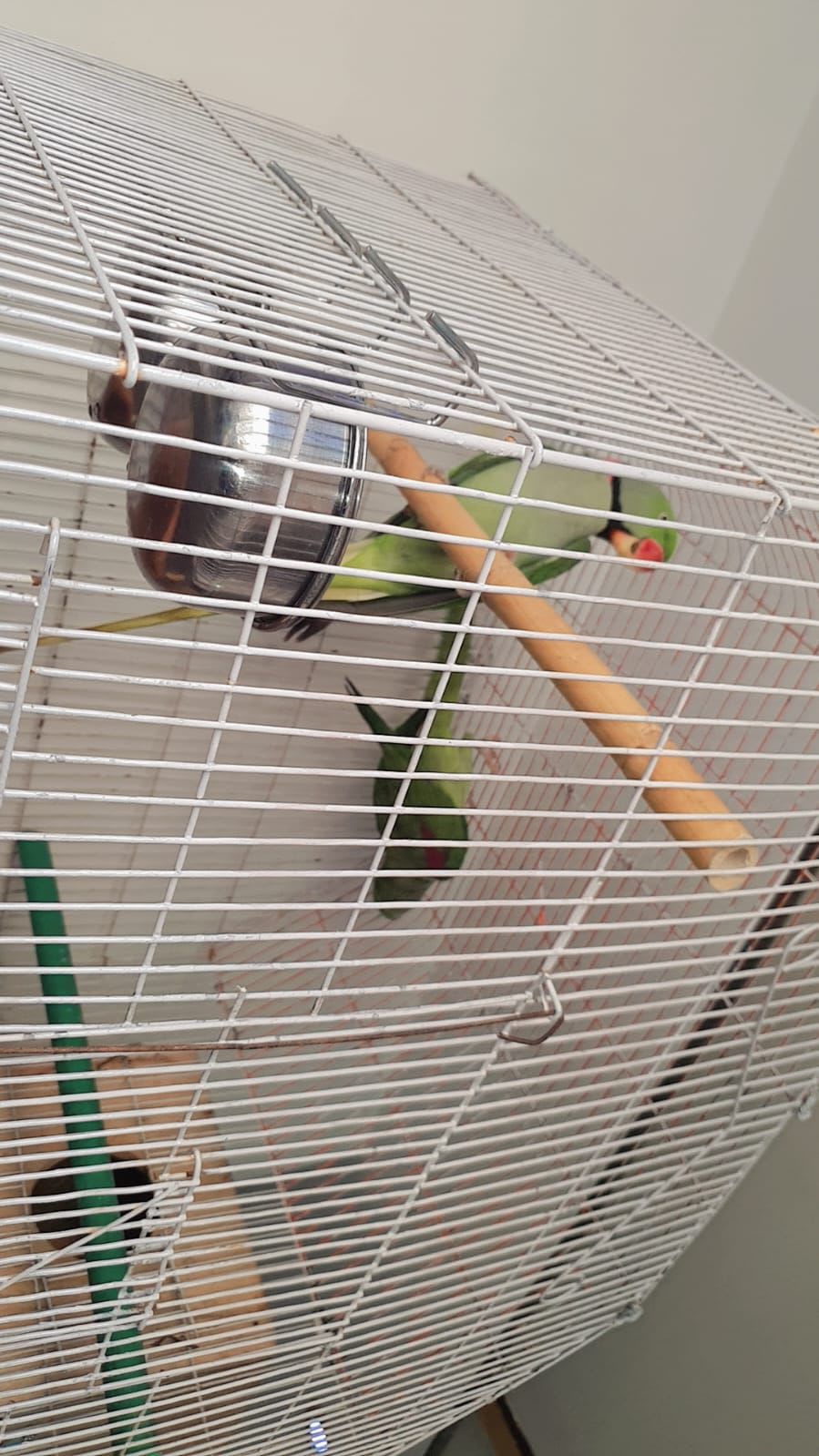
The Raw is the Alexandrine parakeet, the largest parakeet in Pakistan. It is 56 to 62 cm long, weighs 200 to 300 g and can live up to 40 years. It has a heavy red beak and a maroon patch on each shoulder. Adult males add a pink band on the nape and a black cheek stripe.
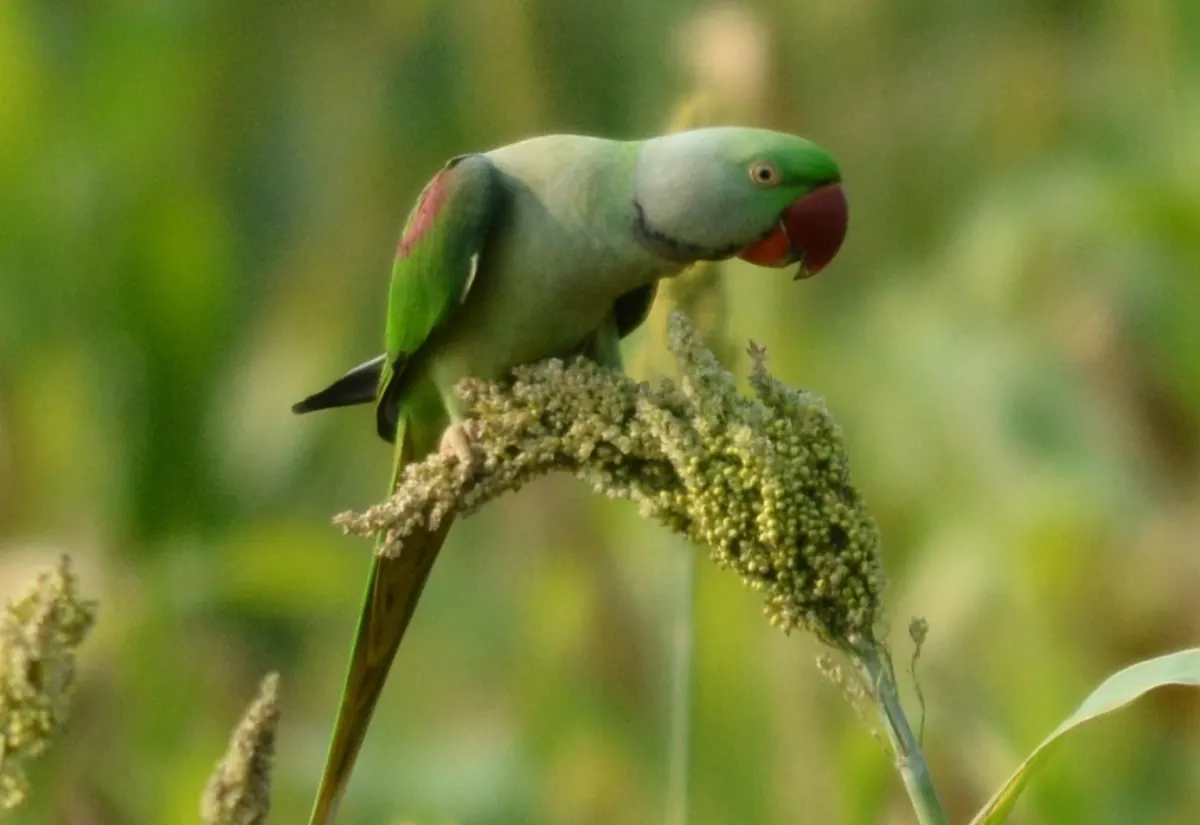
Wild numbers have fallen steeply. A 2024 Dawn report blamed trapping for the pet trade and the cutting of old hollow trees where parakeets nest. A Raw needs a big cage and hours out of it every day.
Grey parrot (African grey)
The Grey comes from the forests of Central Africa. It is about 33 cm long, weighs about 400 to 500 g and is widely seen as the best talking bird. One studied Grey learned more than 100 words.
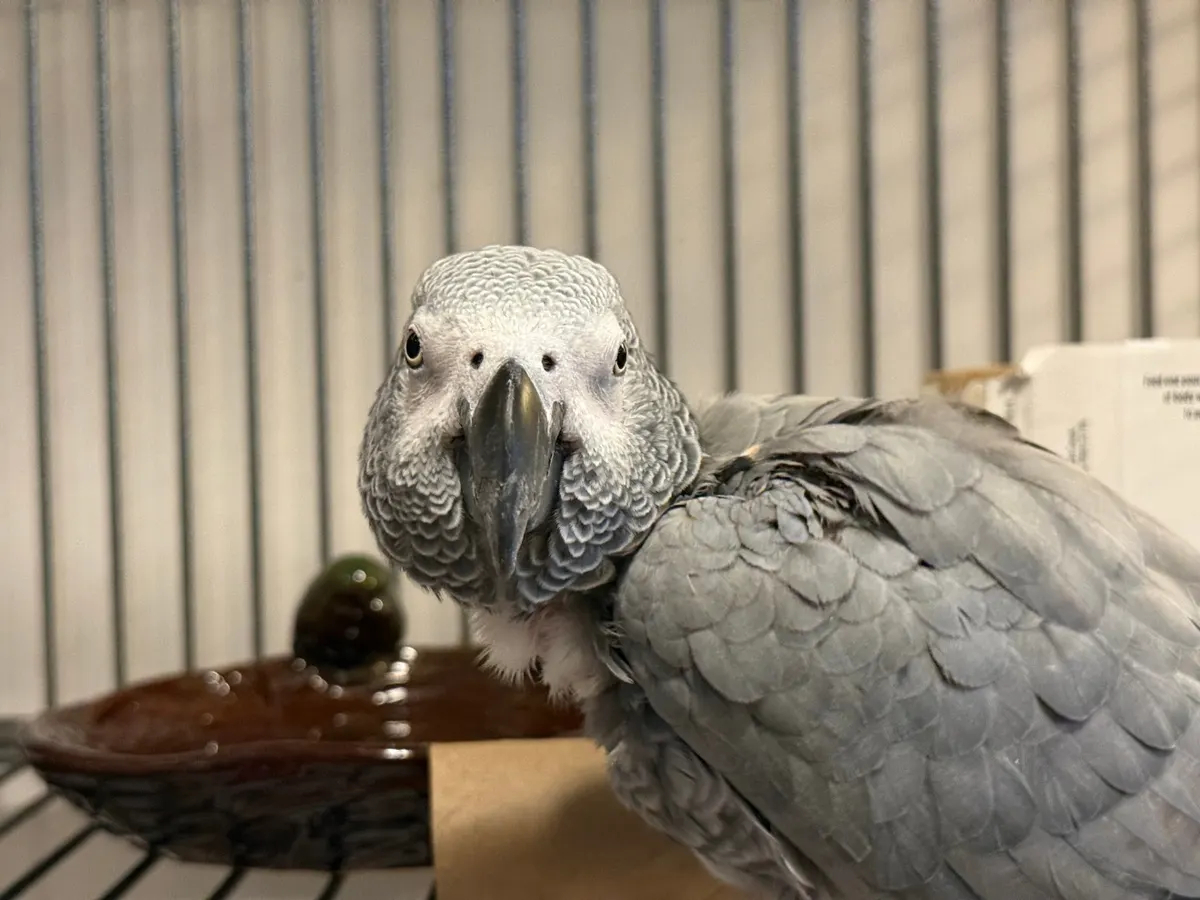
Greys are endangered in the wild and moved to CITES Appendix I in 2016, so wild birds cannot be traded for commerce. In homes they need a calcium source, fresh food and a lot of attention. Up to 40 percent of captive Greys pluck their own feathers, often from boredom or stress.
Cockatiel
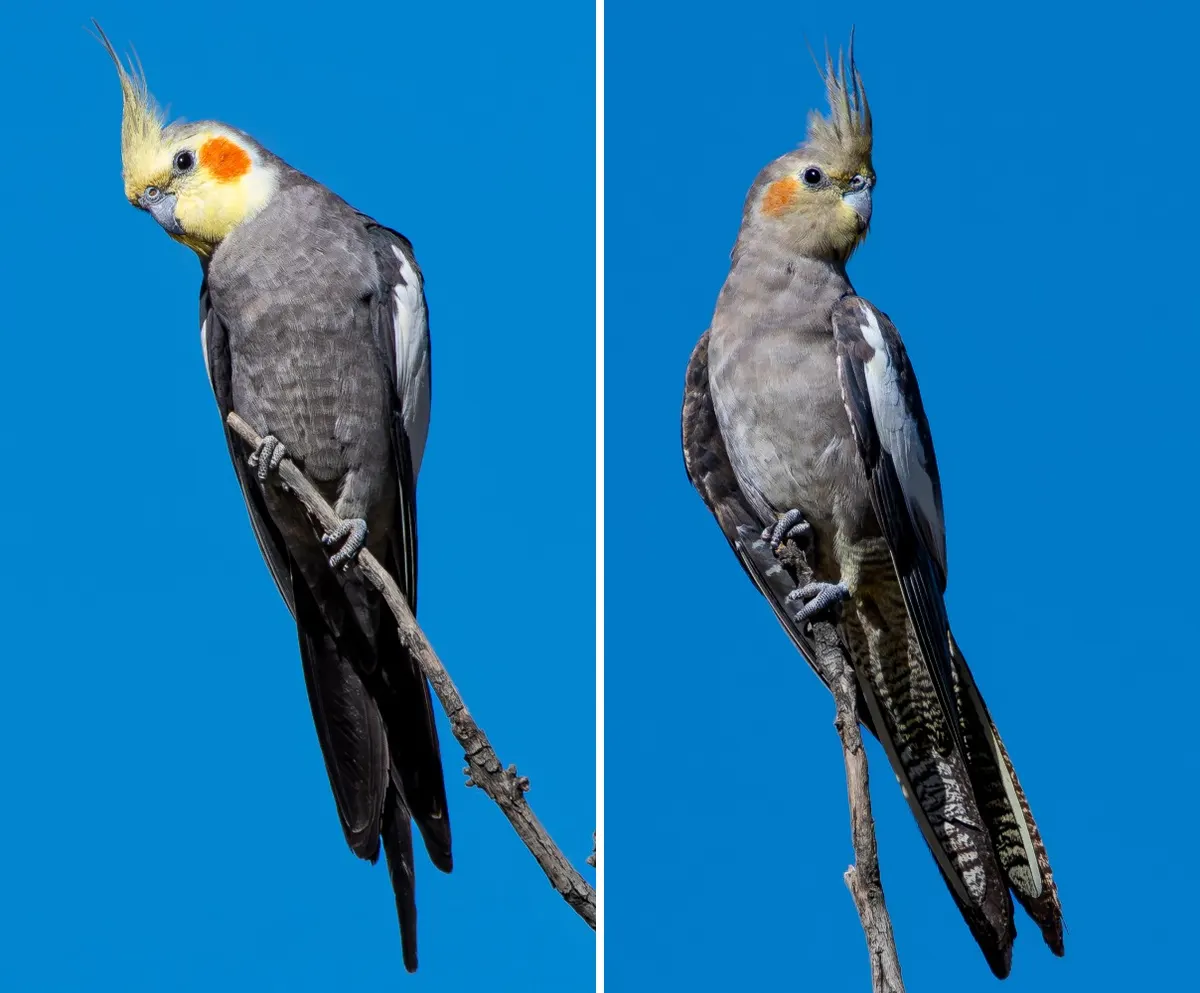
Cockatiels are small crested cockatoos from Australia, 30 to 33 cm long, half of it tail. They live 16 to 25 years. Most whistle tunes better than they talk, and males usually learn faster.
Budgie (Australian parrot)
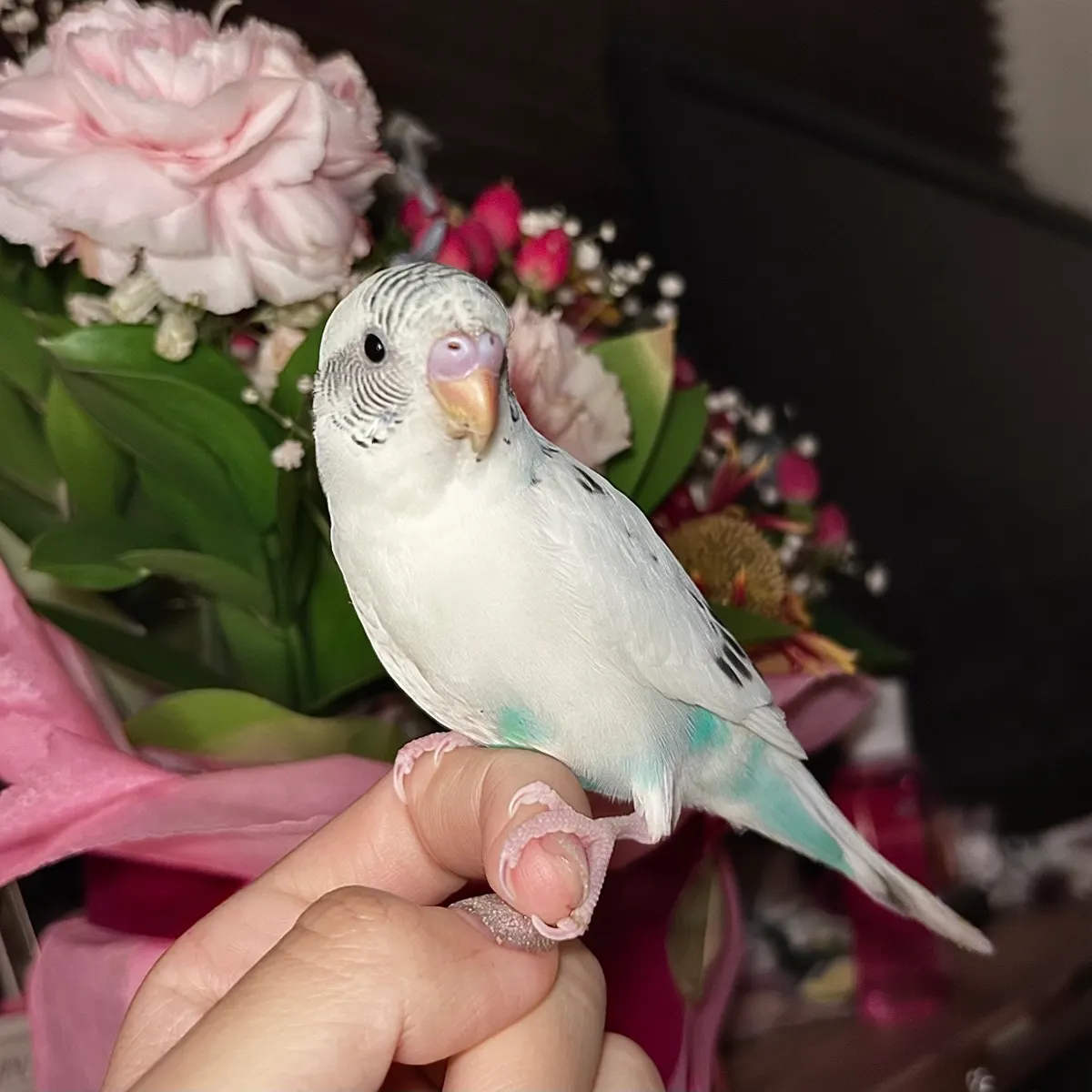
Many people in Pakistan call budgies Australian parrots, because they come from the dry interior of Australia. They are about 18 cm long and weigh 30 to 40 g. Males can learn a few dozen words or more, females rarely more than a dozen.
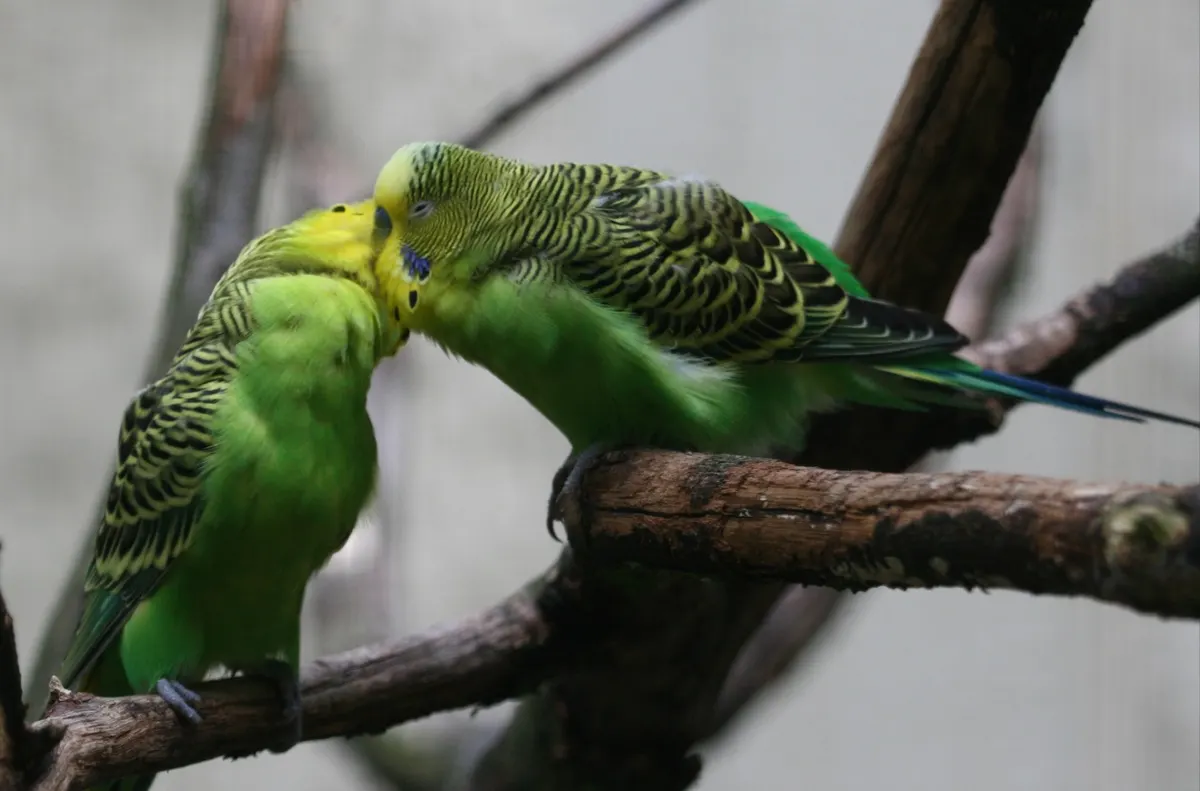
Male or female: a male's cere, the bare skin above the beak, is blue or lavender. A female's is pale brown or whitish, and turns dark brown when she is breeding.
Food and cage basics
- Food: a small seed mix with millet is a start, not a full diet. Add greens, fruit and pellets every day. The World Parrot Trust lists figs, dates and mangoes among a wild ringneck's foods.
- Calcium: Greys in particular need a calcium source.
- Space: the bigger the bird, the bigger the cage. For Alexandrines the World Parrot Trust recommends an aviary at least 4.5 metres long.
- Company: all five are social birds. A lonely parrot gets noisy or plucks its feathers.
For lovebirds, see our lovebird colour mutations guide. For pairing months, see breeding season for budgies, lovebirds and cockatiels.
Is it legal to keep a parrot in Pakistan
In Punjab, yes for native parakeets, but only with registration. Since September 2025 the Punjab Wildlife and Parks Department has allowed four native species to be kept under licence: the rose-ringed (ringneck), Alexandrine (Raw), plum-headed and grey-headed parakeets.
- Each bird is registered, with a yearly fee per bird, and gets a ring with a unique code.
- Chicks are registered separately from their parents. Breeders need a breeder licence.
- Catching or netting wild parakeets is still banned. Only licensed breeders and registered dealers may sell.
- Owners declared their birds on the department's PASS app or website. By late December 2025 more than 100,000 parrots had been declared, and the department set 5 January 2026 as the last date.
Budgies, cockatiels, Greys and other bred exotic birds are not part of this scheme. Rules differ in Sindh, Khyber Pakhtunkhwa and Balochistan, and in other countries. India, for example, bans the sale of its native parakeets. Check with your wildlife department before you buy, sell or breed.
Buying a parrot safely
- For a ringneck or Raw in Punjab, ask for the registration certificate and check the ring number matches.
- Ask the hatch date, and whether the bird is hand fed or DNA sexed.
- Look for clear eyes, clean nostrils, smooth feathers and a clean vent. Watch the bird eat.
- Never buy a wild caught chick.
Read our guide to buying a pet safely, then browse birds and parrots for sale, including parrots, cockatiels and budgies. Have birds to sell? Post a free ad.


References
- Dawn (2025), Licencing for four local parakeet species allowed in Punjab; Dawn (2024), Wild parakeets on the brink.
- The Express Tribune (2025), Parrot registration now mandatory in Punjab.
- ProPakistani (2025 and 2026), How to register your parrots and final deadline; Dunya News (2025), Over 100,000 parrots declared.
- World Parrot Trust, Ringneck parakeet.
- Wikipedia, Rose-ringed parakeet, Alexandrine parakeet, Grey parrot, Cockatiel, Budgerigar.
Frequently asked questions
Is it legal to keep a parrot in Pakistan?
It depends on the species and the province. In Punjab, four native parakeets (rose-ringed, Alexandrine, plum-headed and grey-headed) may only be kept when registered with the Punjab Wildlife and Parks Department, each with a numbered ring. Catching or netting wild parakeets stays banned. Bred exotic birds such as budgies, cockatiels and Greys are not part of that scheme. Check with your provincial wildlife department before you buy or breed.
What is a Raw parrot?
Raw is the name used in Pakistan for the Alexandrine parakeet, Psittacula eupatria. It is the largest parakeet in the country at 56 to 62 cm including the tail, with a heavy red beak and a maroon patch on each shoulder. It can live up to 40 years in care and is a native wild bird, so the Punjab registration rules apply.
What is the difference between a ringneck and a Raw parrot?
The Raw (Alexandrine) is much bigger, 56 to 62 cm against about 40 cm, and heavier, 200 to 300 g against about 116 to 140 g. It has a larger beak and a maroon shoulder patch, which the ringneck does not have. Both are green, and in both only adult males show a full neck ring.
How can I tell a male ringneck from a female?
An adult male has a black chin, a black stripe across the lower cheeks and a pink collar. A female has no black markings and only a faint pale green collar, and her tail is shorter. Young birds of both sexes look like females, so a young bird with no ring may still be a male. DNA sexing gives a sure answer.
Which parrot is best for beginners in Pakistan?
A budgie or a cockatiel. Both are small, bred in homes, used to people and not part of the Punjab registration scheme. Keep them in pairs or give them daily time, since both are flock birds. A Grey is the hardest choice for a first parrot.
Why is a budgie called an Australian parrot?
Budgies (budgerigars) come from the dry interior of Australia, so sellers in Pakistan often call them Australian parrots. They are small parakeets of about 18 cm. Every budgie sold in Pakistan is bred in captivity.
Can a Grey parrot be sold in Pakistan?
Wild Greys cannot be traded internationally for commerce since the species moved to CITES Appendix I in 2016. Bred birds can still change hands, but imports need CITES papers. Ask the seller for proof the bird was bred in captivity, such as a closed ring and breeder records.