Puppy's First Week Home: Health Checks, Routine and Potty Training
What to do in a puppy's first week: a vet check in the first days, a simple routine, a potty training schedule and how to tell its age by its teeth.
By Pets Bazar Editorial Team, Editors · Published · 5 min read
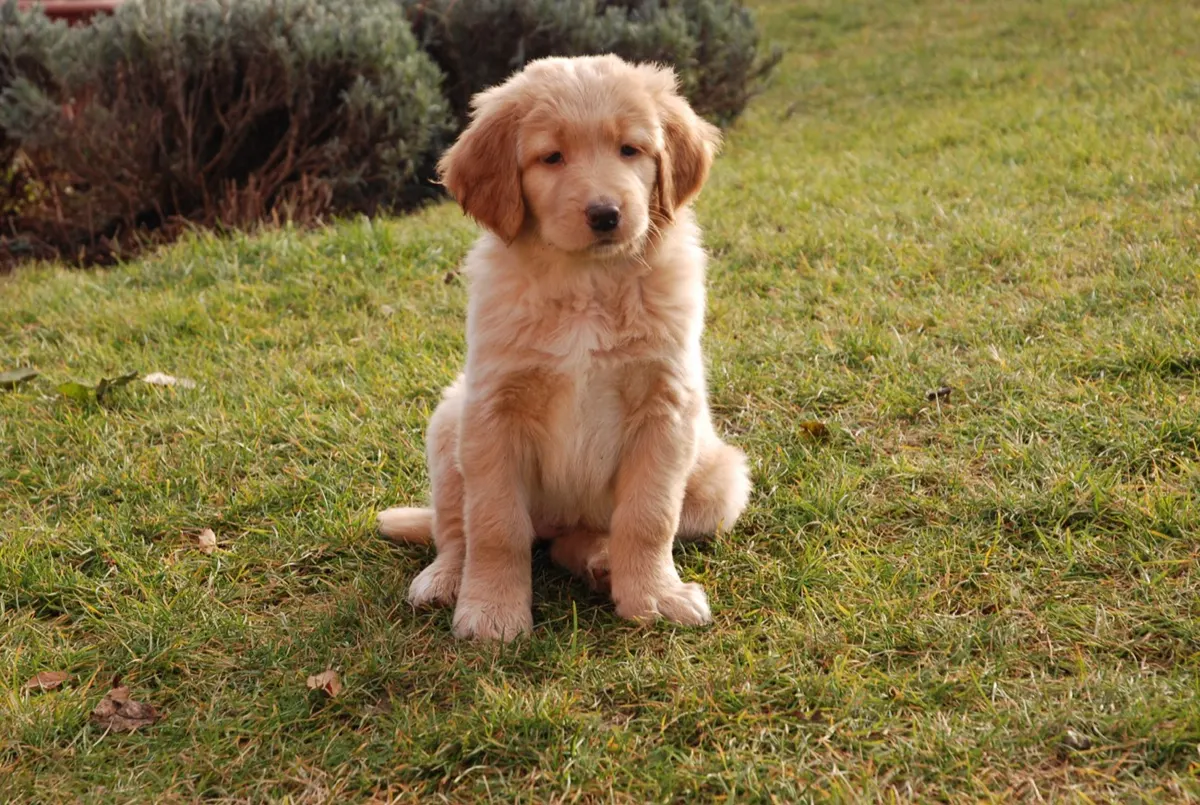
A puppy's first week comes down to three things: a vet check, a calm routine and a lot of toilet trips. Get those right and everything you teach later is easier. The advice works for a house or a flat, in Pakistan, the Gulf, India, the UK or the United States. If you have not chosen a dog yet, start with the best dog breeds for Pakistan.
Day one: the trip home and the first night
Ask the seller what the puppy eats and buy the same food. Collect it in the morning if you can, so it has a whole day to settle. In hot weather, travel early or late, and never leave a puppy in a parked car.
At home, take it straight to its toilet spot and praise it quietly if it goes. Let it explore one room, not the whole house.
At night, put its bed close to yours. Most puppies cry for the first few nights because they miss their litter. If it wakes and whines, carry it to the toilet spot, then straight back to bed with no play.
Health checks in the first few days
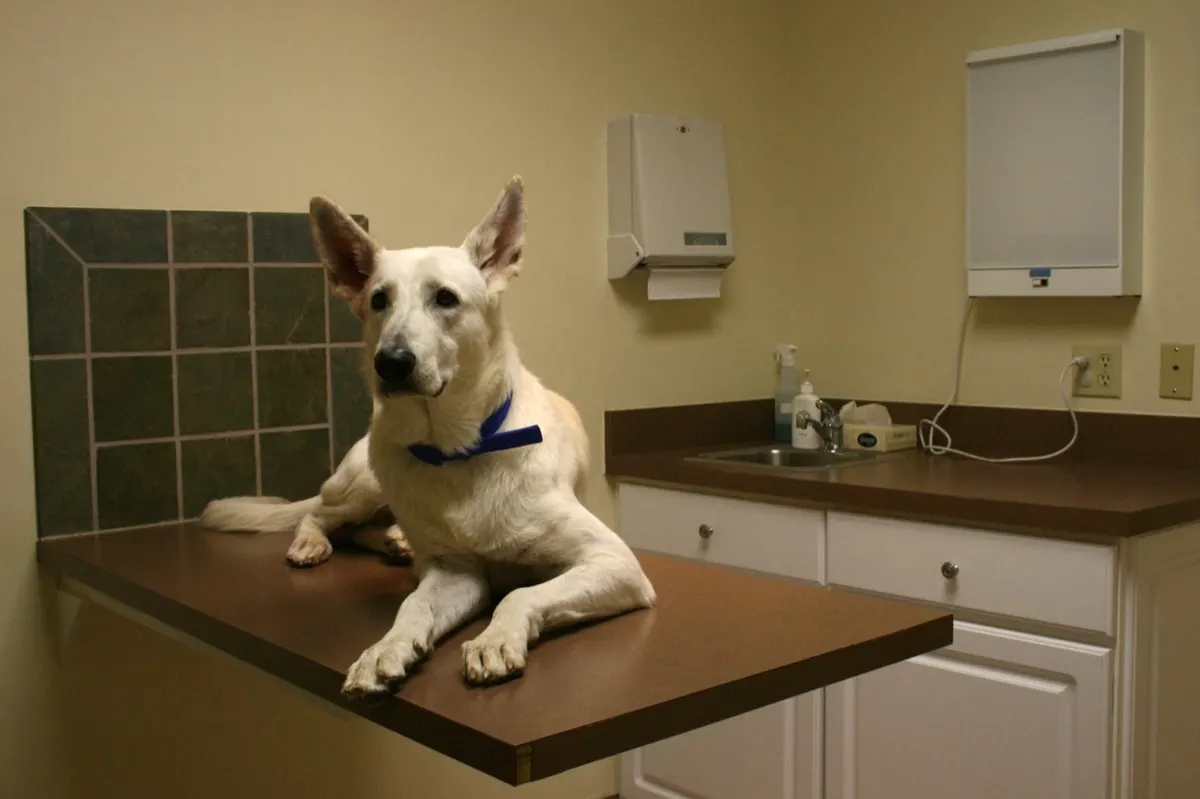
Book a vet visit within two or three days, even if the puppy looks well, and take the vaccination card and deworming record. The vet will check the puppy over, set dates for the next vaccinations and deworming, and tell you whether a microchip or registration is required where you live. Fees vary by clinic and city. In Pakistan you can find a vet through our clinics directory.
At home, look the puppy over once a day.
Call the vet the same day if the puppy vomits more than once, has diarrhoea, refuses food, seems weak or has pale gums or trouble breathing. Young puppies can go downhill fast. Parvovirus, a serious illness spread through dog droppings, mostly strikes puppies that are not fully vaccinated.
How to tell a puppy's age by its teeth
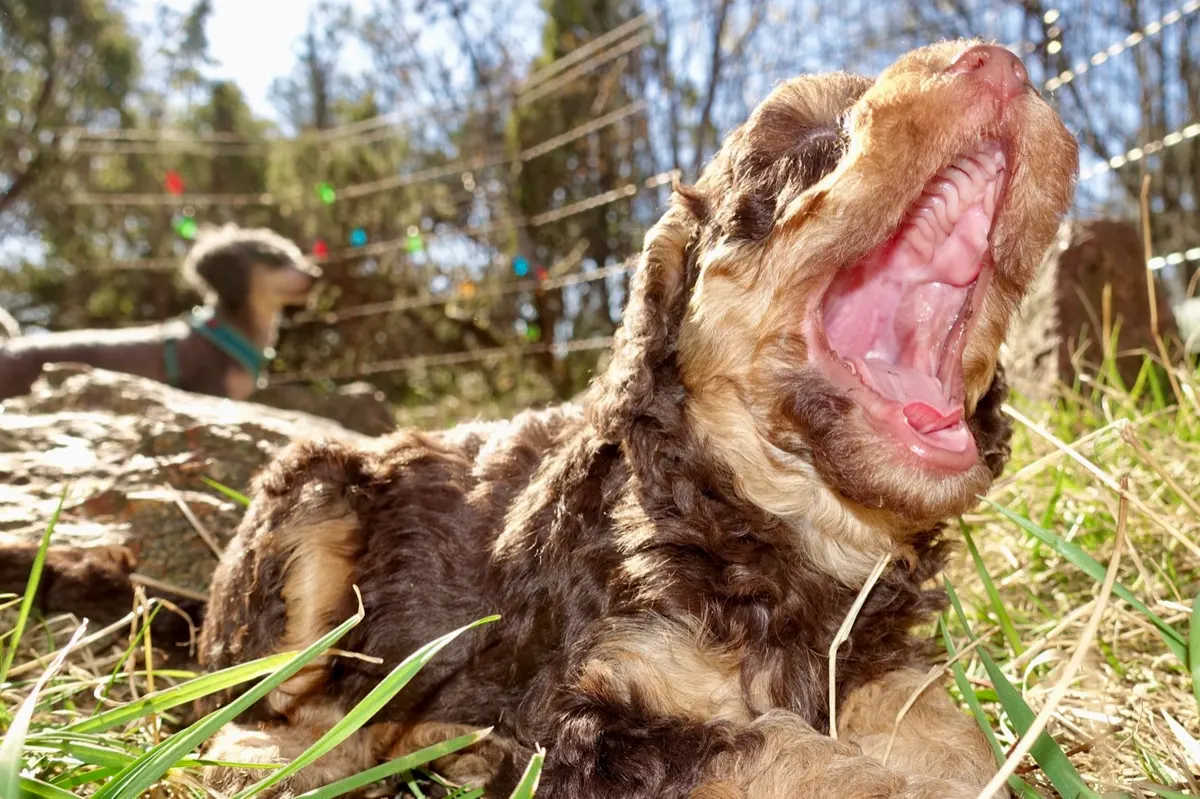
Teeth give a rough check on a seller's stated age. The ages below are typical; small breeds can be later, and your vet can estimate more closely.
| Typical age | What you see in the mouth |
|---|---|
| Under 3 weeks | No teeth yet |
| 3 to 6 weeks | Milk incisors and canines, then the premolars |
| 6 to 8 weeks | Most or all of the 28 small, sharp milk teeth |
| 3 to 5 months | Adult incisors replace the milk front teeth |
| 4 to 6 months | Adult canines and premolars come in |
| 5 to 7 months | Molars arrive, and all 42 adult teeth are in by about 7 months |
A puppy should be at least eight weeks old and eating solid food before it leaves its mother. If one sold as eight weeks old has almost no teeth, ask questions. Our guide to buying a pet safely covers other warning signs.
A simple routine for the first week
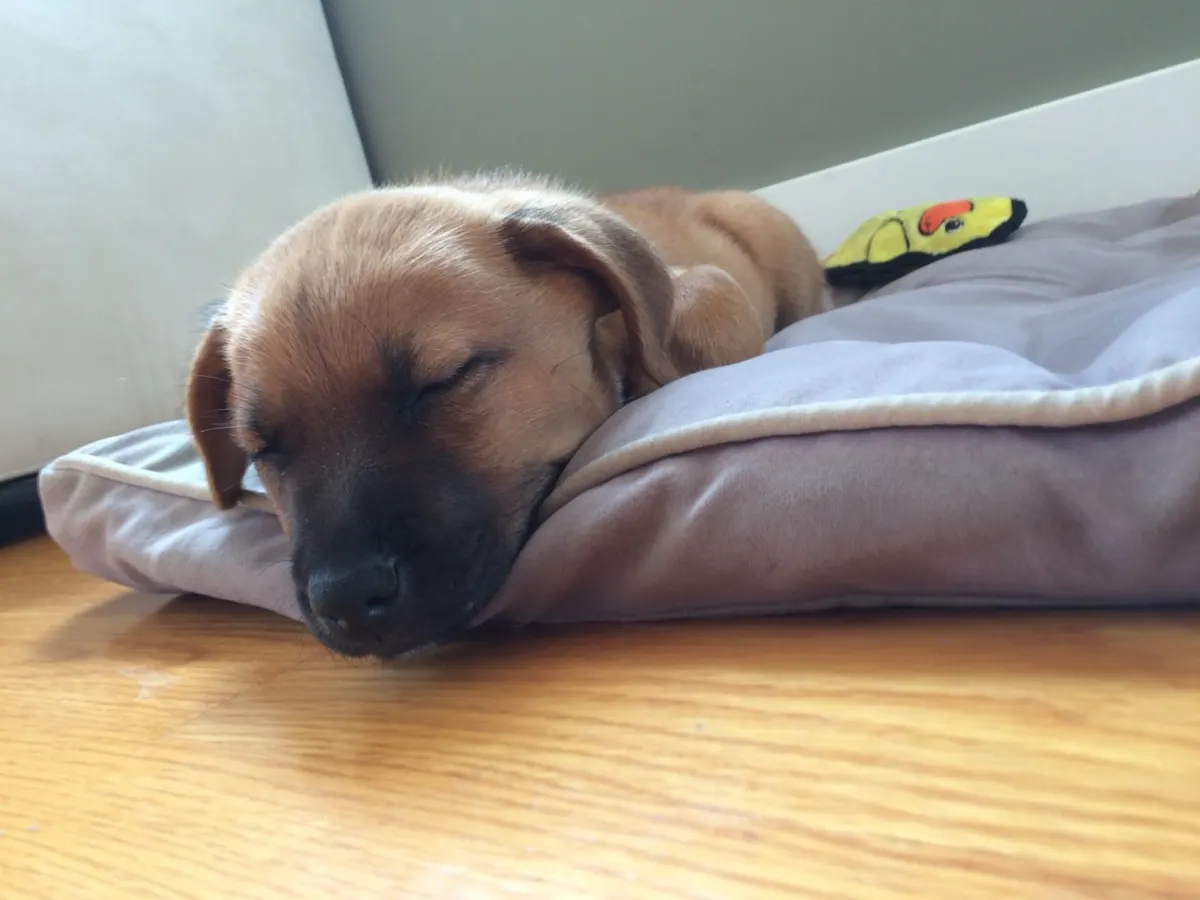
Puppies settle faster when every day looks the same.
- Meals. Four small meals a day until about three months, then three until about six months. To change the food, mix in the new one gradually over about a week.
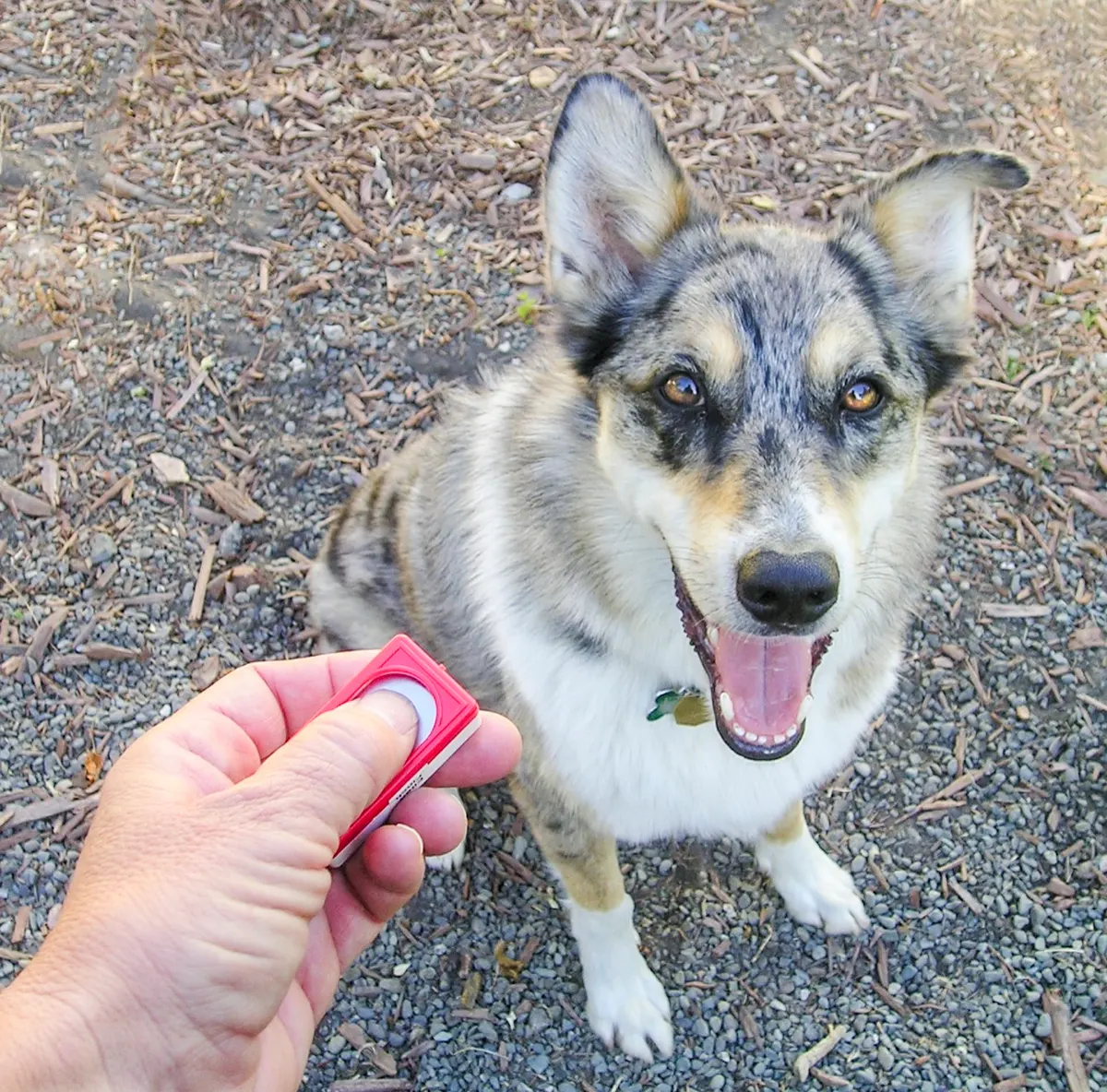
- Play and training. Five-minute sessions, several times a day. Start with its name and "sit", with a small treat as the reward.
- Naps. Puppies sleep most of the day, often 18 hours or more. An overtired puppy bites and cries more.
- Bedtime. A last toilet trip, then lights out at the same time each night.
In hot countries, keep the puppy in a cool room in the afternoon, and once the vet allows walks, go out only early or after sunset. If the pavement is too hot for the back of your hand, it is too hot for its paws.
Potty training schedule
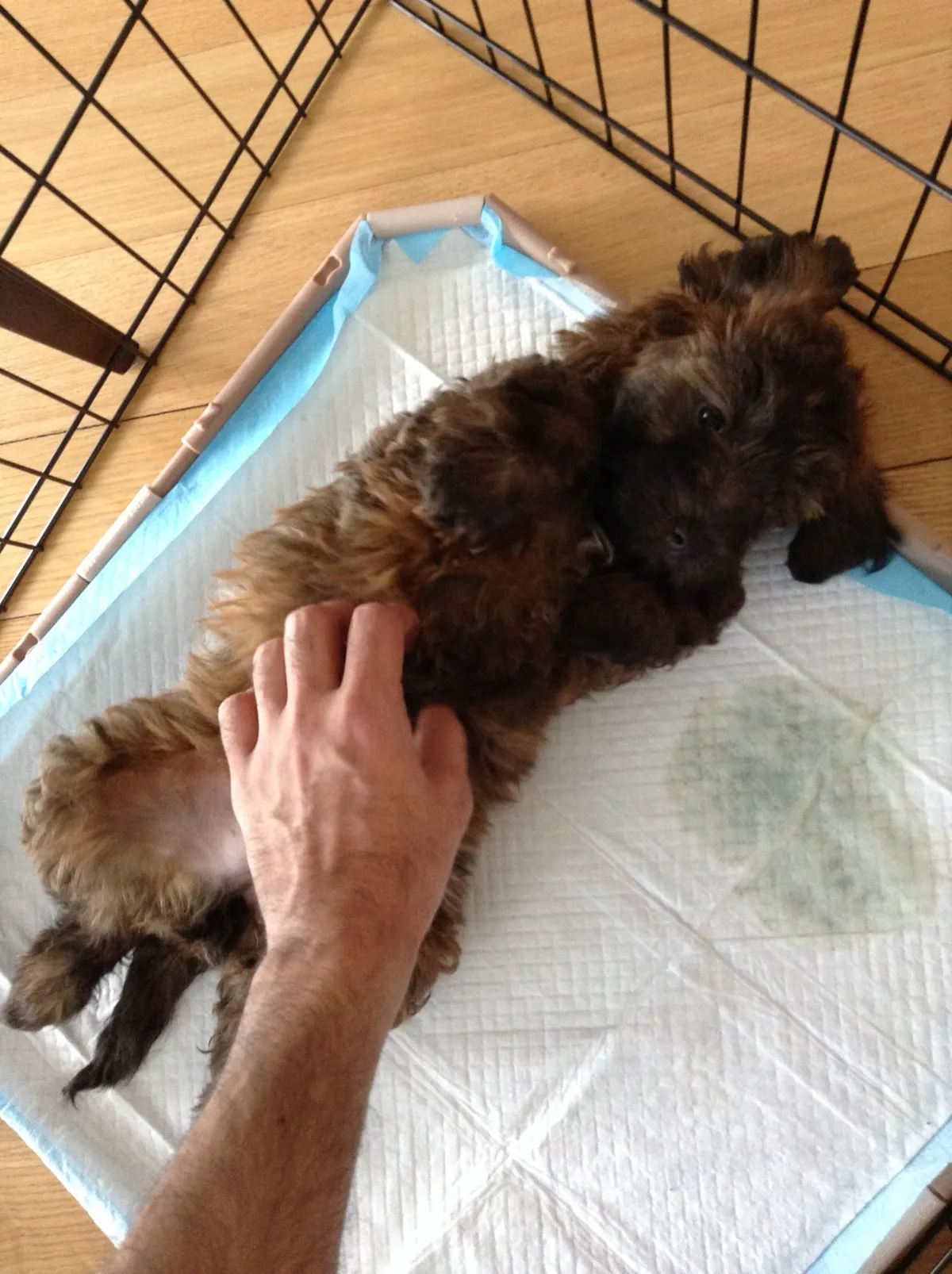
Give the puppy many chances to get it right. Take it to the same spot at these times.
- As soon as it wakes up.
- Soon after every meal and every play session.
- Before bed, and once or twice in the night while it is young.
- Every hour or two in between while it is awake.
Stand still and wait. When it goes, praise it and give a treat within a second or two, so it links the reward with the act.
Clean accidents with an enzyme cleaner so the smell does not draw the puppy back, and never scold: punishment only teaches it to hide.
In a flat, a training pad by the balcony door or in the bathroom works at first. Once the puppy uses it every time, start taking it downstairs at its usual times. Most puppies take a few weeks to a few months to be fully reliable.
Socialising and the weeks ahead
A puppy learns what is normal most easily in its first three months, so do not shut it away until the last vaccination. Carry it outside to watch traffic and people, invite calm, vaccinated dogs you know to visit, and get it used to gentle handling, the doorbell and the pressure cooker. Keep it off ground where unknown dogs go until your vet says it is protected.
Over the next weeks, finish the vaccinations and deworming on your vet's dates, and add one new skill at a time. Our dog vaccination schedule lists each shot, and our guide to dog training at home covers the first commands.
Where to find puppies for sale
If you are still looking, browse dogs for sale in Pakistan, the United States, India or Kuwait. Every ad shows the seller's city, and you can chat with the seller before you visit. See the puppy with its mother and check the vaccination card before you pay.



Frequently asked questions
When should a new puppy first see a vet?
Within the first two or three days at home, even if it looks healthy. Take the vaccination card and the deworming record so the vet can plan the next doses.
How often should I take a puppy out to the toilet?
As soon as it wakes, soon after every meal, after play, before bed and every hour or two while it is awake. Young puppies usually need one or two trips in the night as well.
How can I tell a puppy's age by its teeth?
Milk teeth start to show at about three weeks, and most puppies have all 28 by six to eight weeks. Adult front teeth replace them from about three months, and the full adult set of 42 is usually in by about seven months. Your vet can give a closer estimate.
Is it normal for a puppy to cry at night?
Yes, for the first few nights. Put its bed close to yours, take it to the toilet spot if it needs to go, and keep night trips calm and quiet so it learns that night time is for sleep.
Can my puppy go outside before its vaccinations are finished?
It can use your own clean garden or balcony and be carried outside to see the world. Keep it off ground where unknown dogs go until your vet says its vaccinations give enough protection.